
FineArtDaily serial
The room refuses to behave.
The trouble begins in Gallery 7, where a portrait is hanging correctly but the room inside the painting is not. The floor tiles grow smaller, then larger, then smaller again. A table points in three directions. A tiny window in the background looks closer than the giant chair in front.
Curator Cat narrows one eye. “This room has failed inspection.”
Palette Goblin, still carrying a suspicious blue bucket from Episode 4, whispers, “Maybe space is just vibes.”
Professor Perspective enters with a velvet case of measuring tools. “Space may have vibes. But it also has rules.”
Six panels from the case file
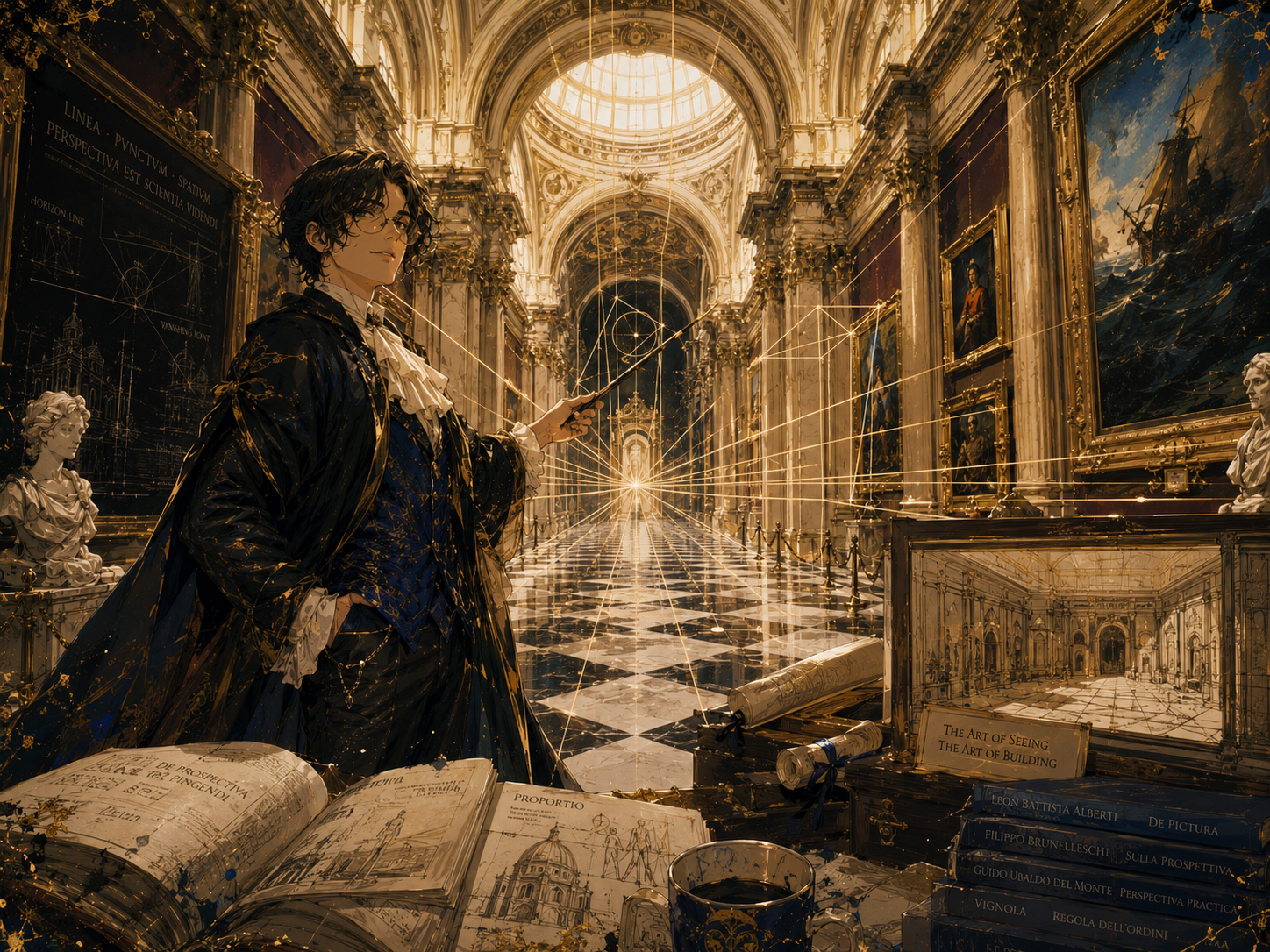
1. The chalk line appears
A golden horizon line snaps across the wall. Every confused chair suddenly looks nervous.

2. The Professor names the culprit
“The vanishing point is missing,” he says. The room gasps. The table denies everything.
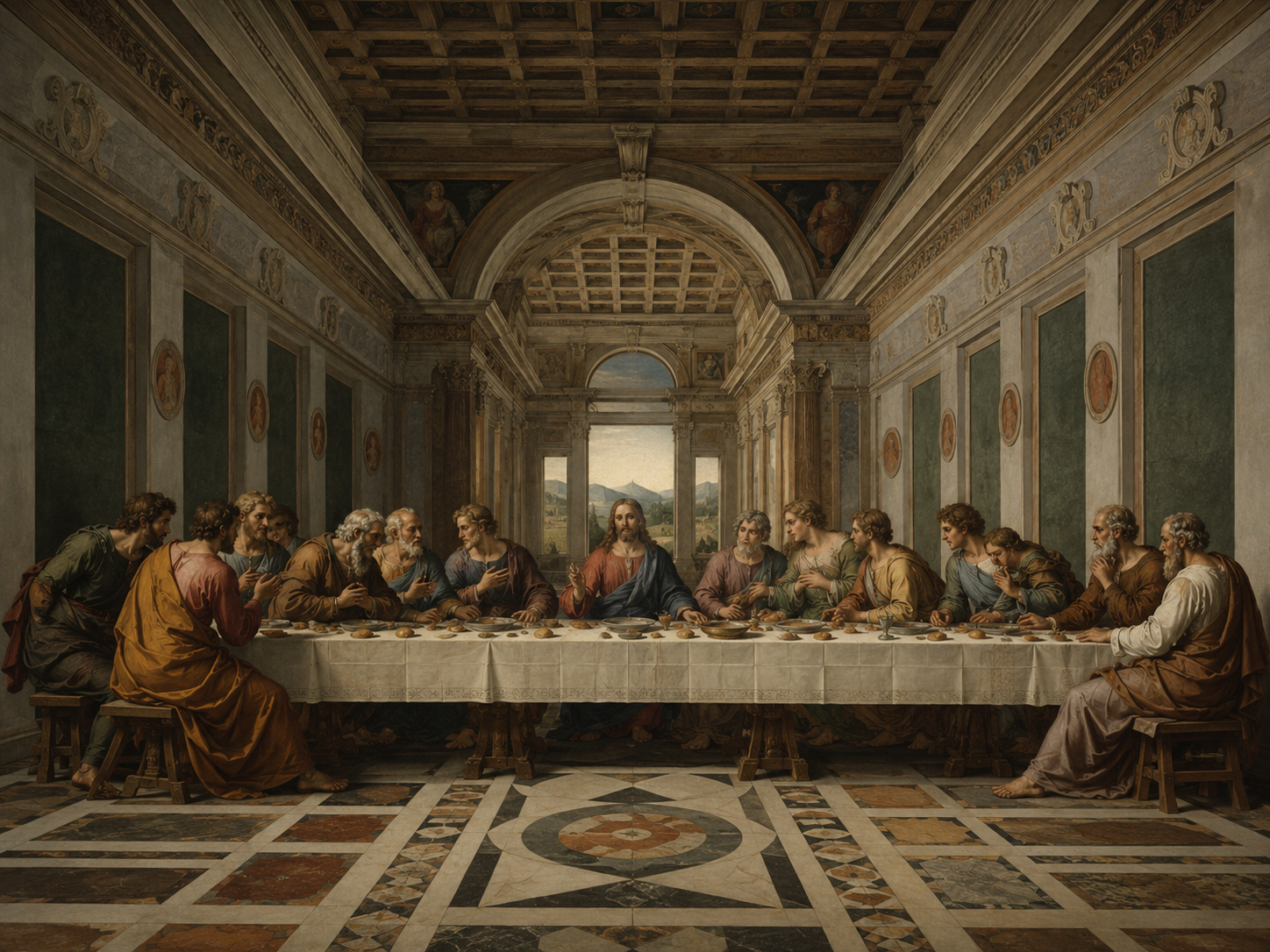
3. One-point perspective enters
Lines from the ceiling, floor, and walls march toward one calm destination like trained museum guards.
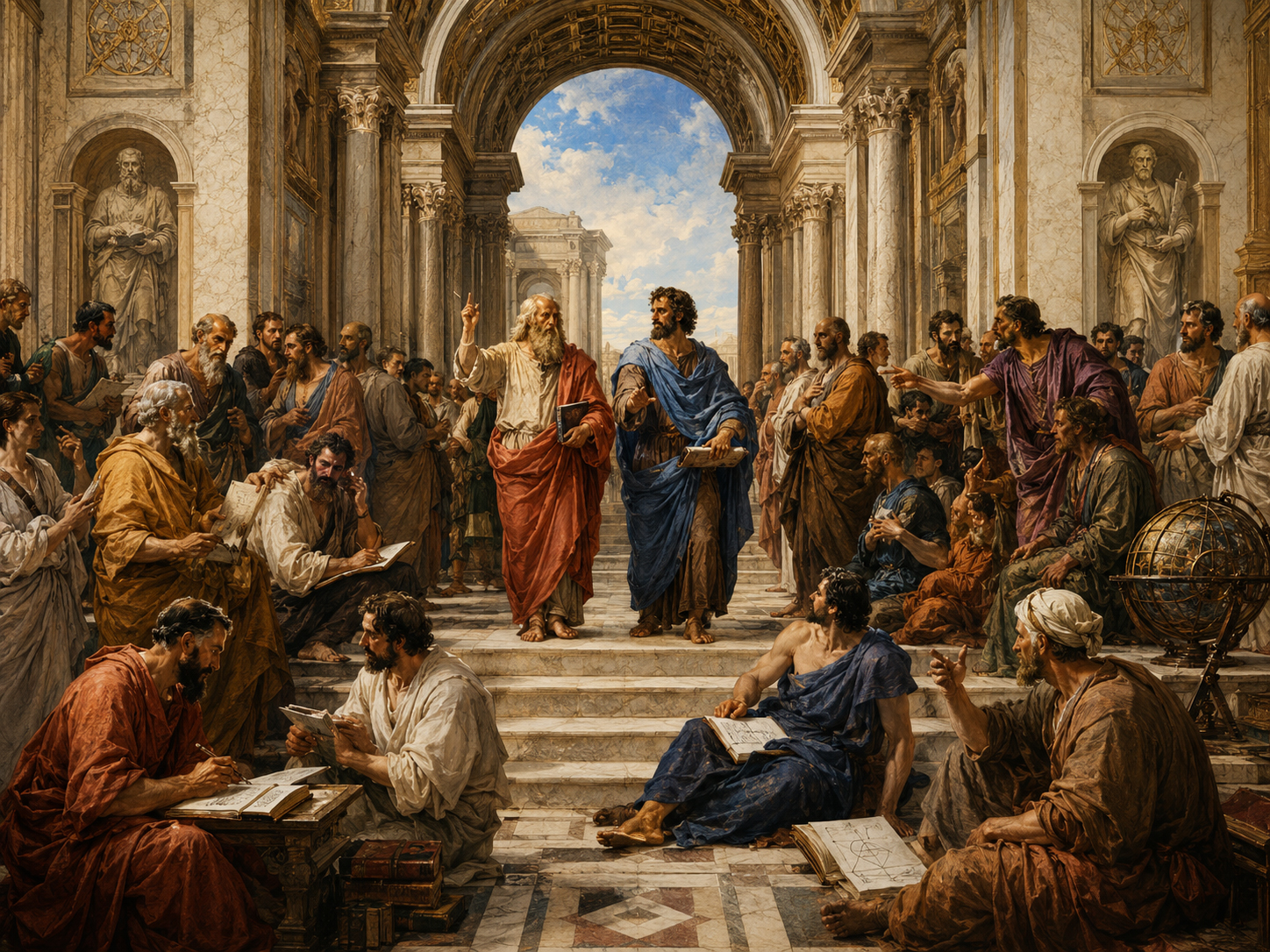
4. Architecture becomes drama
Depth is not just math. It tells the eye where to walk and where to wonder.
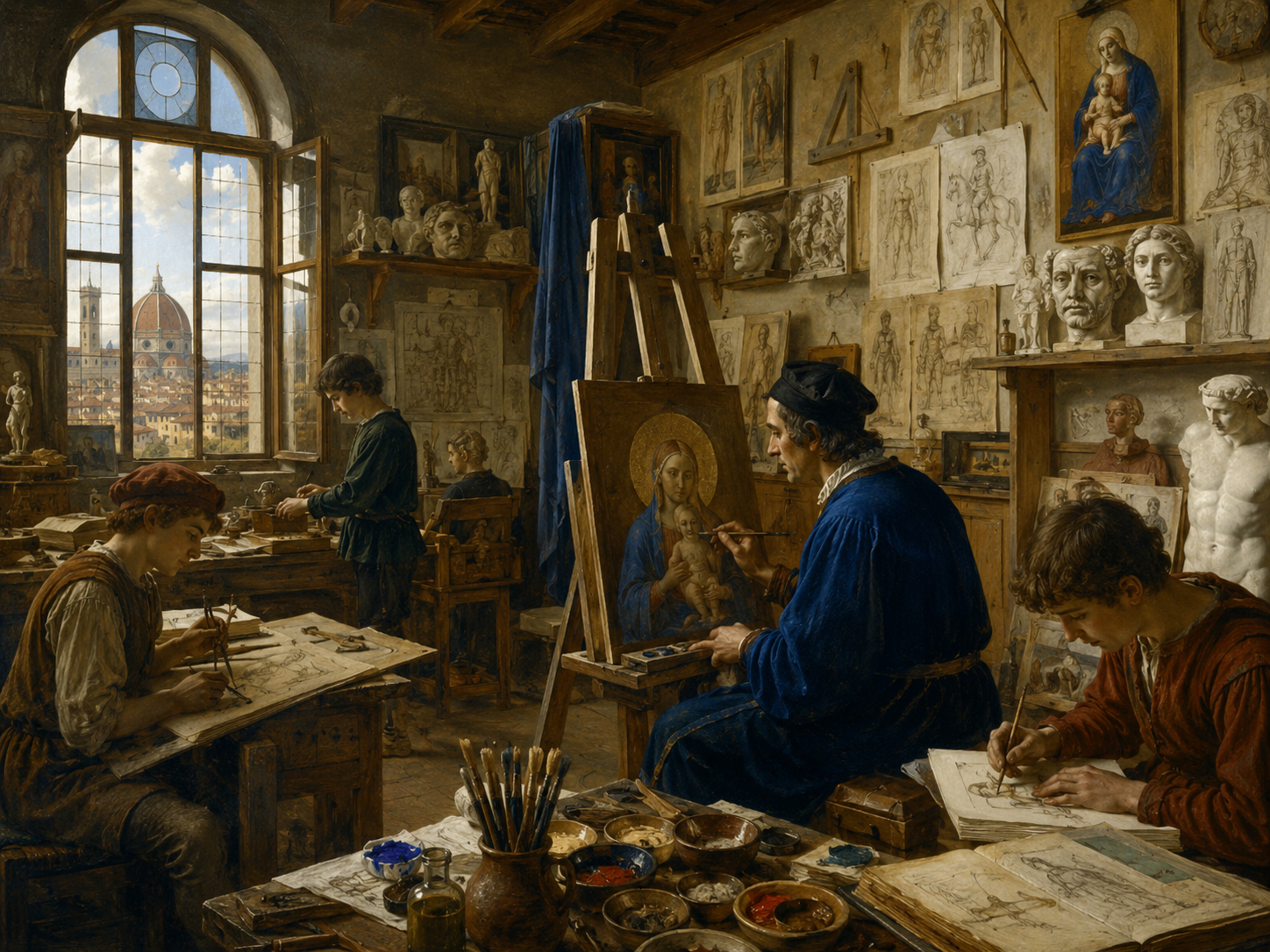
5. The workshop test
The apprentices place tiles, windows, and figures until the room finally stops arguing.

6. Order returns
The room clicks into place. Curator Cat signs the inspection report with one elegant paw.
The art lesson hiding in the joke
Perspective is the system artists use to make a flat surface feel deep. A horizon line marks the viewer’s eye level. Vanishing points help parallel lines appear to recede into space. Scale makes distant objects smaller. Overlap lets one object sit in front of another. Light and shadow help forms feel solid.
Once you see those tools, paintings become less mysterious and more impressive. The artist is not merely drawing a room. The artist is building a little stage for your eye.
How to look for perspective
- Find the horizon line. Look for the eye-level height where the space seems to settle.
- Trace the architecture. Doorways, ceiling beams, tiles, shelves, and tables often reveal the vanishing point.
- Check the scale. Figures and objects should usually shrink as they move away from you.
- Notice the drama. Perspective can make a room feel calm, sacred, theatrical, cramped, or unstable.
- Enjoy the mistakes. Medieval and early Renaissance spaces can feel strange because artists were experimenting with depth.
The room is fixed. Mostly.
At the end of the episode, Gallery 7 stands beautifully corrected. The floor tiles obey. The ceiling behaves. The tiny background window returns to the background.
Then Curator Cat notices the Palette Goblin has painted a second vanishing point behind a curtain.
Professor Perspective sighs. “That is Episode 6’s problem.”
Next in the museum
Abstract Dragon arrives, which means realism, furniture, and polite geometry are about to have a very difficult afternoon.