FineArtDaily Field Guide
Start with the obvious
Most people skip the easiest part of looking at art: simply saying what is there. Before deciding whether a painting is “important,” “beautiful,” or “weird,” slow down and name what you can actually see.
Look first. Explain later. The painting is not a test; it is a room you enter with your eyes.
Who is here? What objects appear? Is the setting indoors, outdoors, real, symbolic, impossible, or theatrical?
The artist probably worked hard to send you there. Follow the light, faces, gestures, lines, or brightest colors.
The odd detail is often the door: a mirror, a letter, a skull, a storm, a hand gesture, a blank stare, a tiny animal, a misplaced object.
Follow the light
Light is one of art history’s great narrators. It can make a kitchen sacred, a face mysterious, a battle chaotic, or a quiet room feel like a confession. Ask where the light comes from, what it blesses, and what it hides.
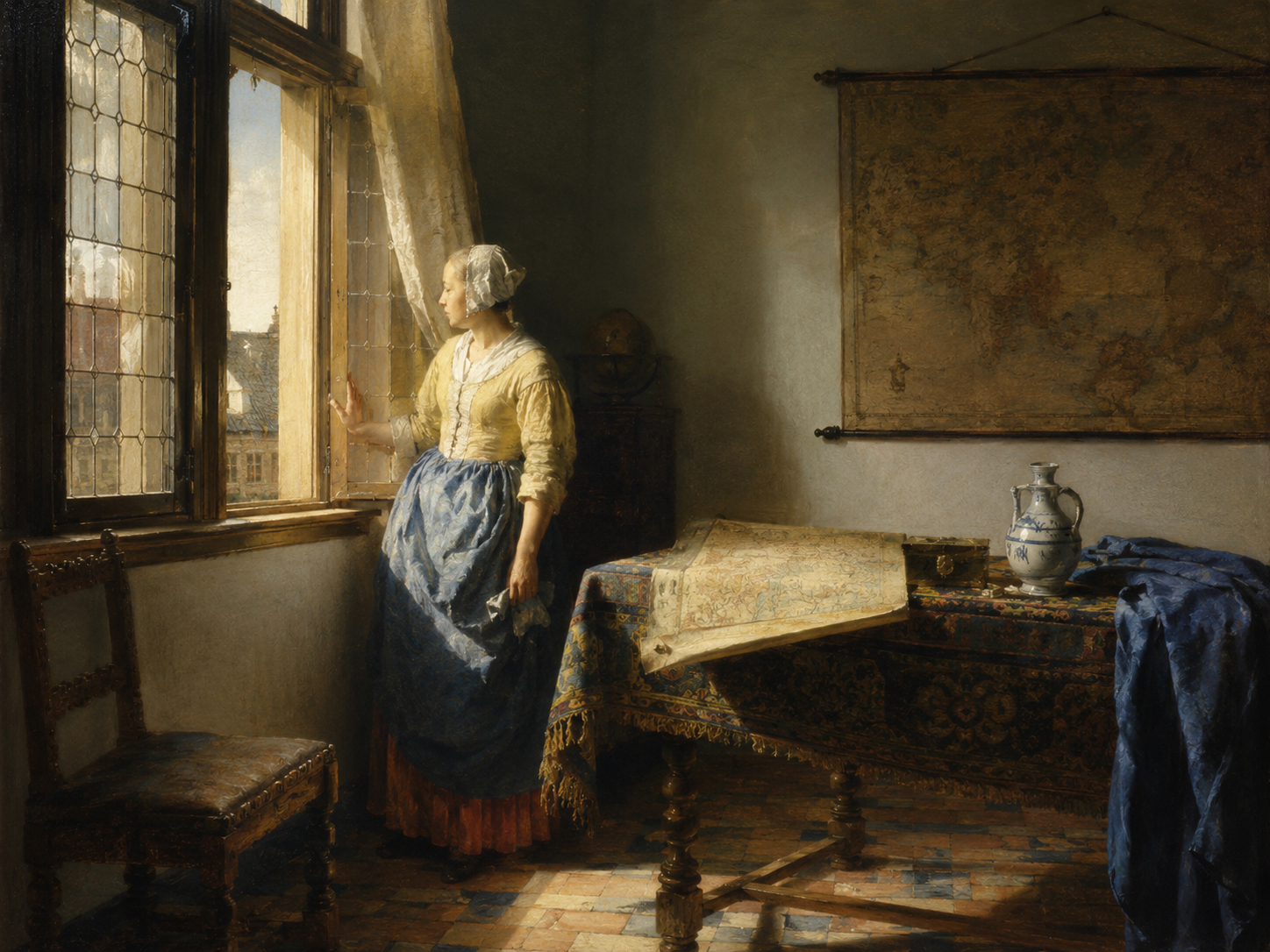
Window Light
Quiet rooms become dramatic when sunlight enters like a character.
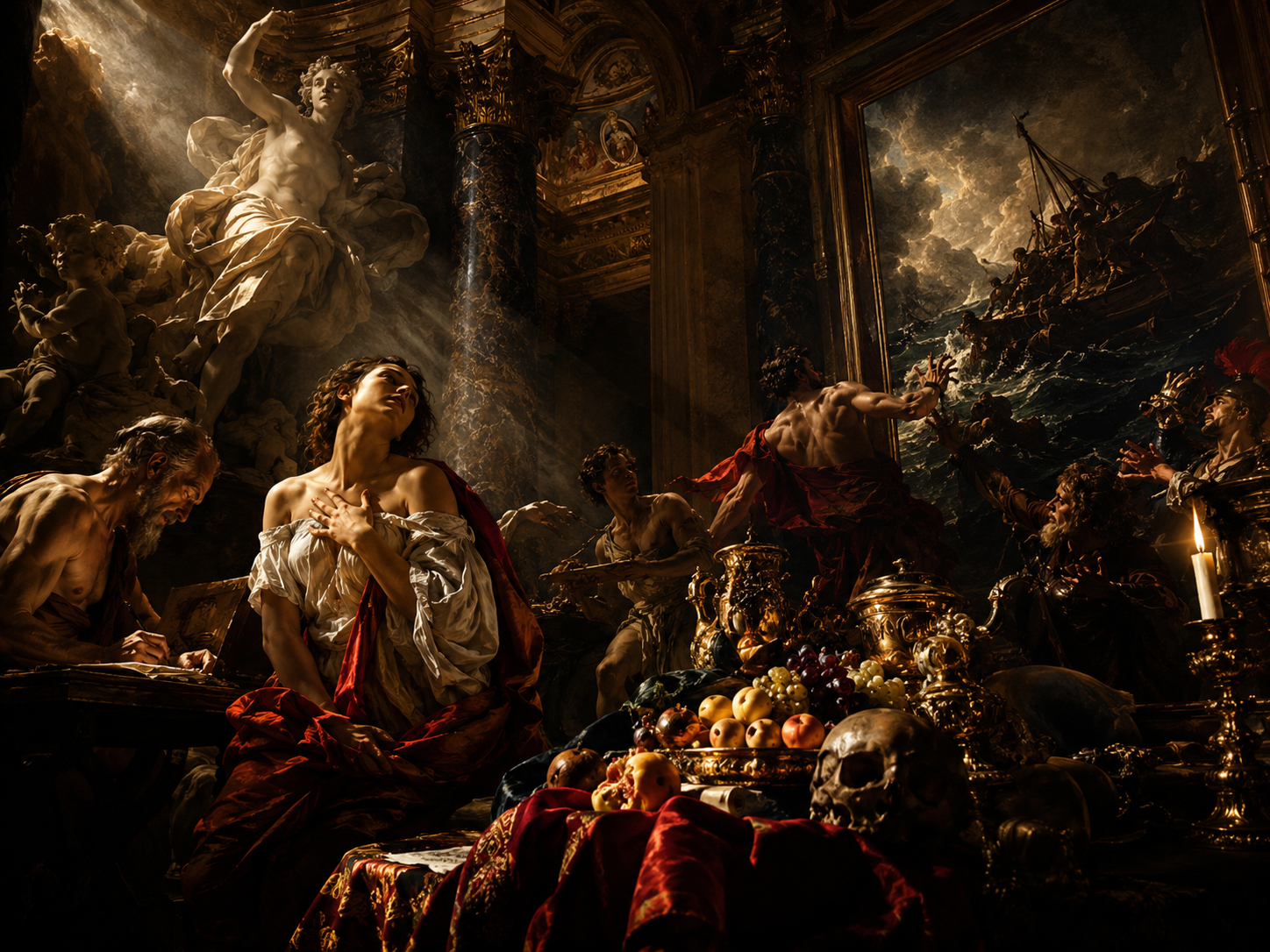
Drama and Shadow
Baroque art often turns light into a spotlight and darkness into suspense.
Find the hidden structure
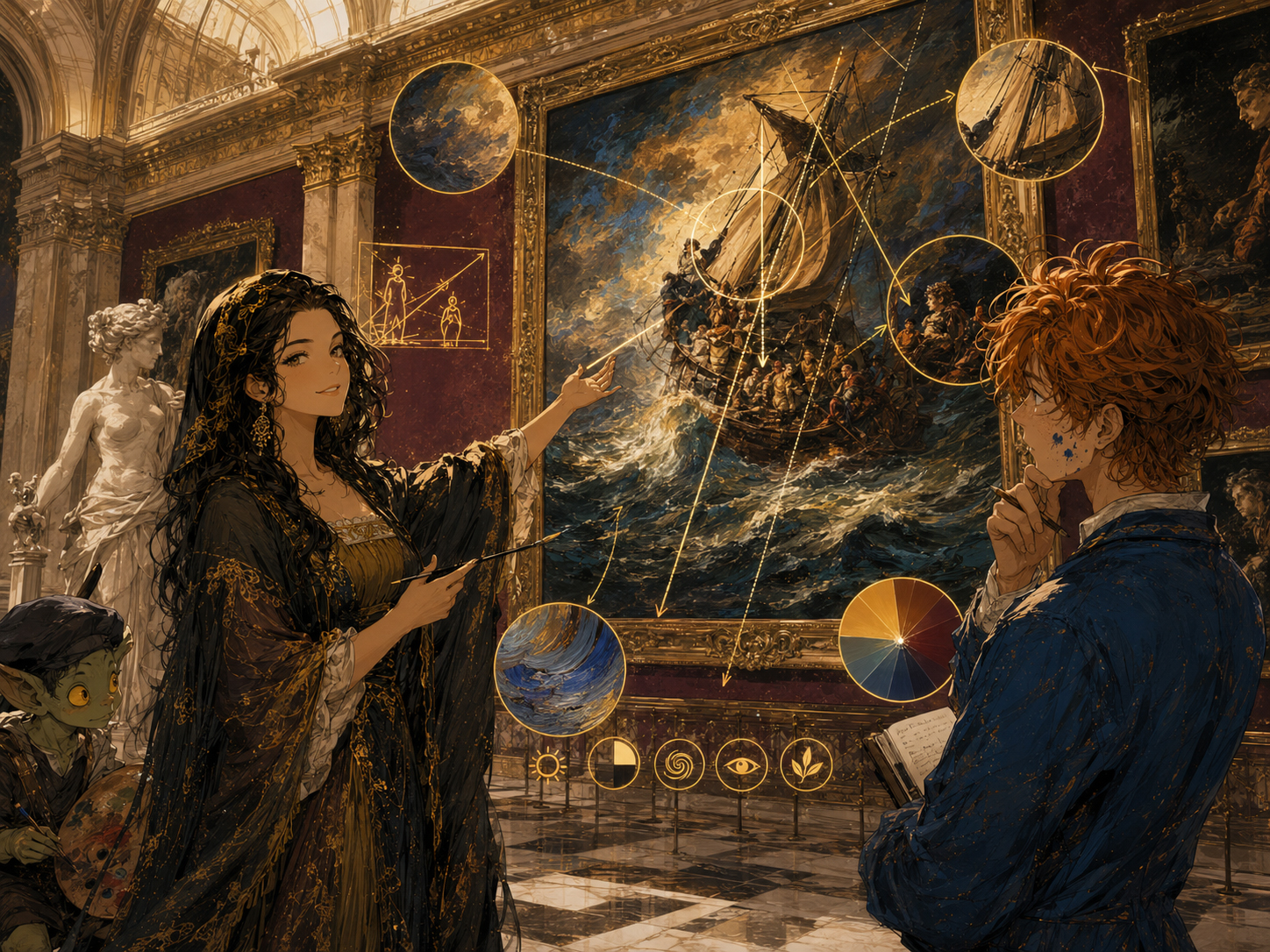
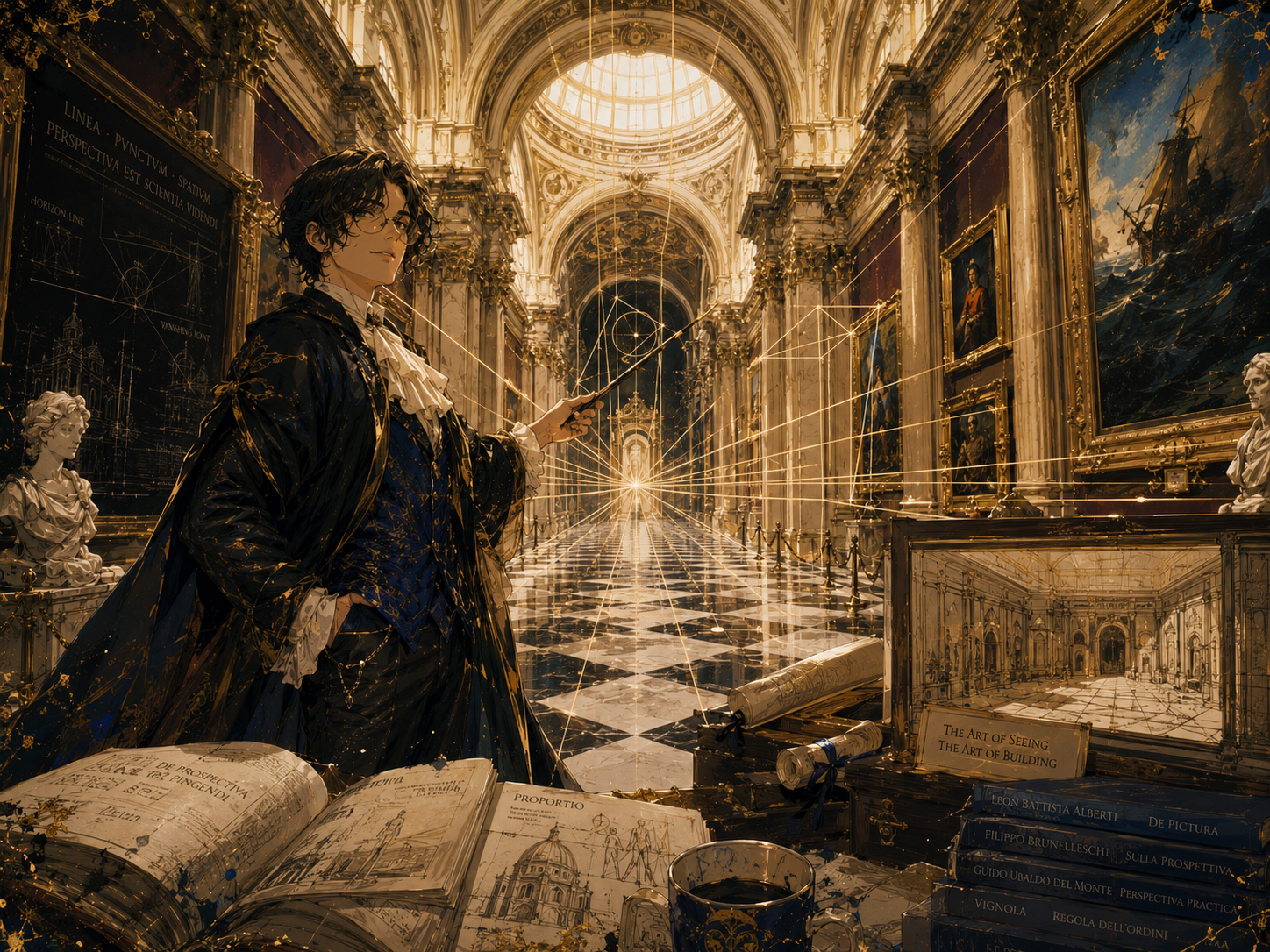
A painting can look natural while secretly being engineered. Artists use triangles, diagonals, circles, grids, frames, perspective lines, and repeated shapes to control the room. The trick is not to memorize formulas. The trick is to ask: how is this image holding itself together?
Perspective is especially powerful because it gives a flat surface the illusion of depth. Once you notice vanishing points, rooms stop being rooms and become machines for guiding attention.
Listen to color
Color is not decoration. It is temperature, rhythm, mood, symbol, and argument. Blue can feel sacred, cold, royal, melancholy, or infinite. Red can feel violent, luxurious, loving, dangerous, or alive. Yellow can be sunlight, sickness, gold, or joy.
Ask whether the colors feel natural or emotional. Impressionism often chases changing light. Post-Impressionism often pushes color toward feeling. Abstraction may let color become the main subject.
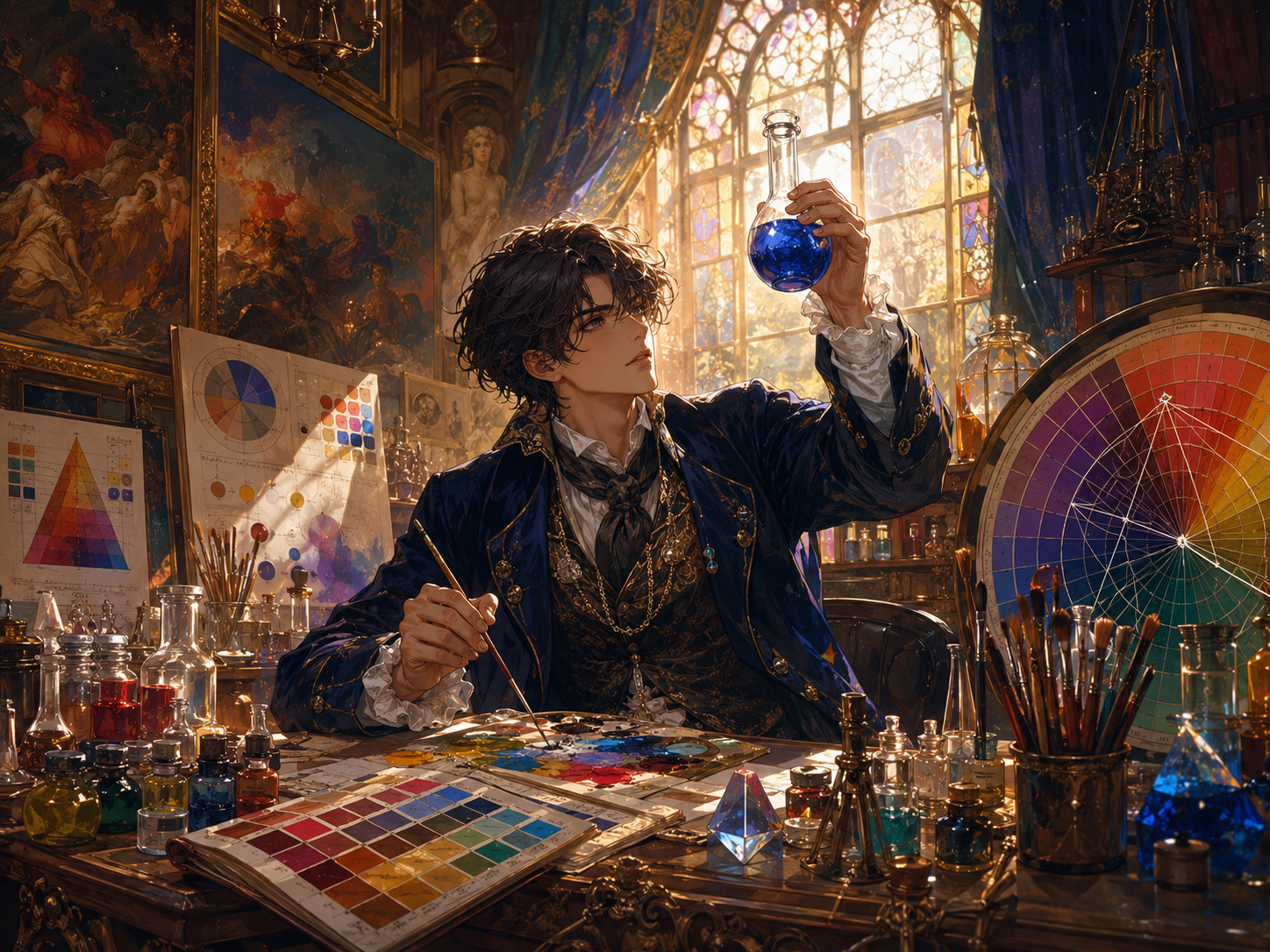
Color Theory
The palette is a laboratory, not a paint accident.
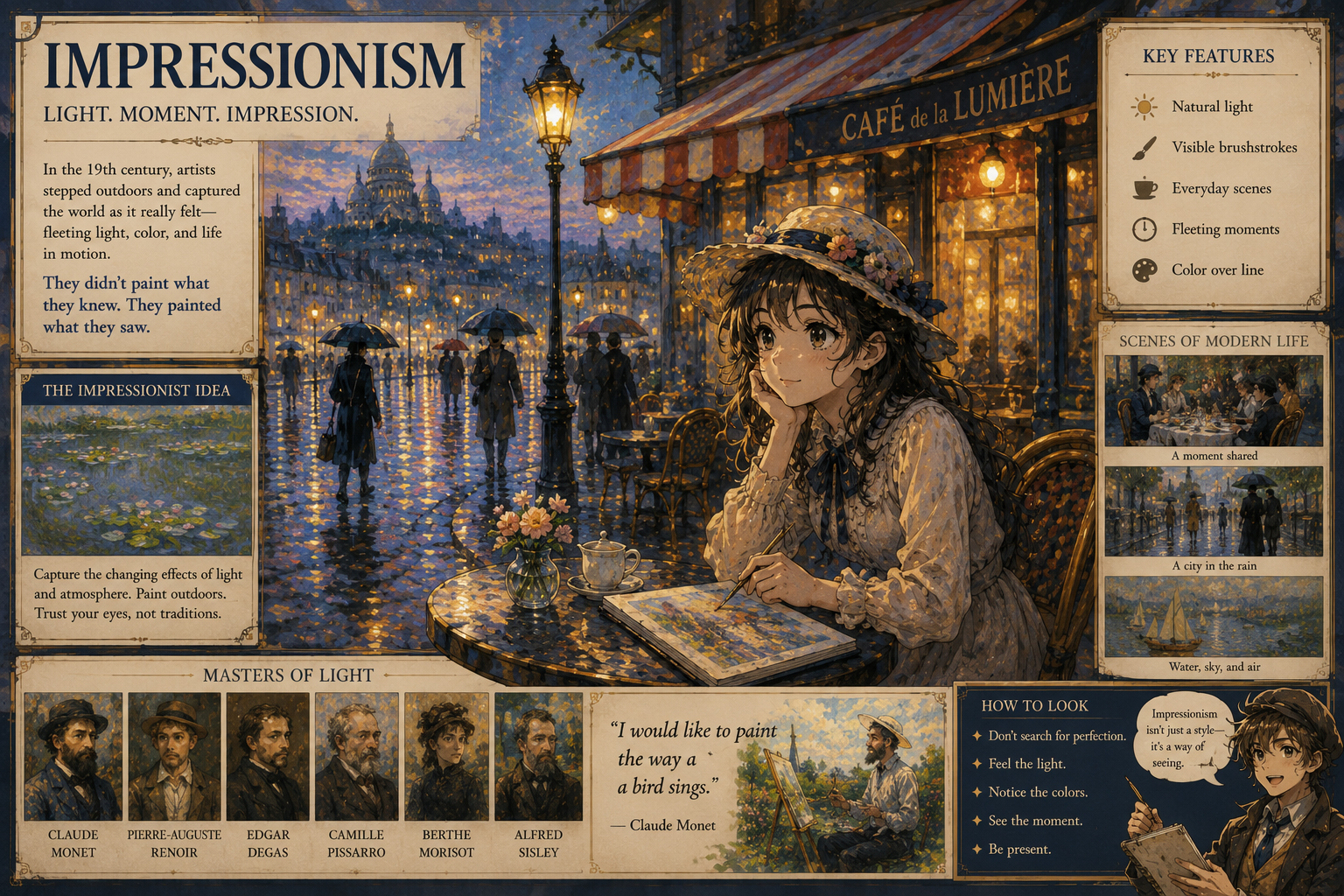
Impressionism
Light arrives, changes, and refuses to sit still.
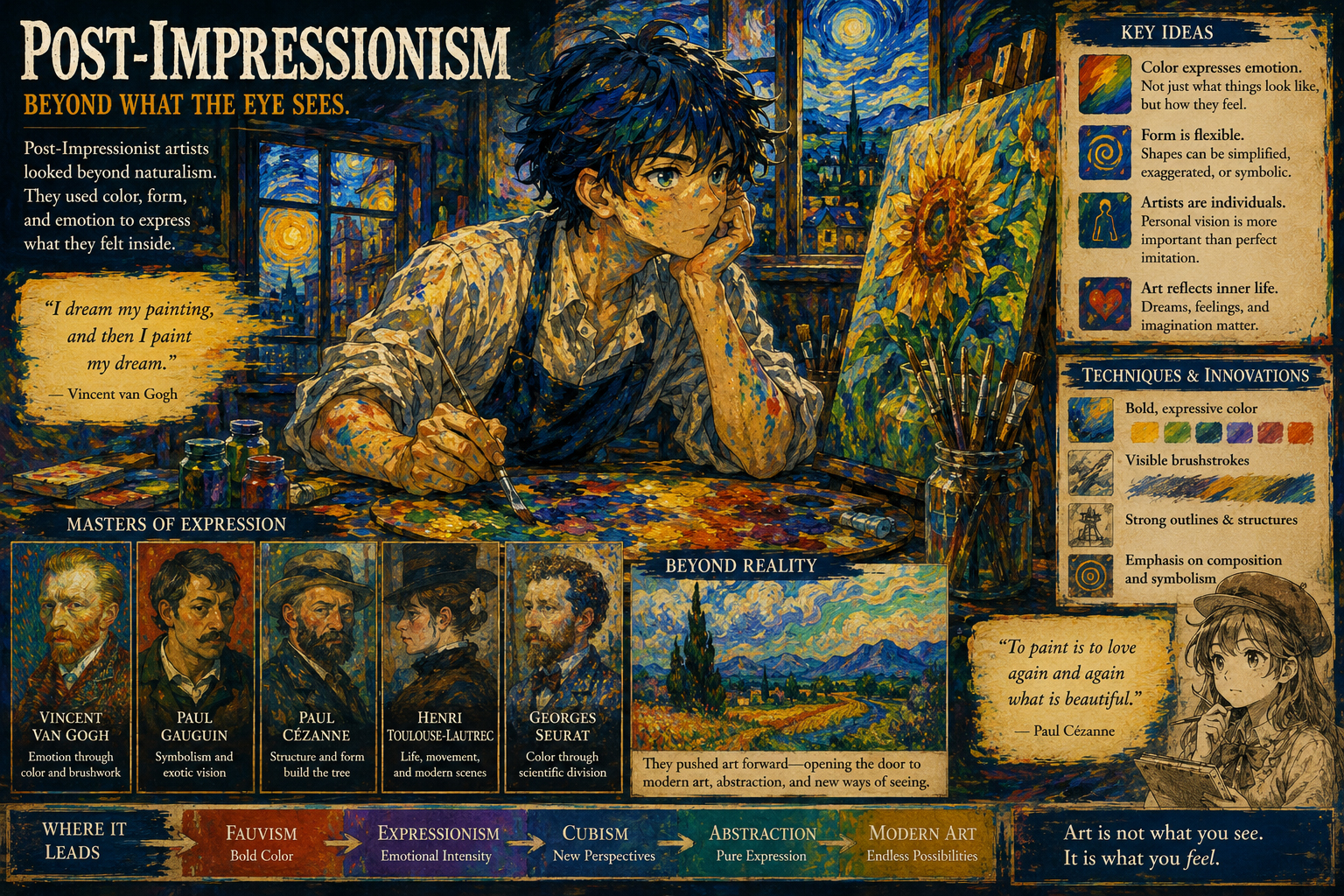
Post-Impressionism
Color stops reporting and starts confessing.
Hunt for symbols, but do not over-hunt
Art is full of clues: flowers, fruit, books, skulls, dogs, candles, mirrors, shells, halos, storms, windows, locked boxes, and letters. Some clues have long traditions. Some are personal. Some are just there because the painter liked them.
The safe method is simple: notice the symbol, ask what it usually means, then ask how it behaves in this specific picture.
FineArtDaily rule: a skull does not automatically mean “death” in every painting. It might mean time, vanity, scholarship, repentance, theater, or the artist being extremely dramatic before lunch.
Add context after looking
Context matters: who made it, who paid for it, where it was displayed, what religion or politics surrounded it, what materials were used, and what viewers at the time might have understood. But context should deepen looking, not replace it.
Start with your eyes, then bring in the wall label, the museum essay, the source, or the history book. That order keeps you honest.
Five questions that work almost anywhere
- What did I notice first, and why?
- What is the painting asking me to feel?
- What detail seems too specific to be accidental?
- Where is the light, and what does it reward?
- What would disappear if one object, figure, or color were removed?
Museum manners that help
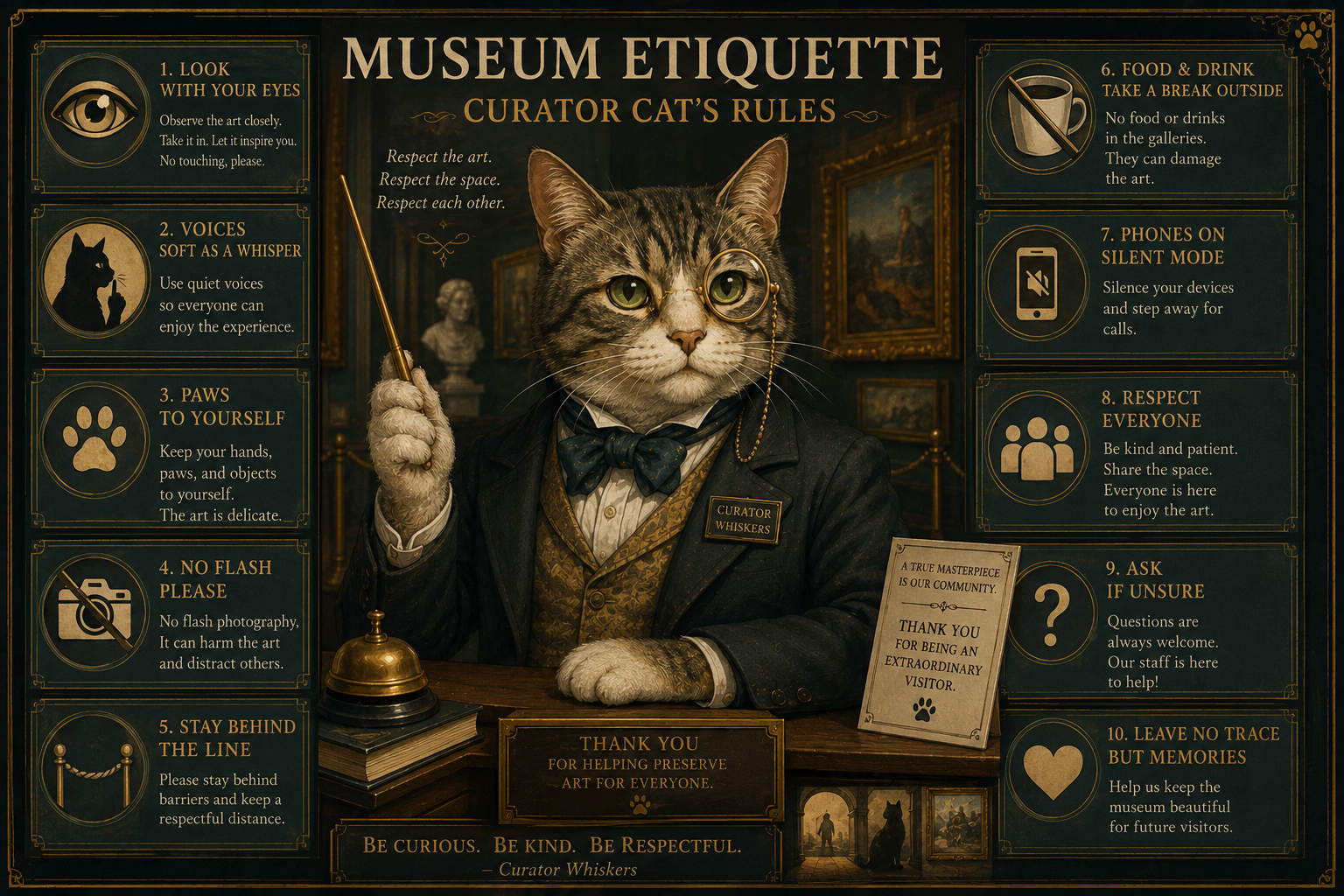
Give the work a little time. Step close enough to see brushwork, then step back enough to see structure. Read the label after you have formed one honest observation. Do not block the painting forever. Do not touch the art. Curator Cat is watching.