FineArtDaily field note
What Impressionism is
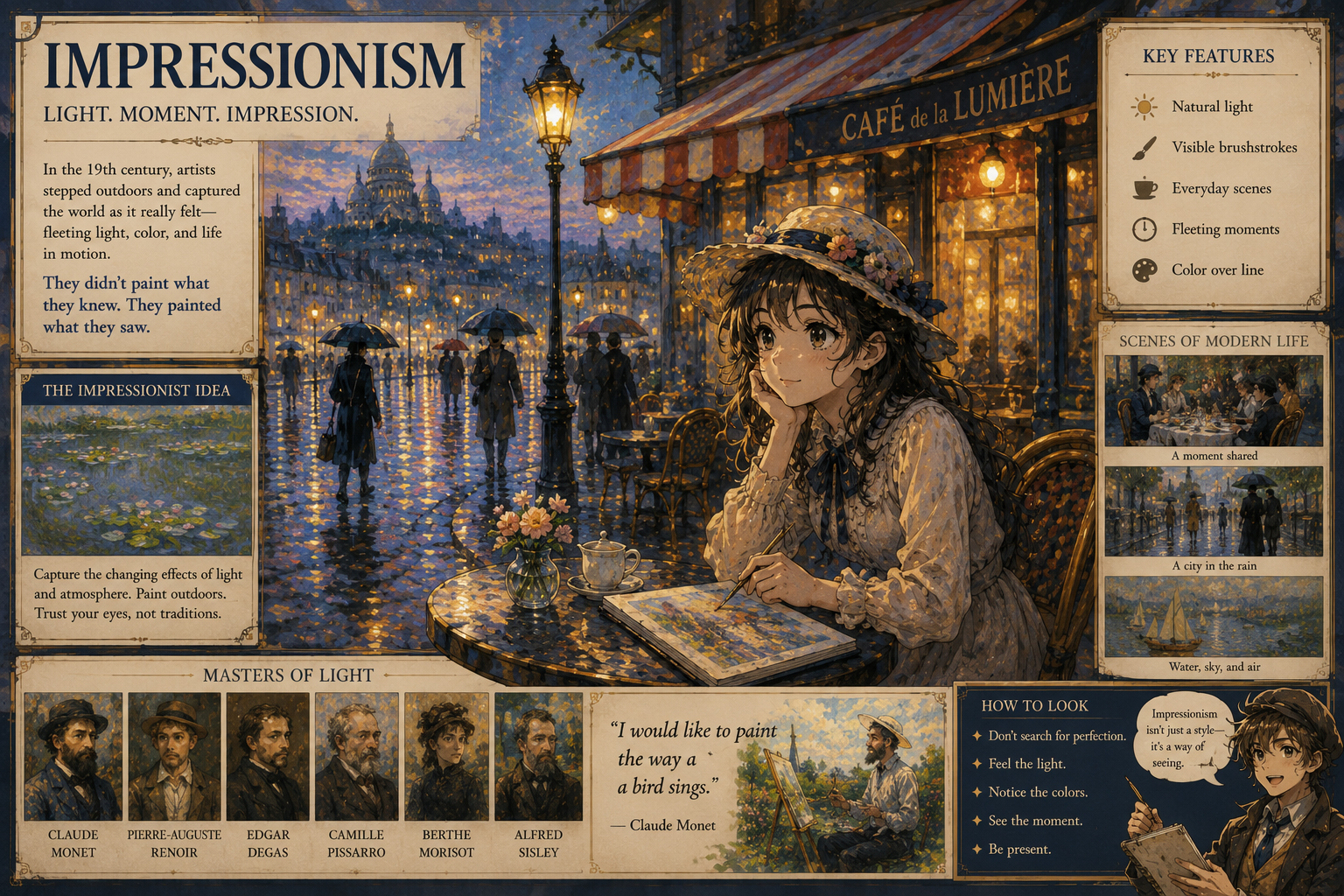
Impressionism is a late nineteenth-century movement built around visible brushwork, bright color, modern subjects, outdoor painting, and the feeling of a moment caught before it changes. It is less interested in polished academic finish and more interested in what the eye experiences right now.
Why it shocked people
To viewers trained on smooth salon painting, Impressionist works looked sketchy, too bright, too ordinary, and too casual. The subjects were not always grand myths or royal dramas. They were train stations, riverbanks, dancers, gardens, café tables, boating parties, women reading, children playing, and weather doing whatever weather does.
The scandal was not only style. It was attention. Impressionism declared that modern life was worth painting.
How to look at an Impressionist painting
- Step back first. Let the colors blend in your eyes instead of inspecting every brushstroke immediately.
- Find the light source. Ask what time of day it feels like: morning, noon, dusk, lamp-lit evening, rainy afternoon.
- Look for edges that dissolve. Impressionism often softens outlines because light does not respect borders.
- Notice the ordinary subject. The movement turns daily life into an event.
- Move closer last. Up close, the image may break into strokes, dabs, and color decisions. That is the trick.
Color: the real main character
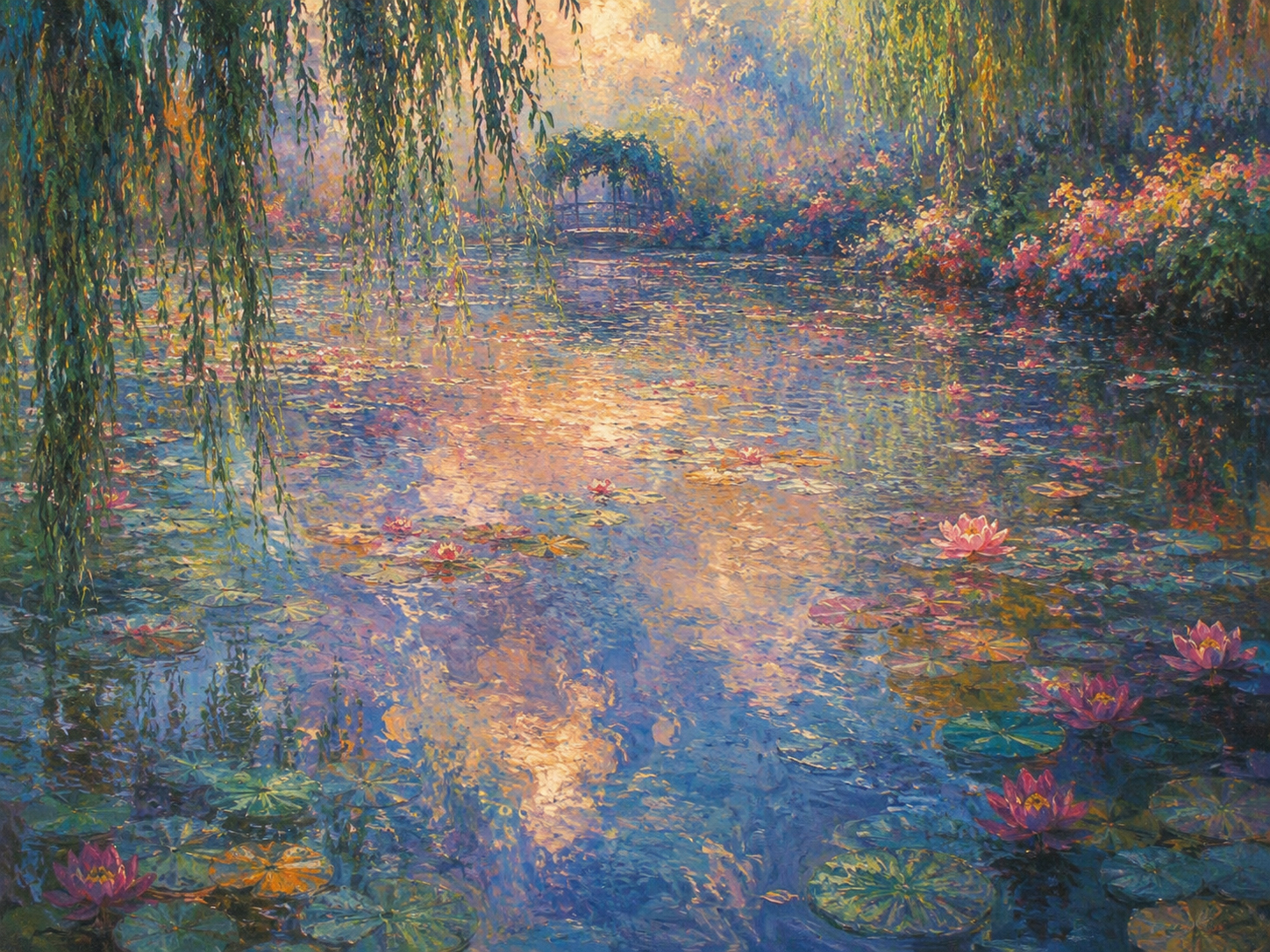
Impressionist color is not just decoration. It is structure. Shadows can be violet or blue. Snow can contain pink, yellow, gray, and lavender. Water can be a mirror, a mosaic, or a broken window of sky.
Reflections do not behave
Water lets Impressionism show color as movement rather than fixed local color.
Dots become air
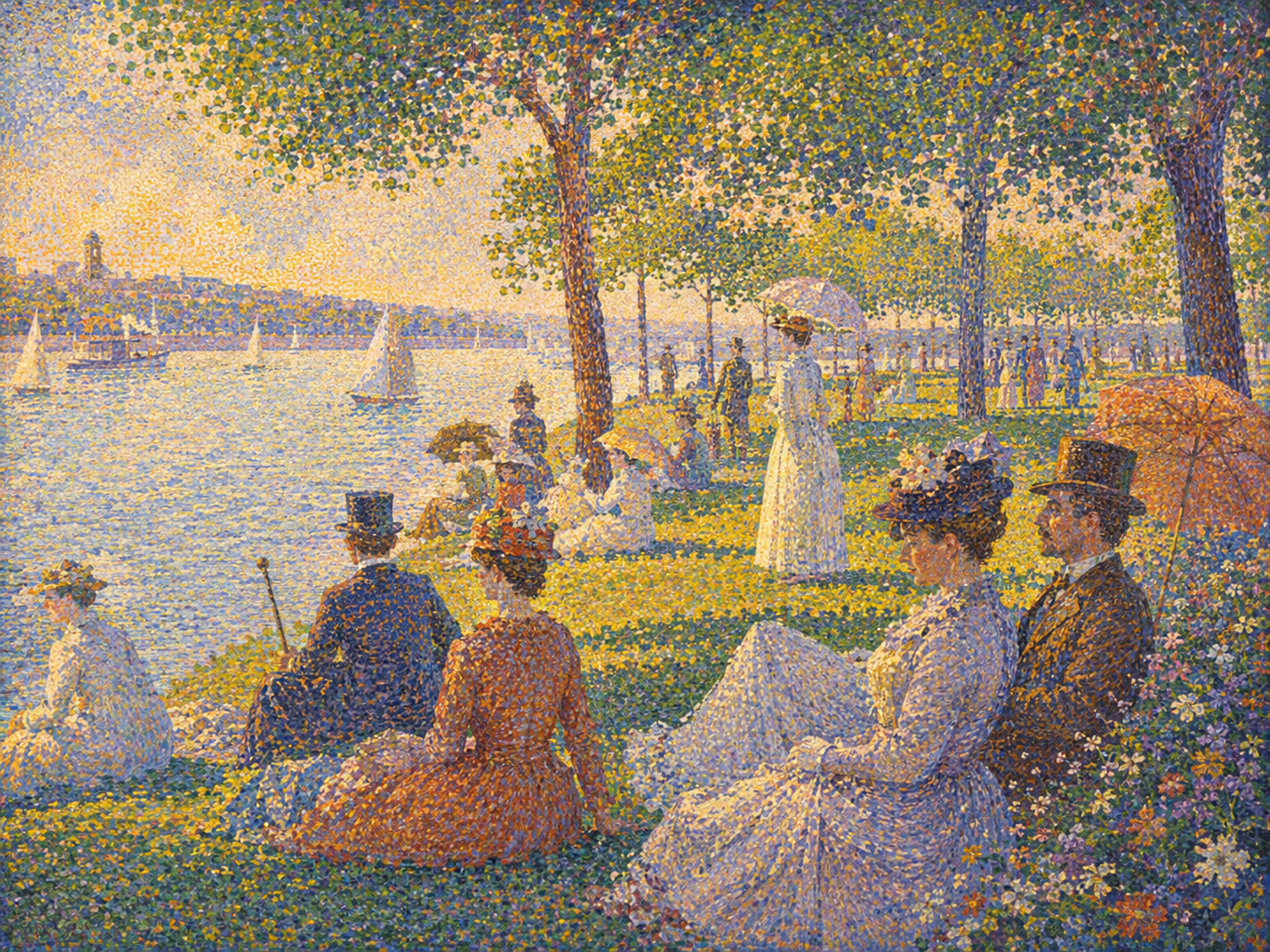
Post-Impressionist and pointillist experiments grow out of the same obsession: how color reaches the eye.
Names to know
Claude Monet pursued changing light across water, gardens, haystacks, fog, and cathedral façades. Pierre-Auguste Renoir brought warmth, social scenes, and human glow. Edgar Degas studied dancers, movement, cropping, and modern composition. Berthe Morisot and Mary Cassatt brought domestic life, women’s experience, and intimate modern observation into the center of the movement.
FineArtDaily rule: do not reduce Impressionism to pretty gardens. It is also speed, city life, changing technology, new leisure, new seeing, and the shock of painting the world as it felt rather than as tradition said it should look.
The manga version
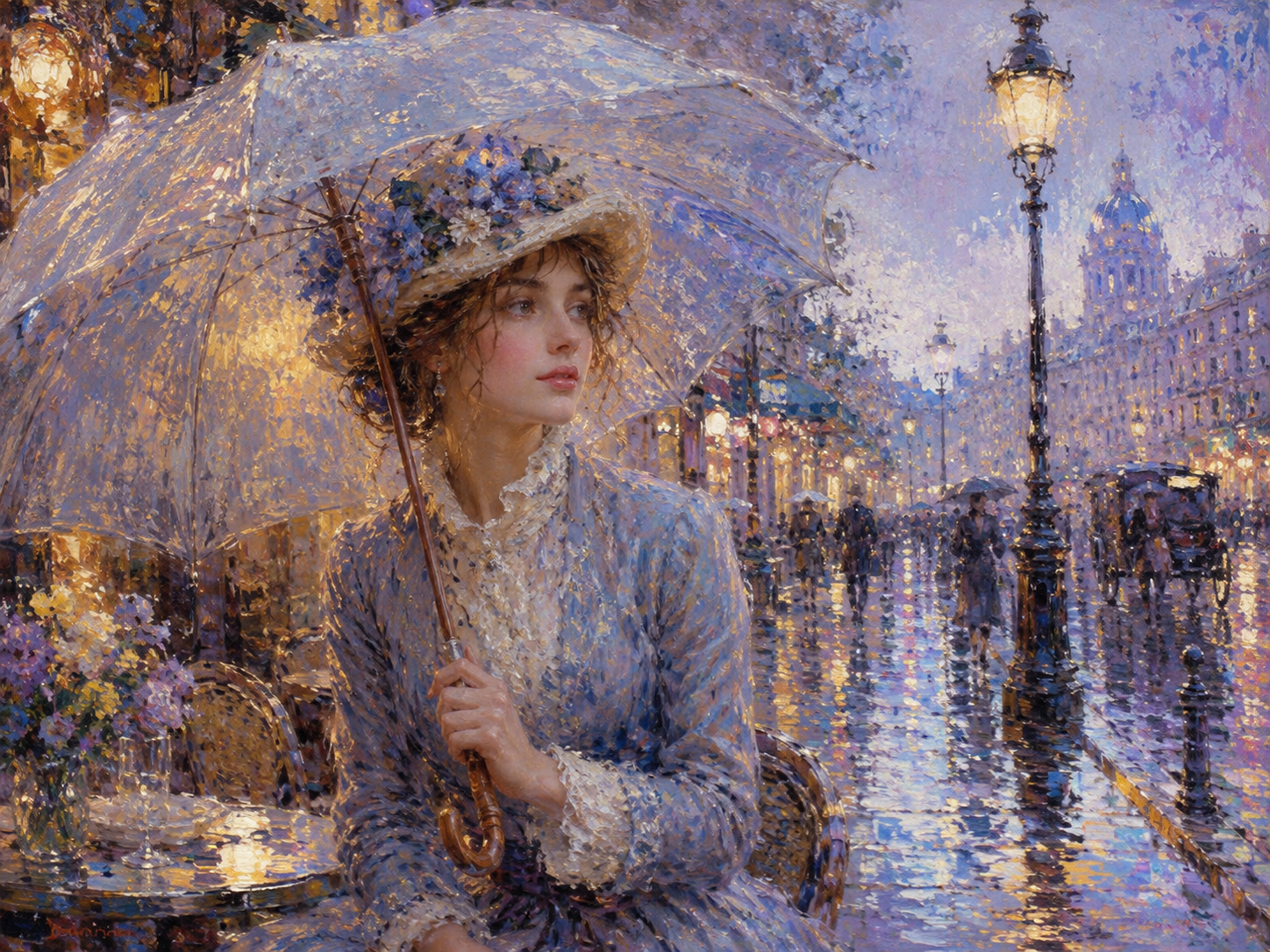
On FineArtDaily, Impressionism becomes a rain-lit café world where the Impressionist Rain Girl carries a sketchbook through puddles, steam, umbrellas, gas lamps, and moving crowds. She is not chasing perfect outlines. She is chasing the exact second before the reflection disappears.
Impressionist Rain Girl
Her superpower is seeing color in gray weather.

Palette Laboratory
Where shadows stop being black and start causing arguments.
Quick test: is it Impressionist?
Ask these questions:
- Does the image care more about light than outline?
- Does the brushwork remain visible?
- Does the scene feel temporary, like weather or motion could change it?
- Is the subject modern, ordinary, outdoor, social, or fleeting?
- Do colors mix in your eye rather than being fully blended on the canvas?
If yes, you are probably standing in Impressionist territory — or just across the border, where Post-Impressionism starts making louder emotional demands.
Next museum rooms
After Impressionism, follow the brush into more emotional color, stranger structure, and modern art breaking the frame.