FineArtDaily field guide
What makes Renaissance art feel Renaissance?
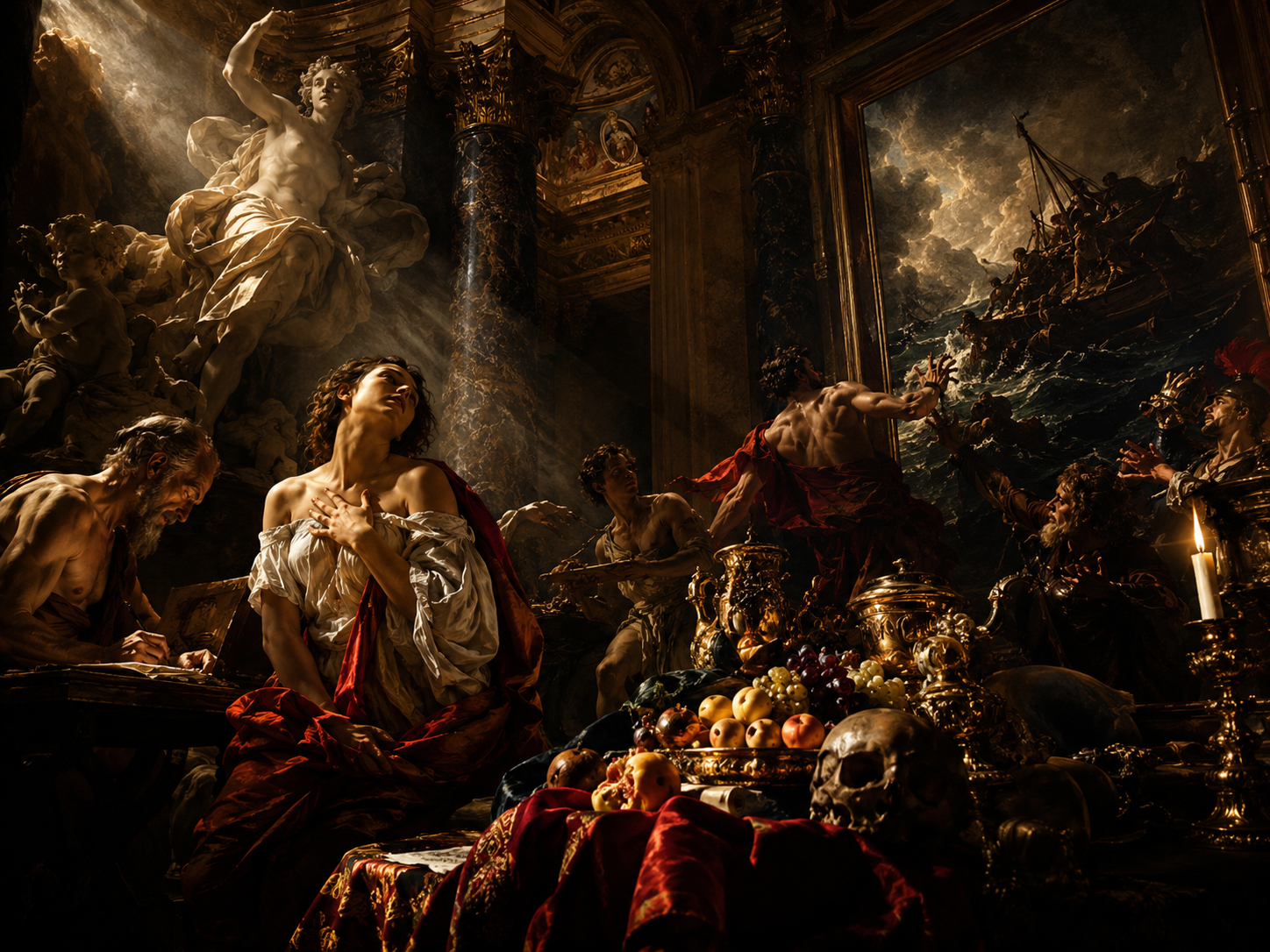
Renaissance art often feels calm, balanced, and intelligent because artists were trying to make visible things obey visible rules. A room has depth. A figure has weight. A face has psychology. A story has a stage. Even heaven starts to look architecturally organized.
1. Perspective turns the wall into a world
Linear perspective is the big magic trick. Parallel lines appear to meet at a vanishing point, so the viewer feels as if they are looking into a believable space. Floors, ceilings, columns, streets, and tables become visual machines.
Professor Perspective would explain it this way: the painting is no longer just decorated surface. It is a little universe with rules.
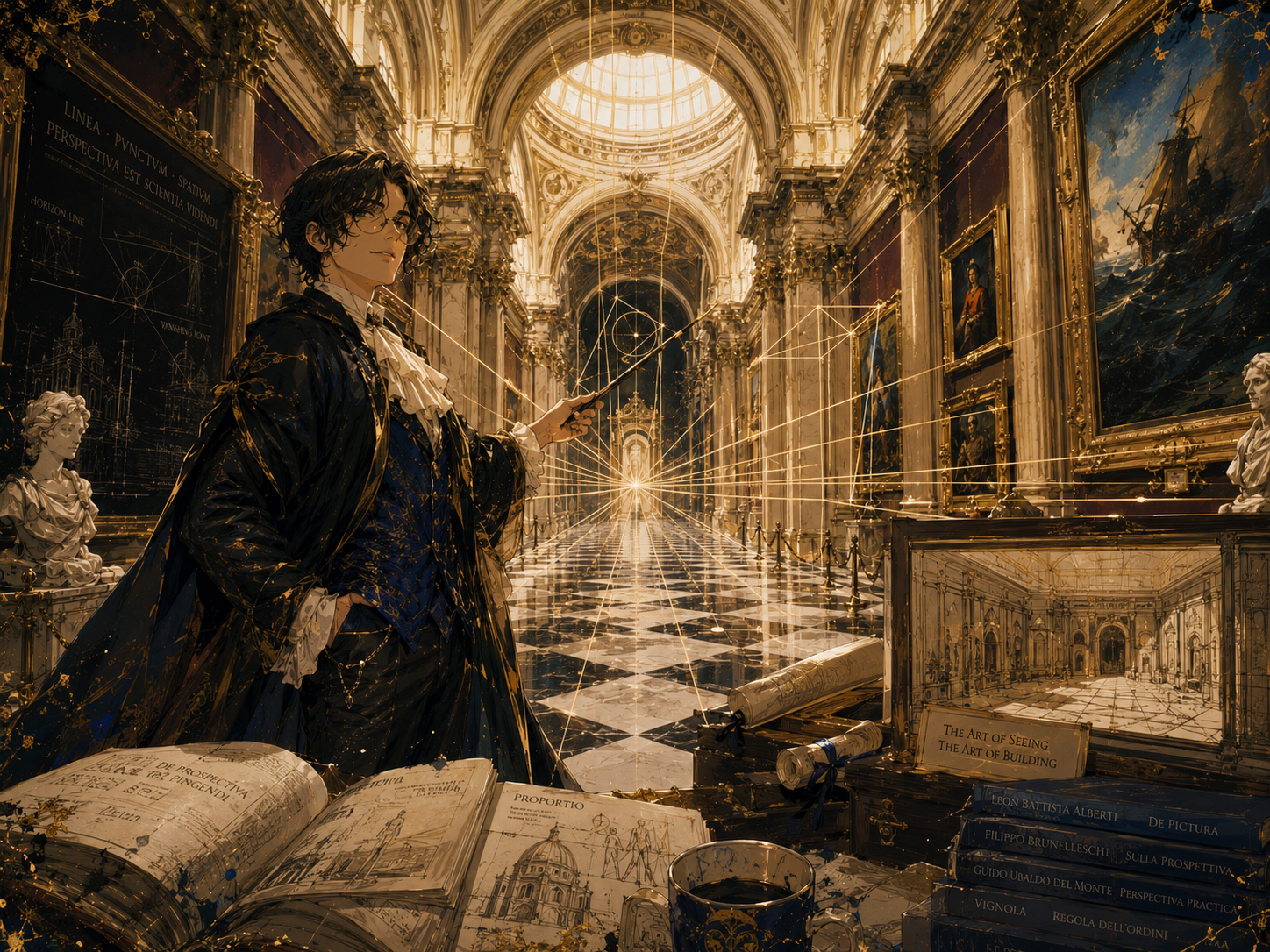
Professor Perspective
The guide to depth, diagonals, horizon lines, and why Renaissance rooms suddenly behave.
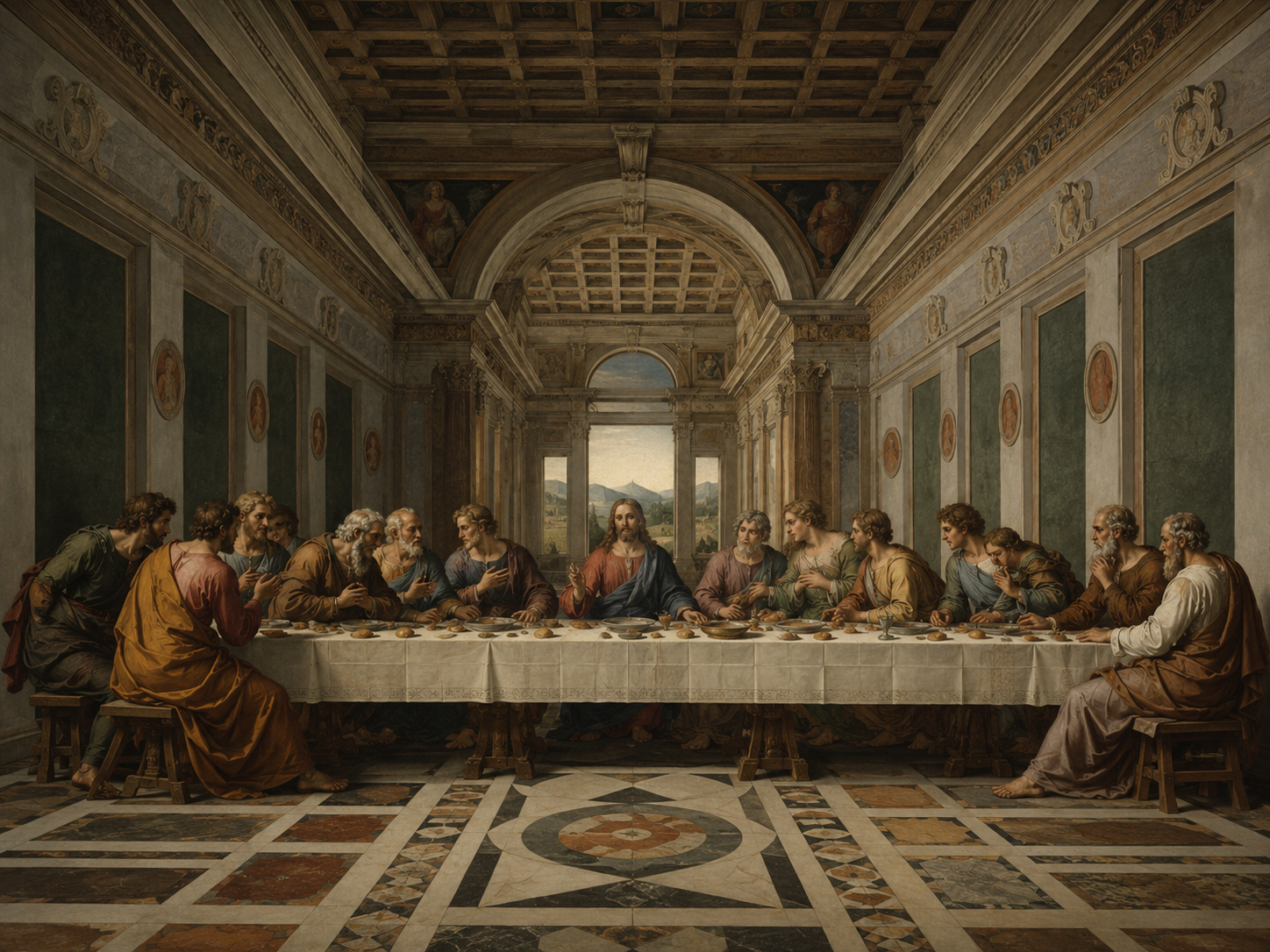
The room becomes a stage
Renaissance compositions often use architecture to aim your eye toward the emotional center.
2. Humanism puts people back at the center
Humanism did not mean “no religion.” It meant human beings mattered: their bodies, choices, intelligence, beauty, and emotions. Artists studied anatomy, gesture, proportion, and facial expression because people were no longer just symbolic placeholders.
That is why Renaissance figures often feel sculptural. They occupy space. They turn, lean, think, worry, bless, argue, and sometimes stare at you as if you just interrupted a very expensive commission.
3. Classical ideas return with fresh paint
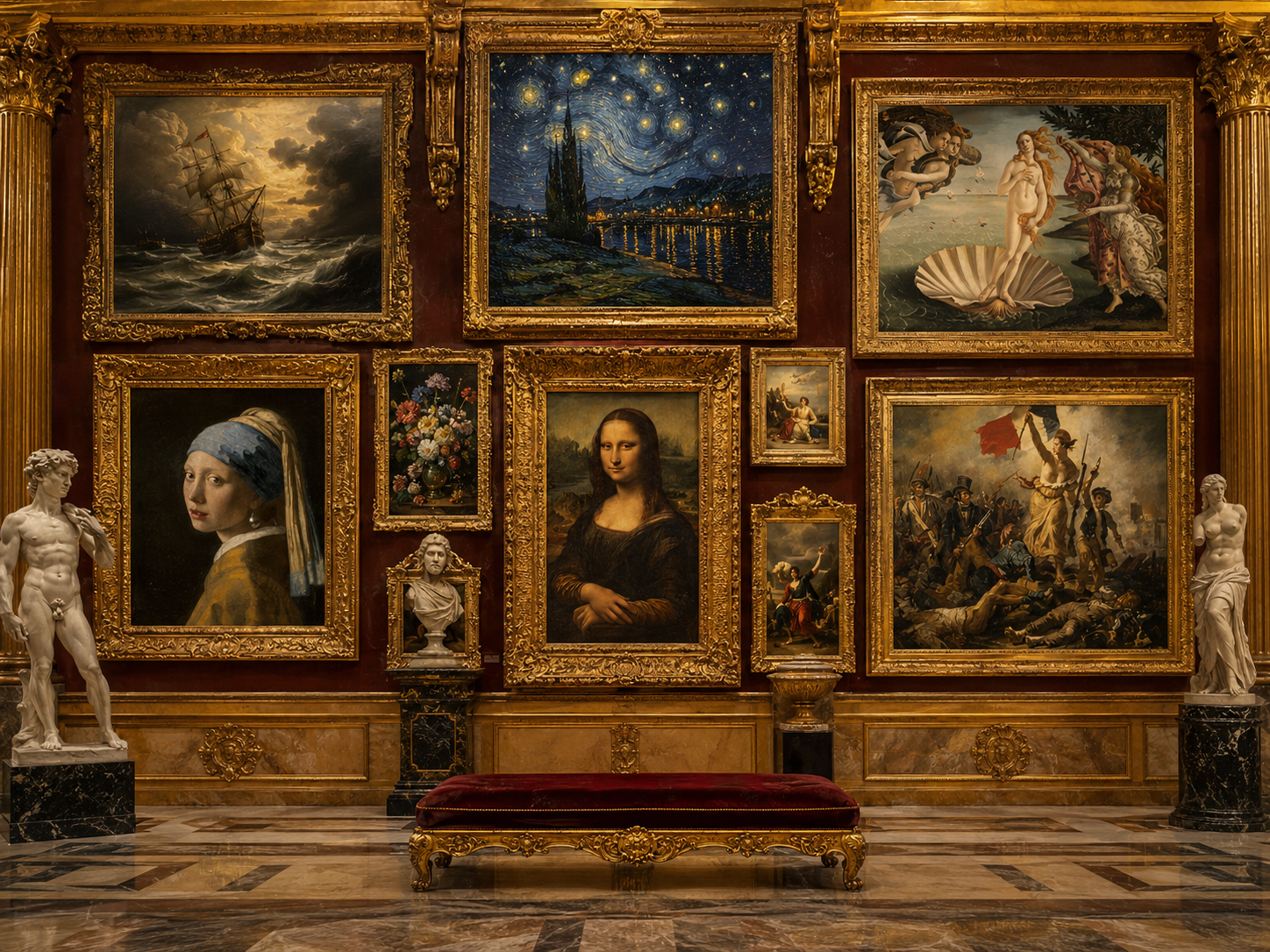
Artists and patrons looked back to ancient Greece and Rome for proportion, architecture, mythology, and ideals of beauty. Columns, arches, domes, marble bodies, mythic scenes, and balanced compositions all helped create the Renaissance mood: ancient order, newly alive.
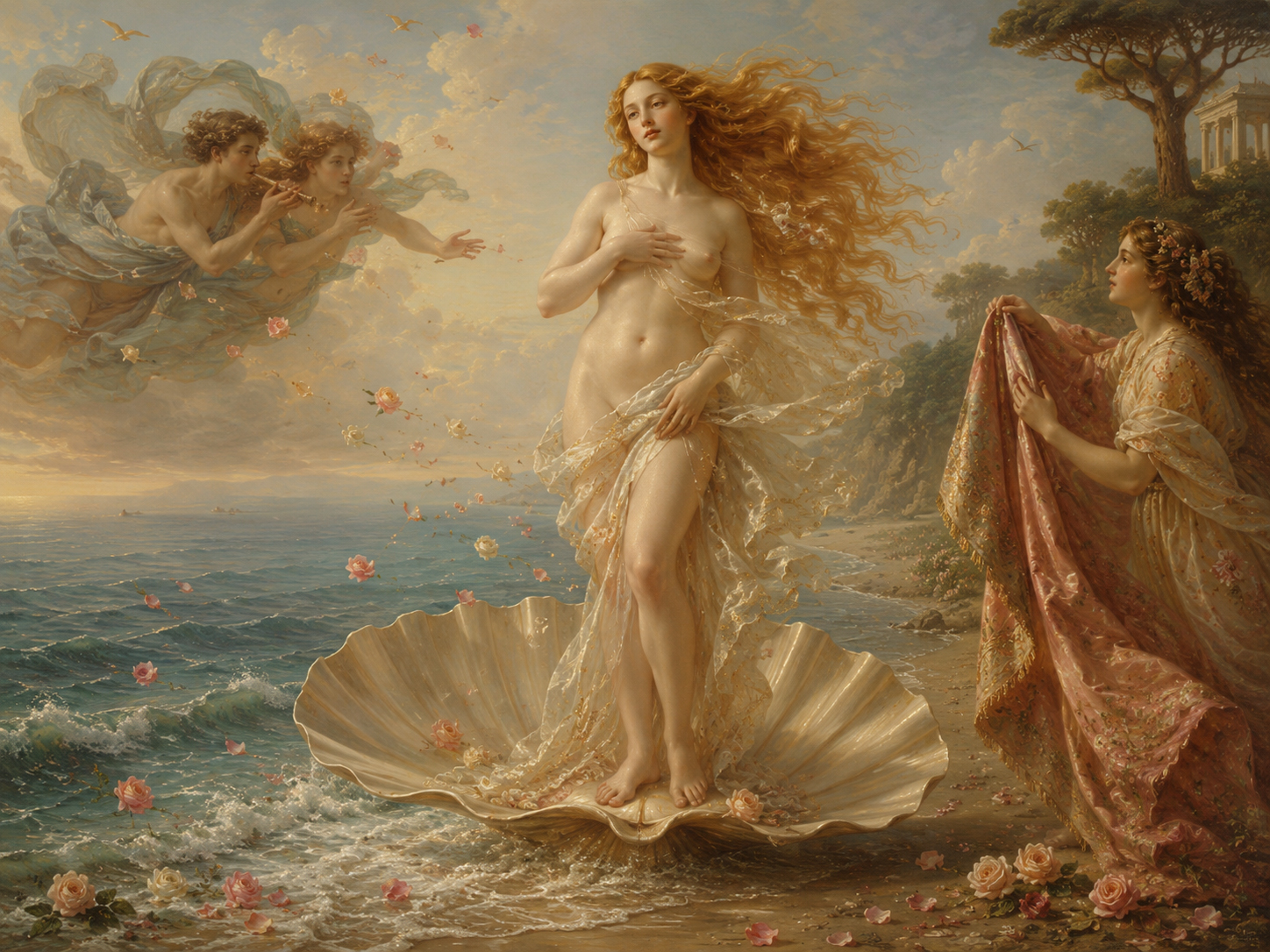
Myth enters the gallery
Classical stories became a major source of visual drama and beauty.
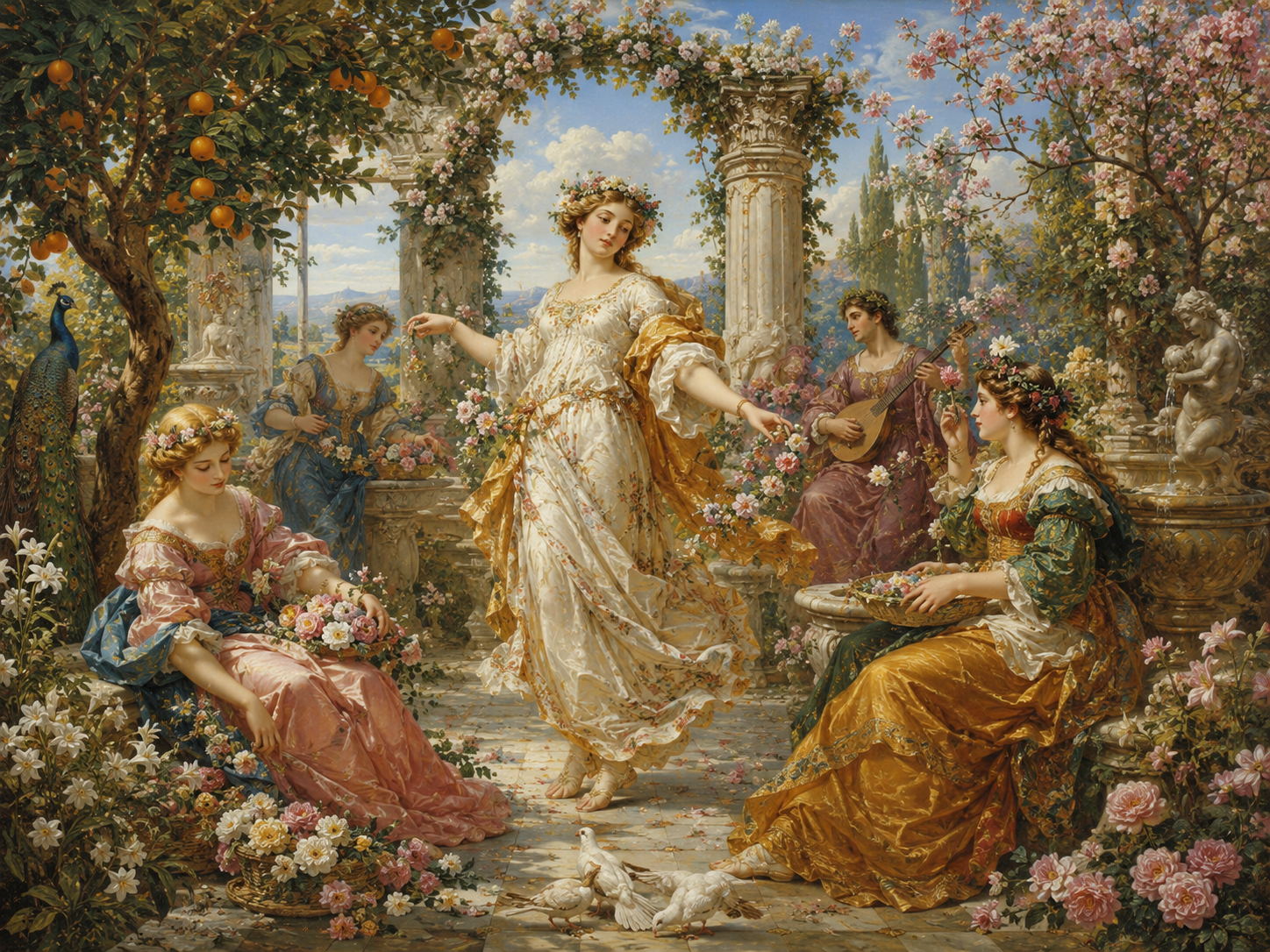
Allegory blooms
Renaissance images often hide philosophy inside flowers, seasons, and graceful figures.
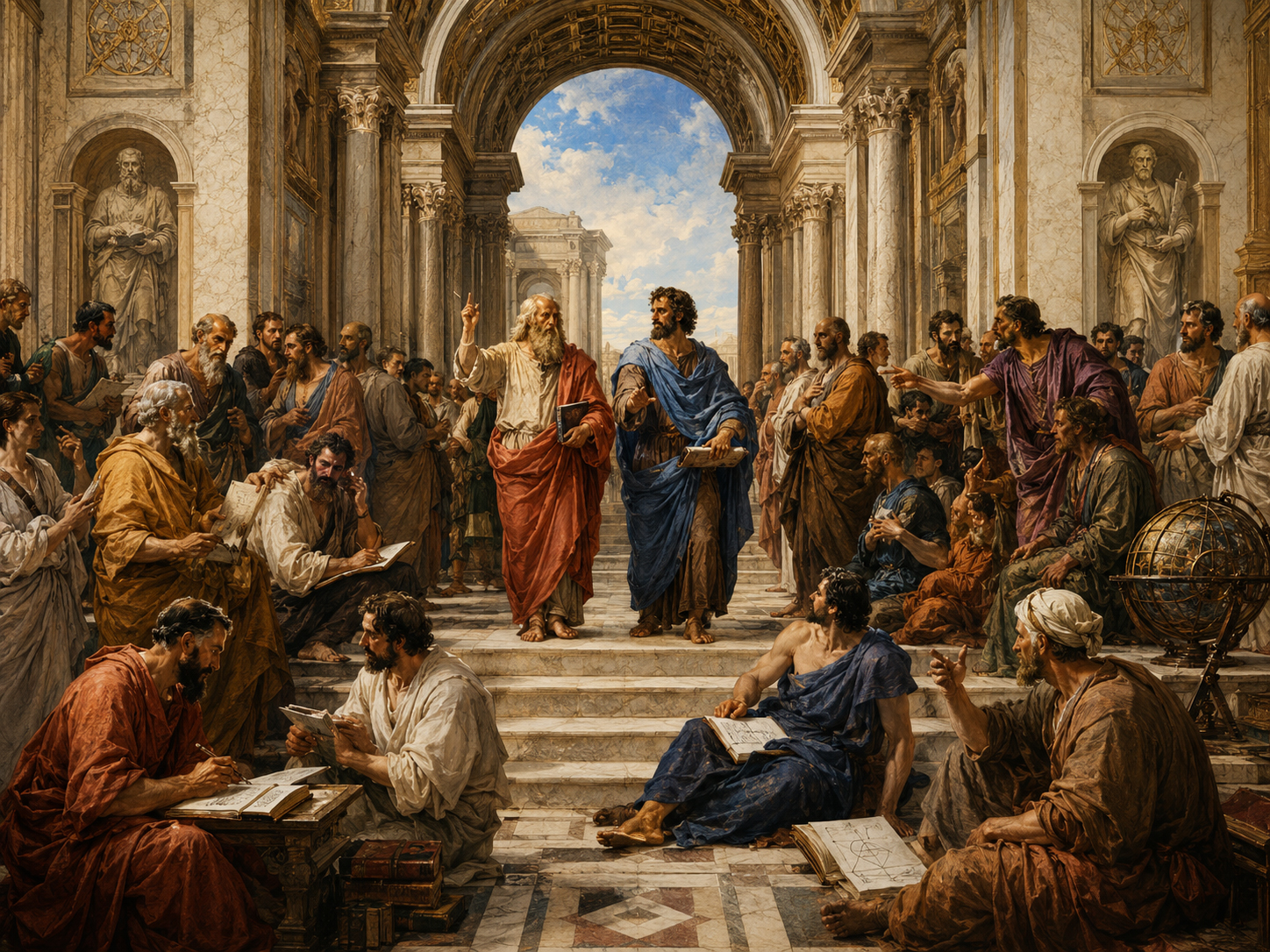
Ideas get architecture
Philosophy, geometry, and argument become part of the visual spectacle.
4. The workshop was the engine
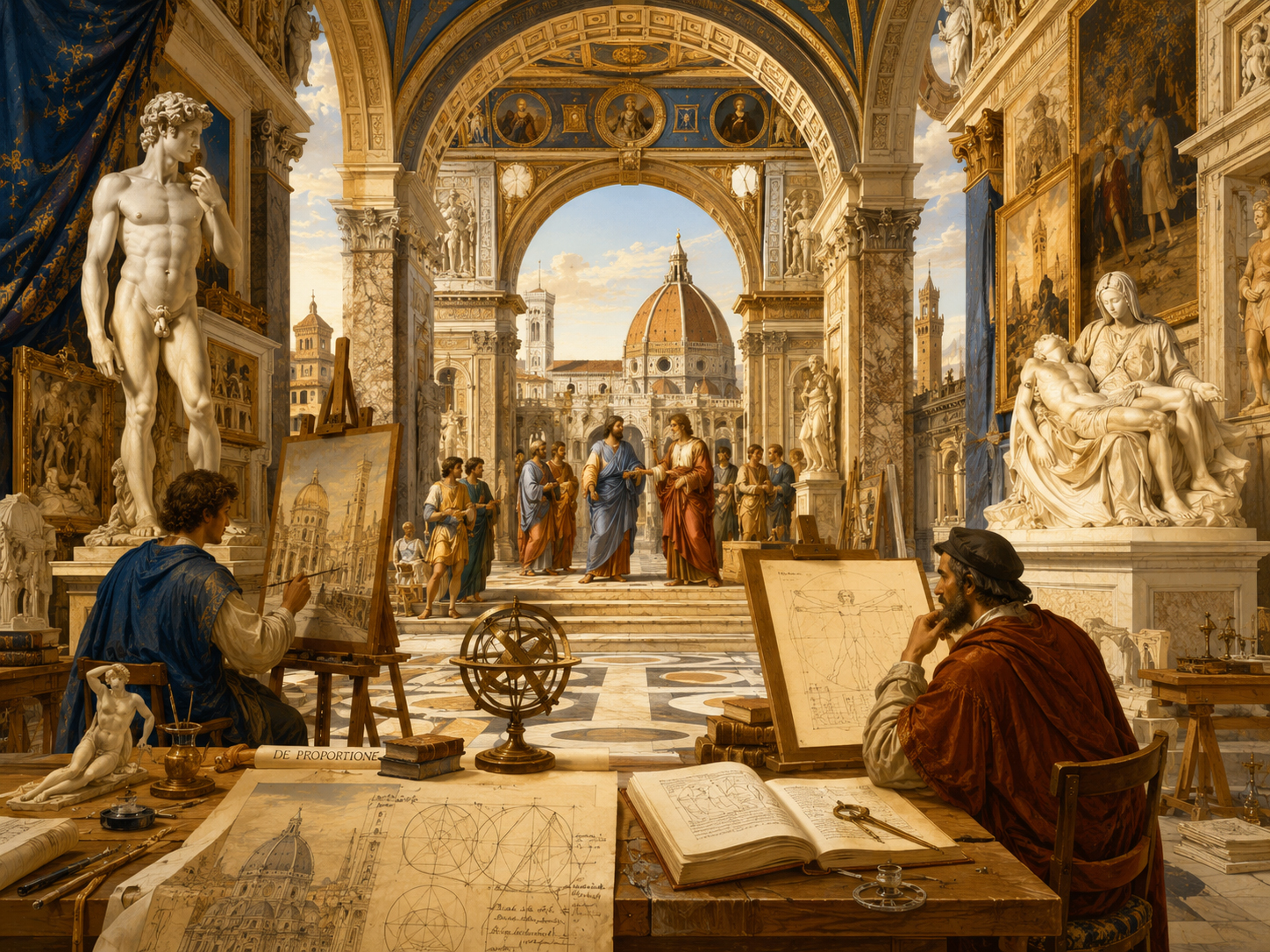
The Renaissance masterpiece was rarely a lonely lightning bolt. It often came from a workshop world: apprentices grinding pigments, assistants preparing panels, masters drawing cartoons, patrons negotiating changes, and everyone trying not to ruin the expensive ultramarine.
FineArtDaily’s Renaissance Angel Intern lives here: half helper, half messenger, always carrying a brush, a geometry tool, and the panic of a deadline.
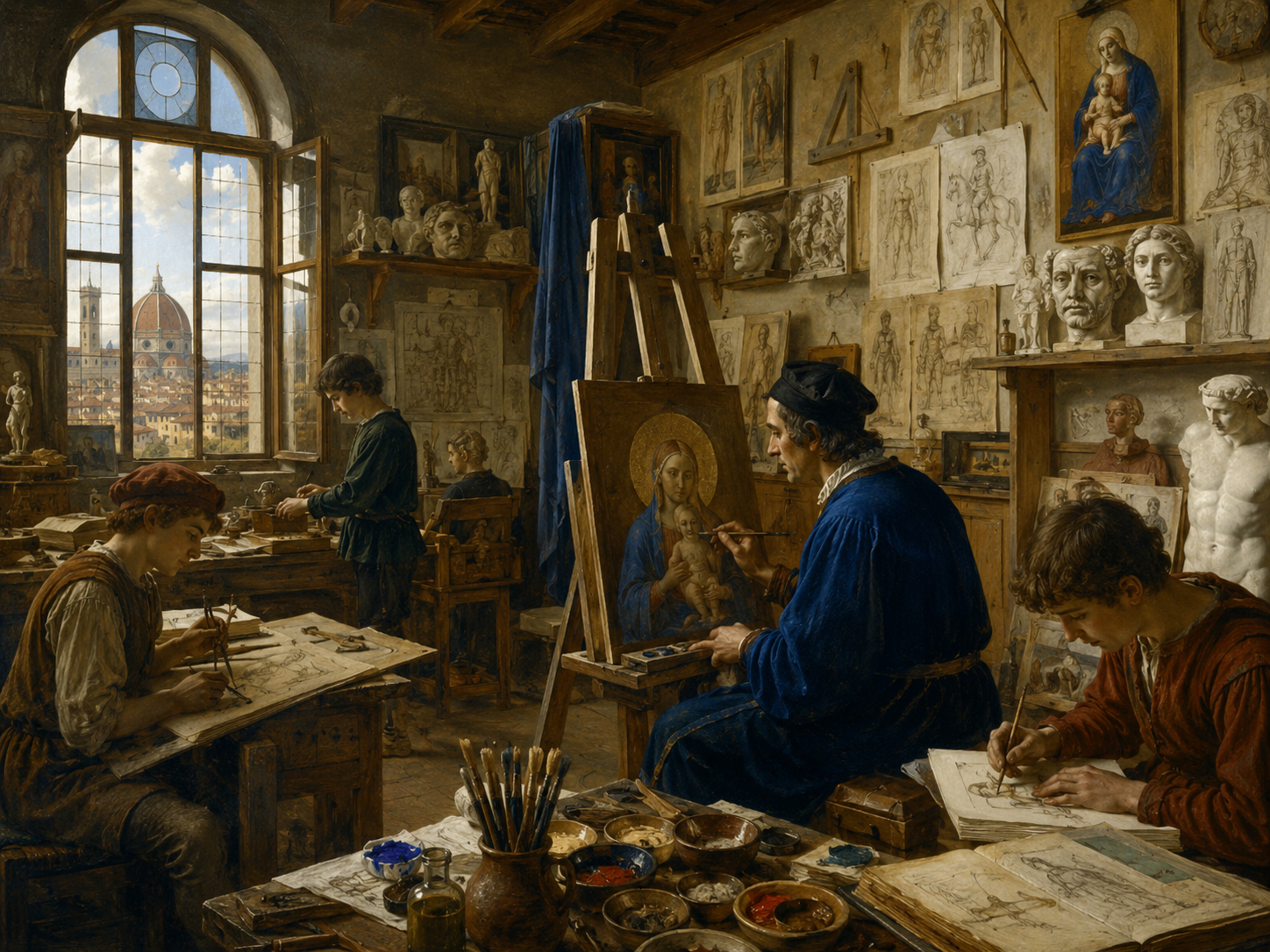
Early Renaissance workshop
Drawings, pigments, apprentices, commissions, and the machinery behind beauty.
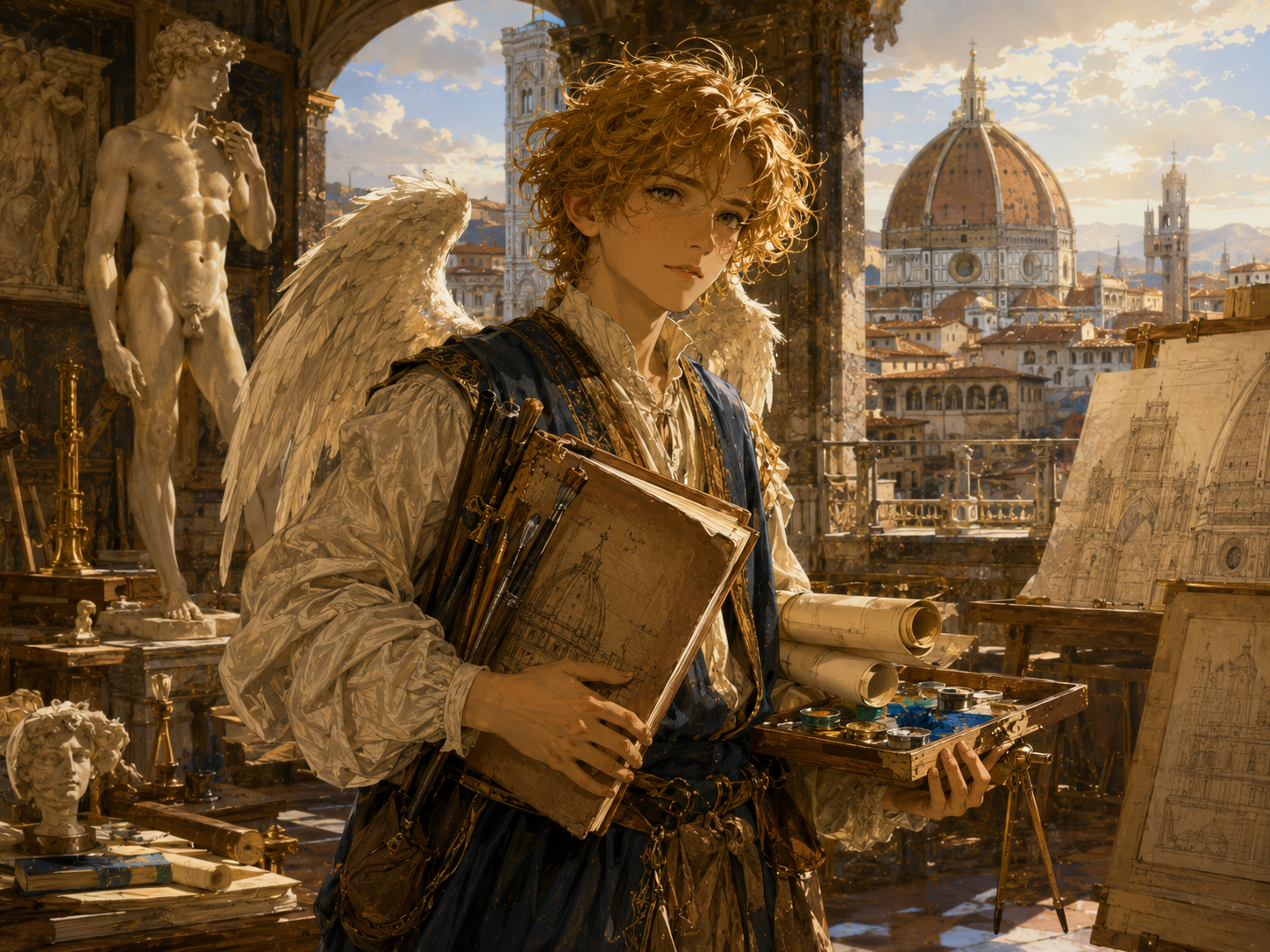
Renaissance Angel Intern
Knows where the brushes are. Does not know why the patron changed the deadline.
5. The famous names are famous for reasons
Leonardo turned observation into mystery. Michelangelo made bodies feel like geological forces. Raphael made composition look effortless. Botticelli made line and myth feel like music. But the Renaissance was bigger than any one genius: it was a network of cities, patrons, workshops, arguments, materials, and experiments.
Quick museum test
When you see a Renaissance work, ask four questions: Where is the vanishing point? How does the body occupy space? What classical or religious story is being staged? Who paid for this image, and what did they want it to say?
Why it still matters
Renaissance art still shapes how people imagine beauty, genius, realism, museums, and “masterpieces.” Even when modern art rebels against it, the rebellion often begins here. The Renaissance is the grand old rulebook — and sometimes the best way to understand later art is to watch later artists break that rulebook on purpose.