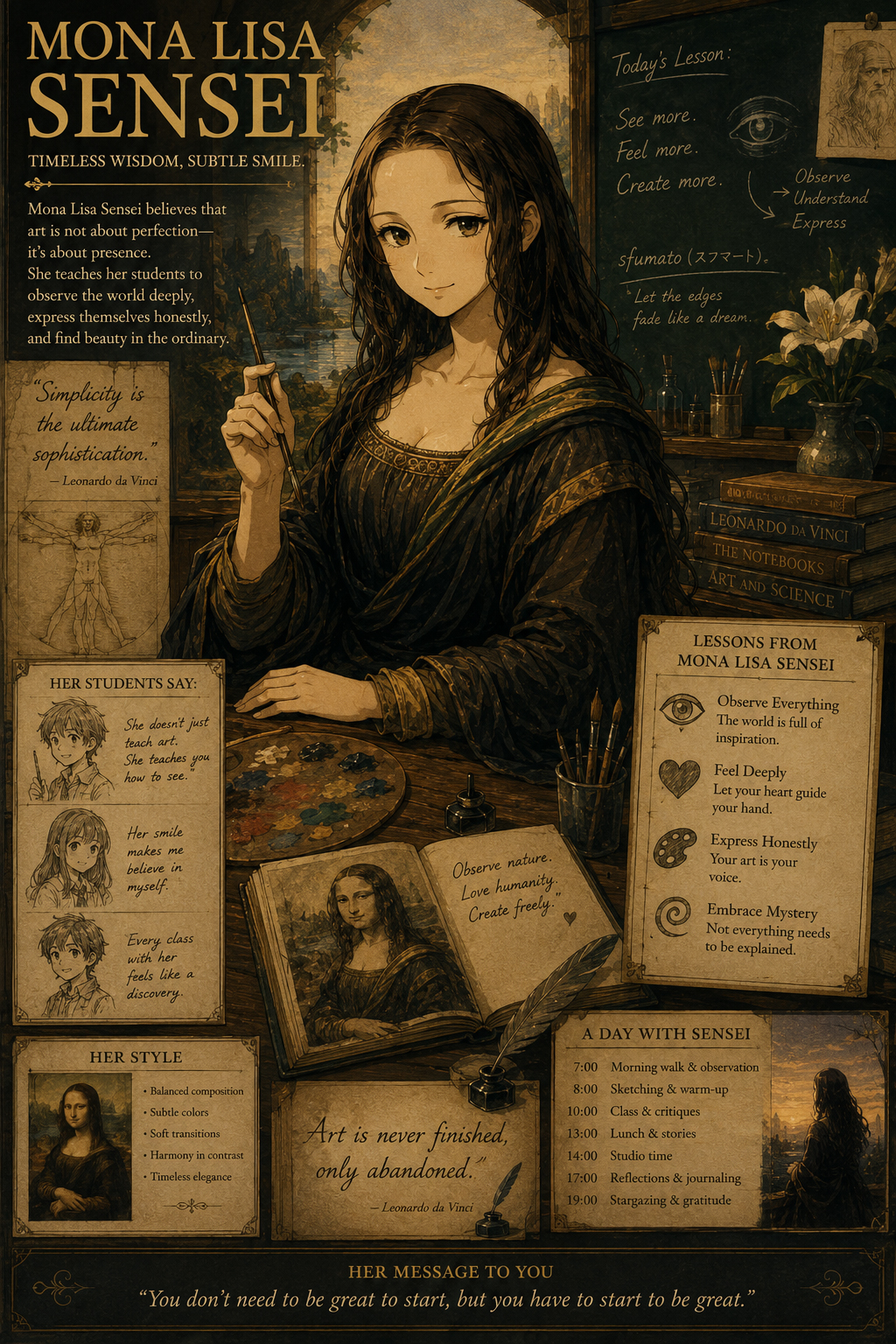
FineArtDaily cast
The teacher who does not over-explain.
Mona Lisa Sensei appears whenever visitors try to solve a painting like a crossword puzzle. She does not shout. She does not give instant answers. She lets the room get quiet until the details begin speaking for themselves.
Her main lesson is simple: the best paintings do not always reward speed. They reward attention. A face, a hand, a shadow, a background path, a small turn of the mouth, or a strange bit of atmosphere can change what the whole image means.
Profile card
Official title
Senior Sensei of Ambiguity, Portrait Psychology, Soft Backgrounds, and Museum Silence.
Signature move
The half-smile pause: a devastating technique that makes impatient viewers notice what they skipped.
Favorite question
“What did you see first — and what did you only notice after slowing down?”
Natural enemy
Anyone who says, “I get it,” after looking for three seconds.
What Mona Lisa Sensei teaches
She teaches the art of uncertainty. Not confusion. Not vagueness. The useful kind of uncertainty that keeps a painting alive. A portrait can feel calm and tense at the same time. A smile can invite and withhold. A background can look peaceful while quietly adding mystery.
In FineArtDaily stories, Mona Lisa Sensei is the character who reminds everyone that art history is not only dates, names, and movements. It is also looking, comparing, wondering, and admitting that a masterpiece may still have secrets after 500 years.

The mystery smile
Her smile is not a punchline. It is a lesson in ambiguity, edge, gaze, and psychological temperature.

The quiet authority
She can stop a gallery argument with one raised eyebrow and a perfectly timed silence.
The slow-looking method
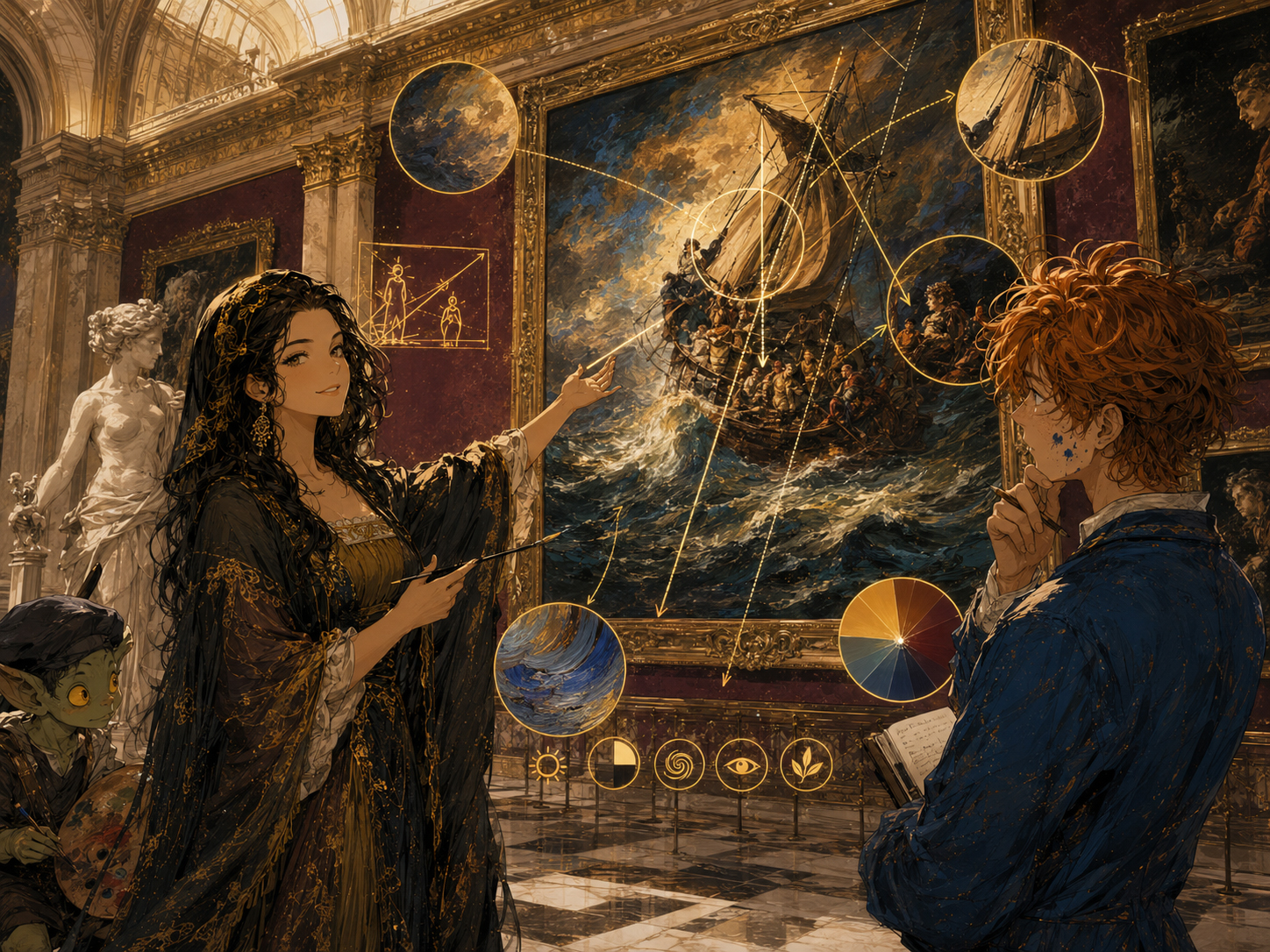
Start with what you see. Then ask what changed. Then ask why the artist wanted that effect.
Role in the FineArtDaily universe
Mona Lisa Sensei is the calm center of the museum. Palette Goblin causes chaos. Professor Perspective fixes rooms. Curator Cat judges frame placement. Abstract Dragon breaks the rules. Mona Lisa Sensei watches all of them and asks the question that makes the lesson land.
She is especially useful in stories about portraits, famous paintings, ambiguity, symbols, museum myths, public-domain masterpieces, and the difference between “I recognize this image” and “I have actually looked at this image.”
Episode appearances
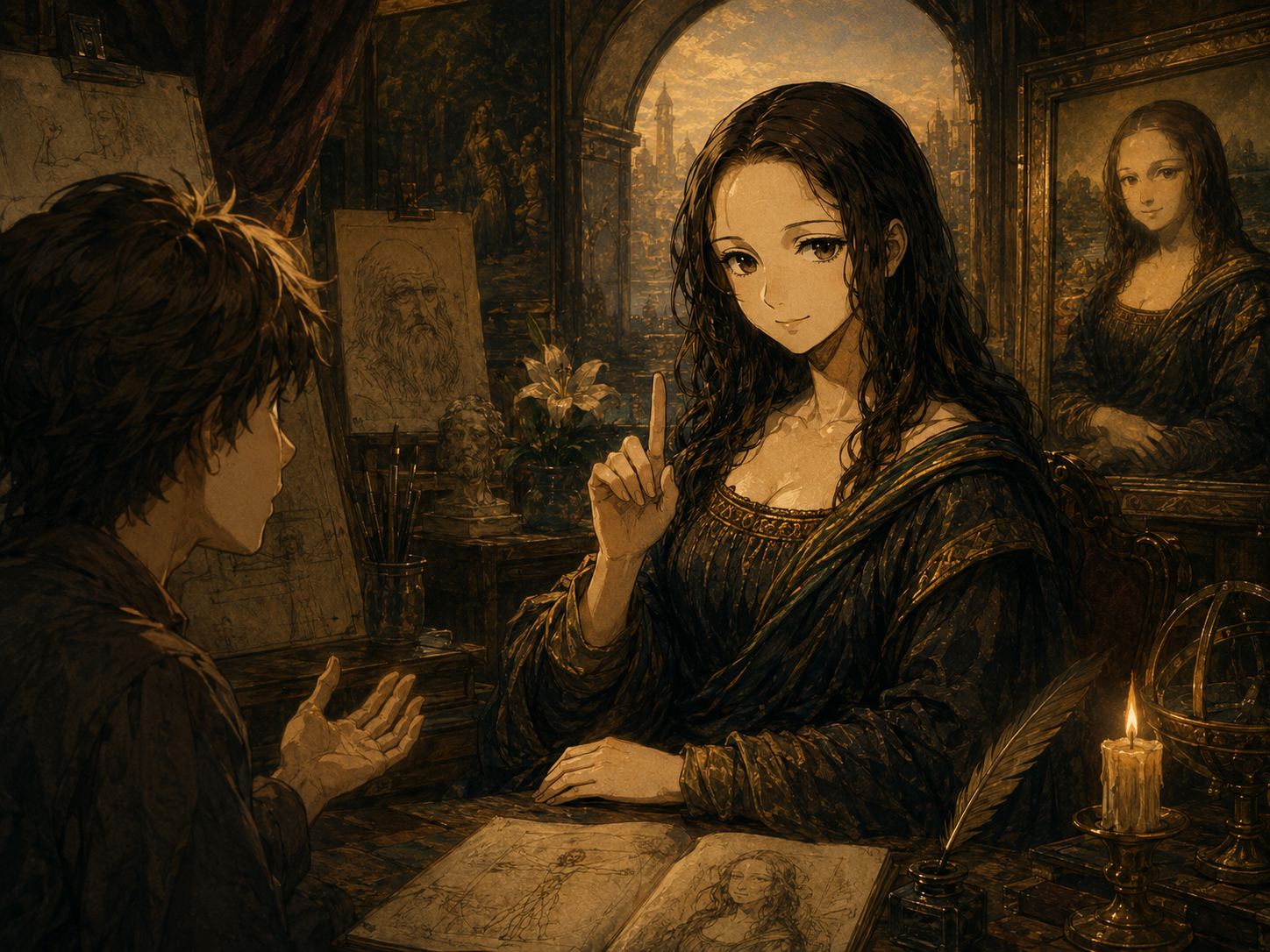
Episode 2: Mona Lisa Refuses to Explain
The class demands a quick answer. Mona Lisa Sensei gives them a better problem.
How to Look at Art
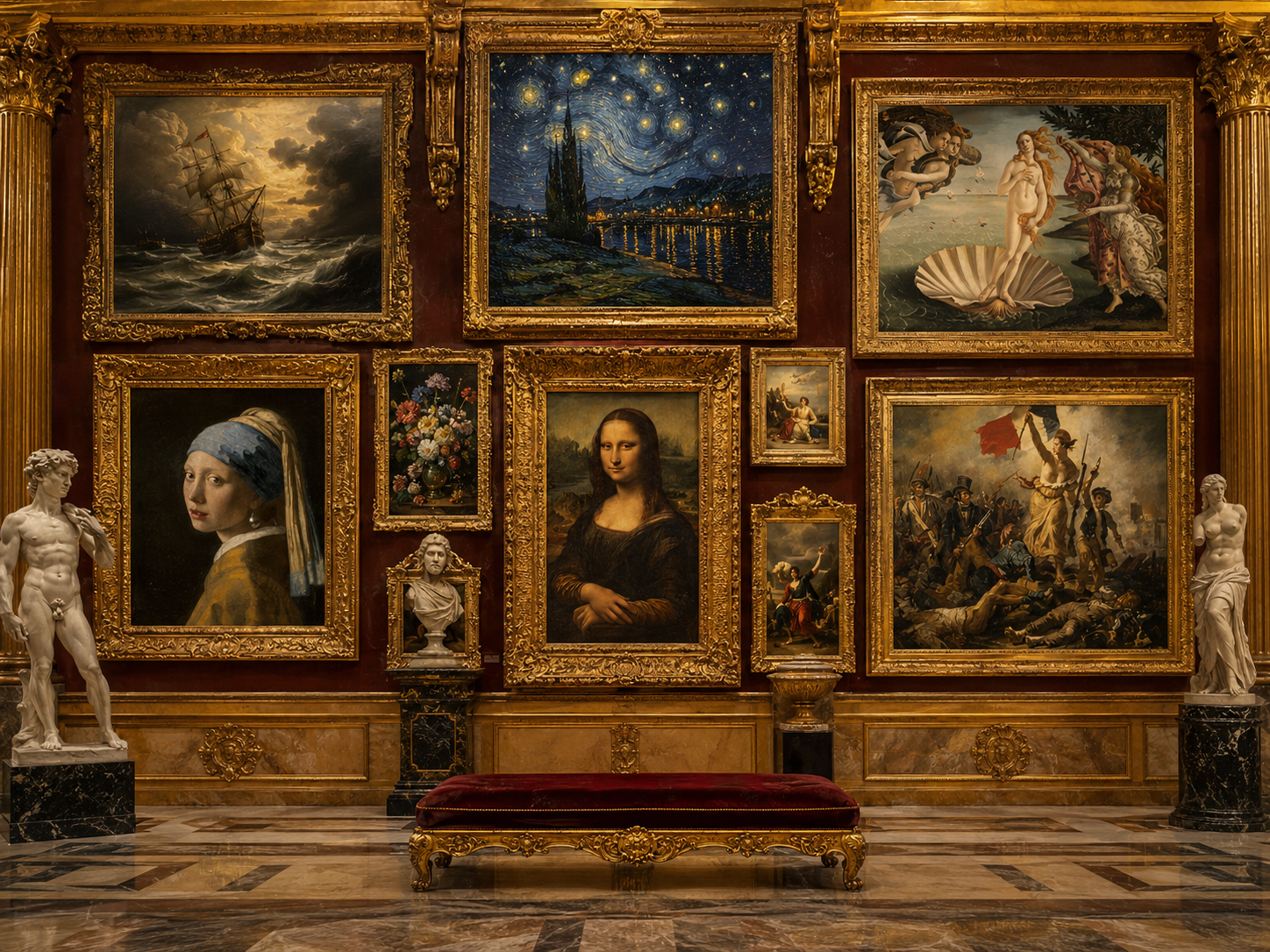
Her practical method: look first, name second, explain last.
Mona Lisa Sensei’s five rules
- Look before reading the label. The label should deepen your observation, not replace it.
- Notice the edges. Soft edges, hard edges, lost edges, and hidden transitions often carry the mood.
- Ask what changed. Your first impression is useful. Your second impression is usually smarter.
- Respect ambiguity. Not every mystery is a failure of explanation. Sometimes the mystery is the achievement.
- Return later. Great art behaves differently after you have lived another day.
Next character
Van Gogh Boy sees stars in everything — and teaches the museum that color can carry emotion before it carries description.