A museum comedy about color having emotions.
After Mona Lisa Sensei protected mystery, the visitor thought art might become quieter. Then Van Gogh Boy arrived with a brush, a lamp, and the alarming belief that the sky had something urgent to say.
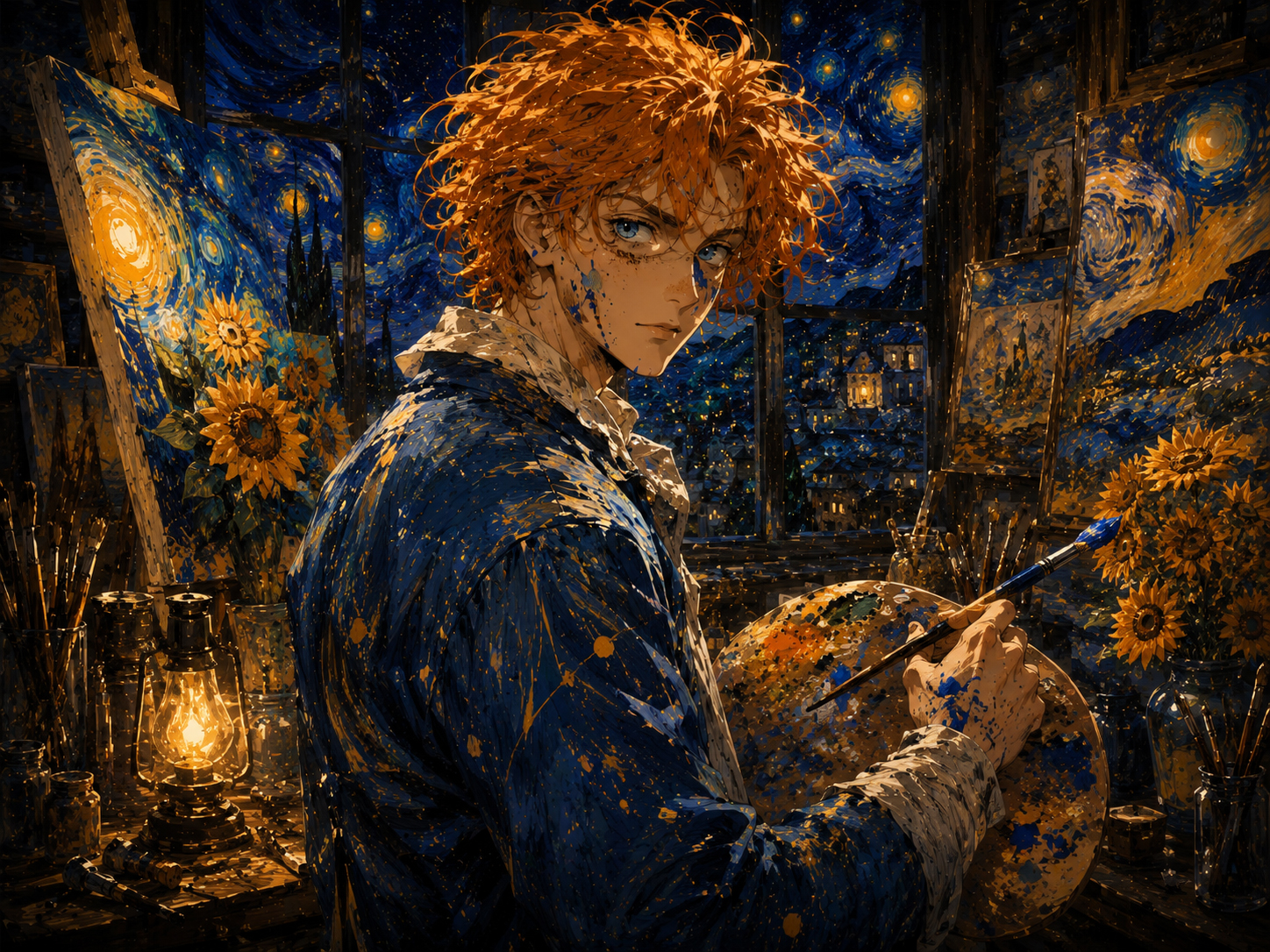
The Studio Refuses to Stay Indoors
The walls were blue. The chair was yellow. The floorboards seemed to hum. Van Gogh Boy looked out the window and nodded as if the stars had just insulted boring paint.
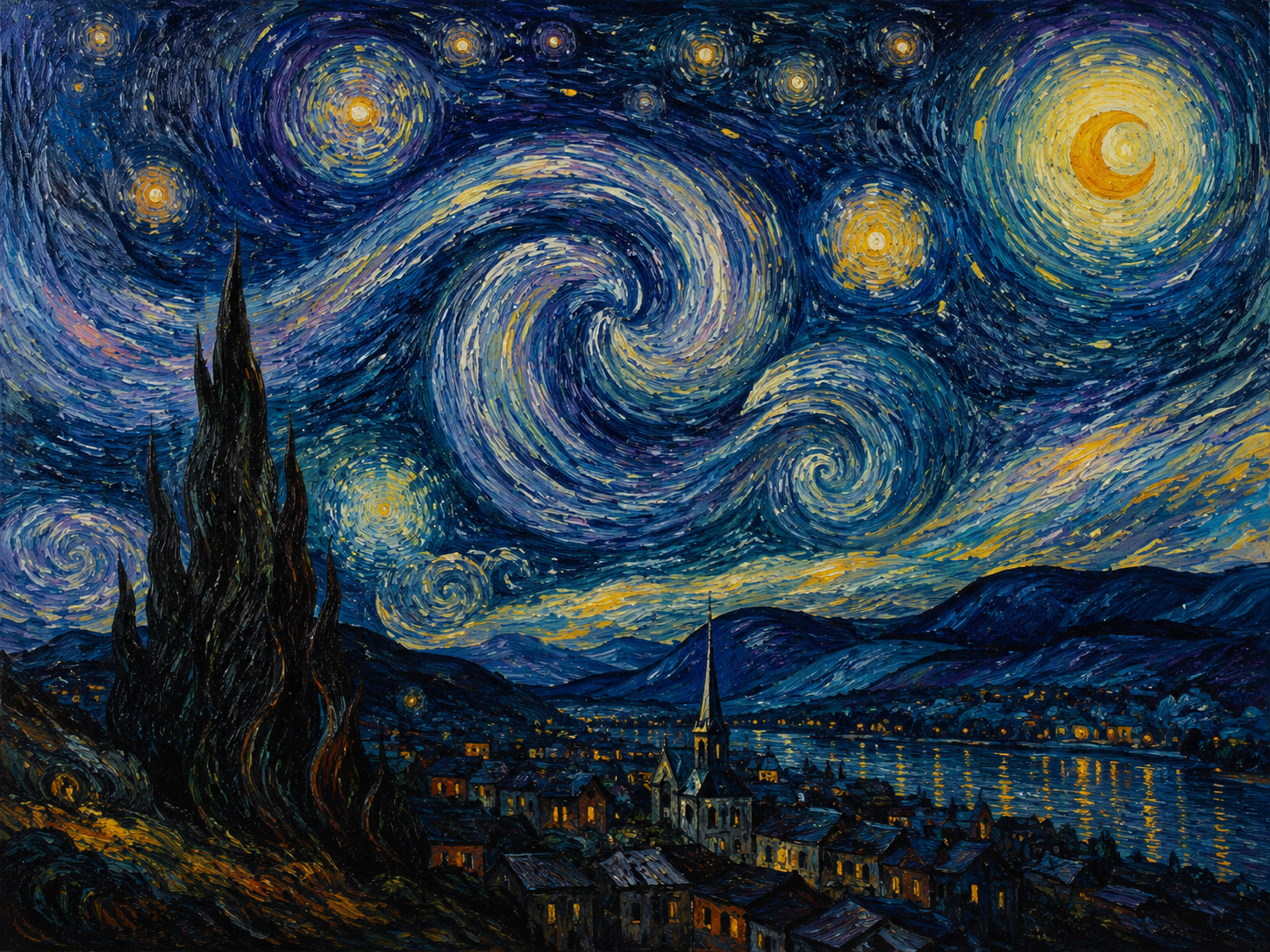
The Sky Starts Spiraling
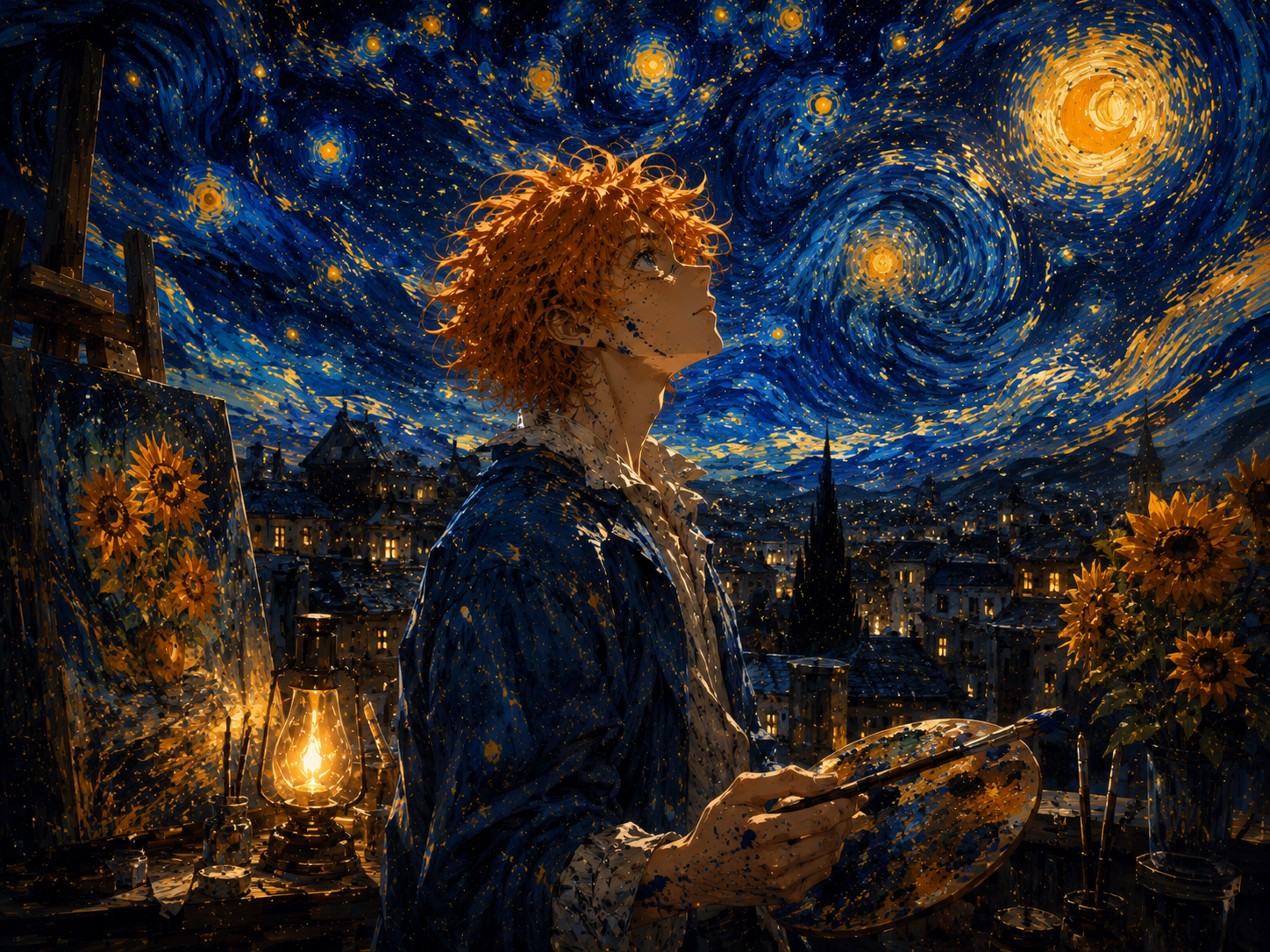
The visitor expected a neat moon and several polite stars. Instead, the sky twisted into rivers of blue, gold, and motion. Curator Cat flattened one ear.
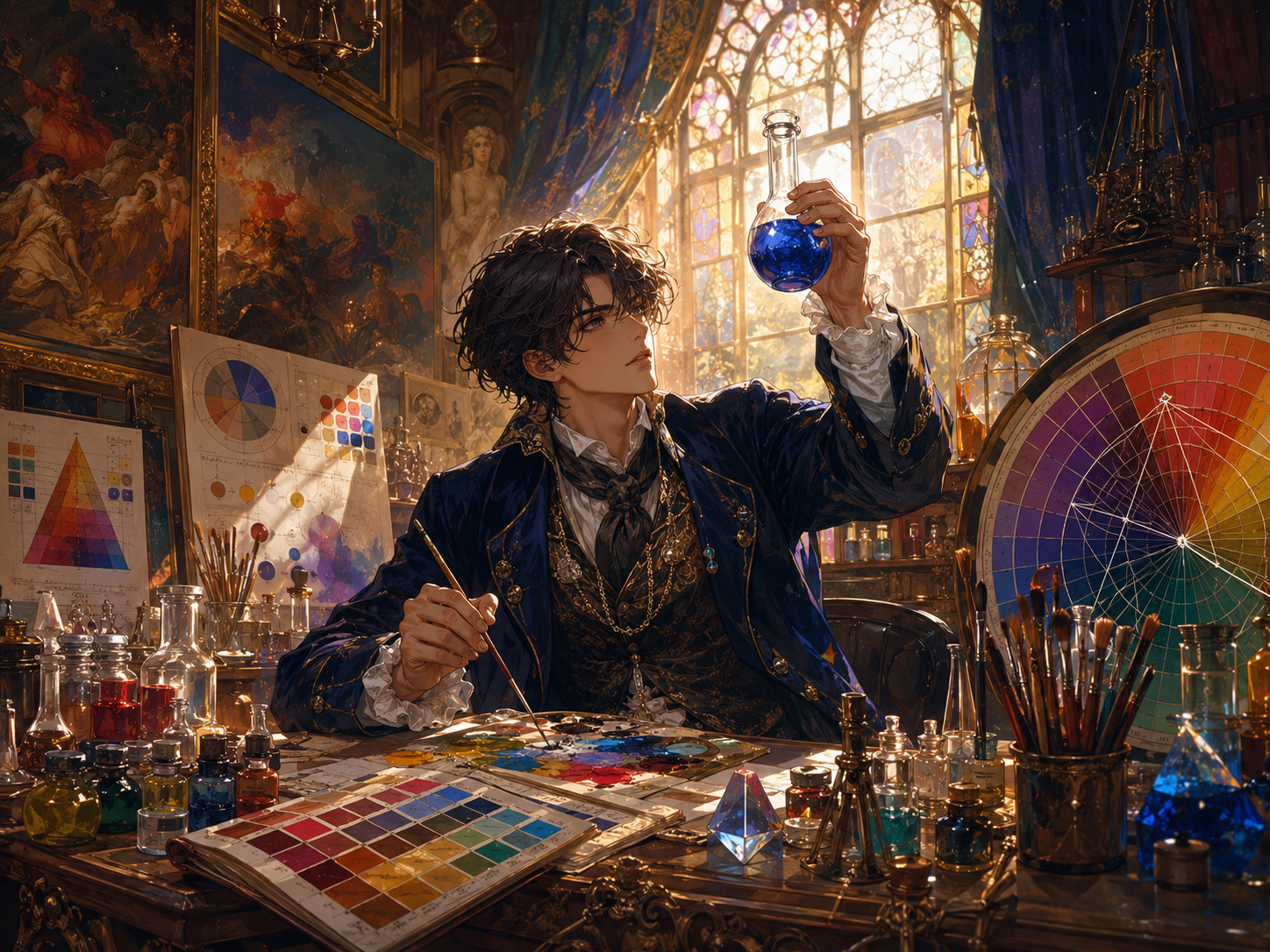
The Palette Goblin Touches Everything
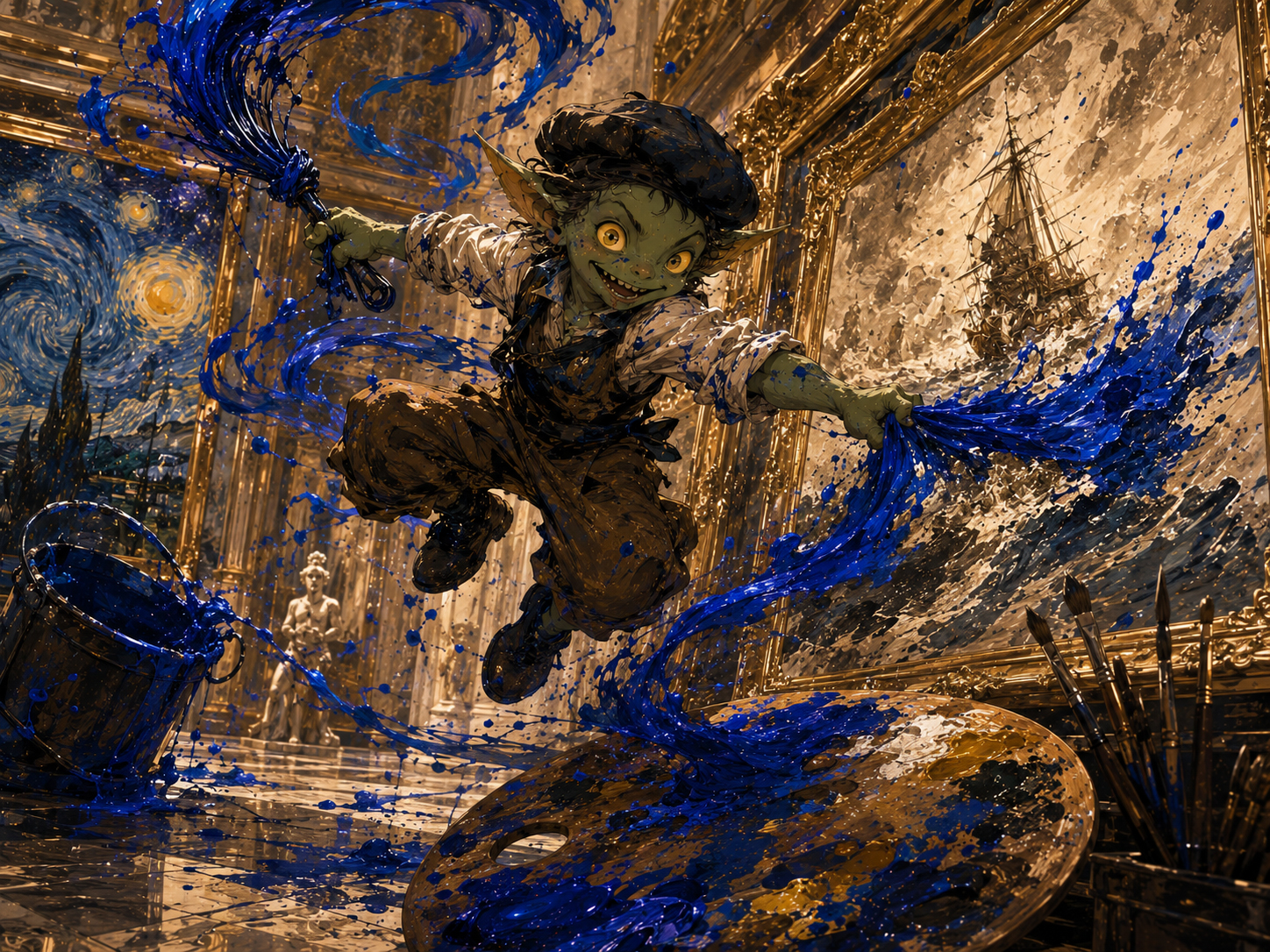
The Palette Goblin burst from a drawer carrying ultramarine, chrome yellow, and a terrible lack of restraint. Every color became louder than the museum’s recommended indoor voice.
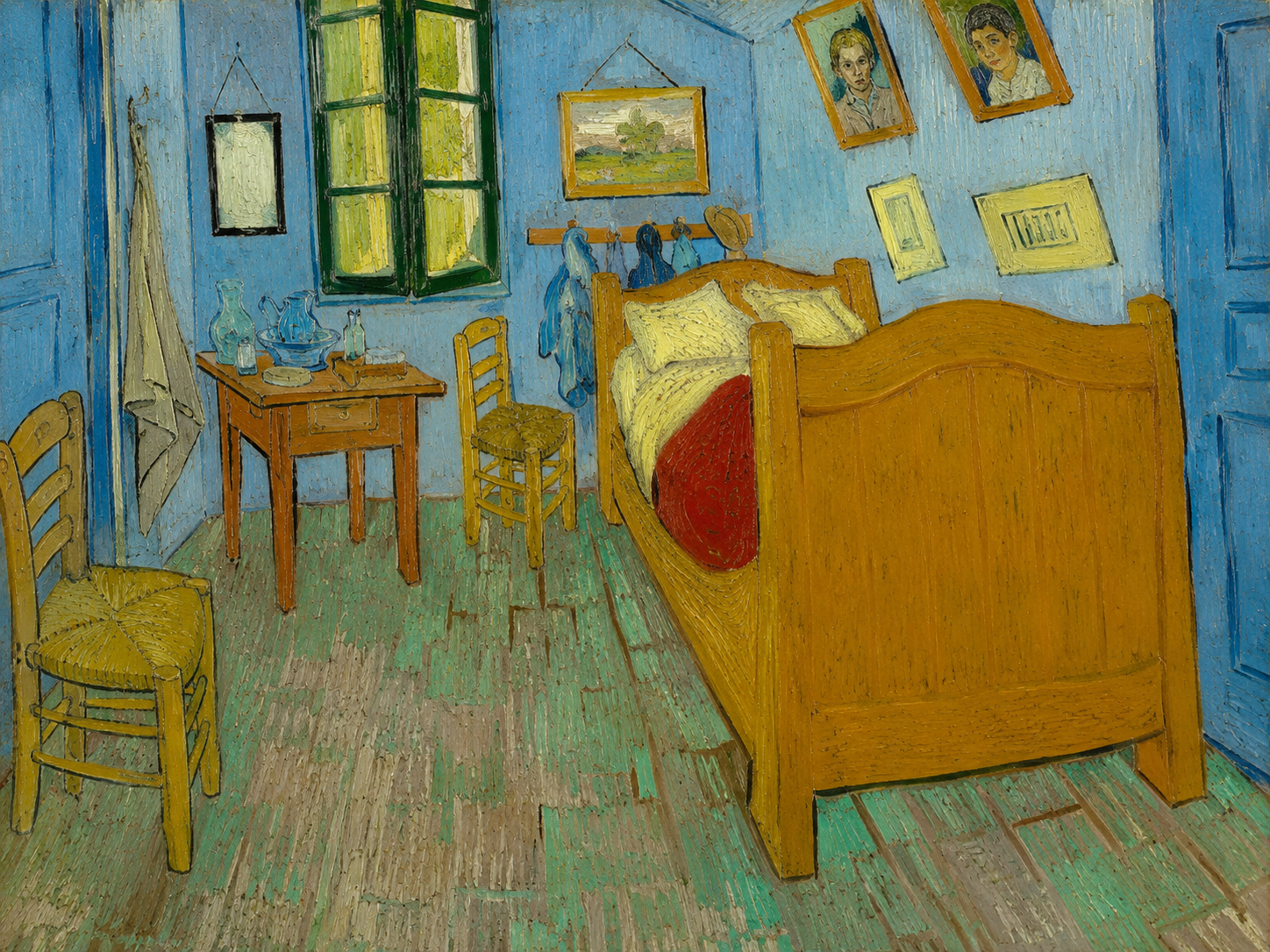
Perspective Gets Emotional
Professor Perspective entered, noticed the room bending slightly, and chose diplomacy. The space was not broken. It was being dramatic on purpose.
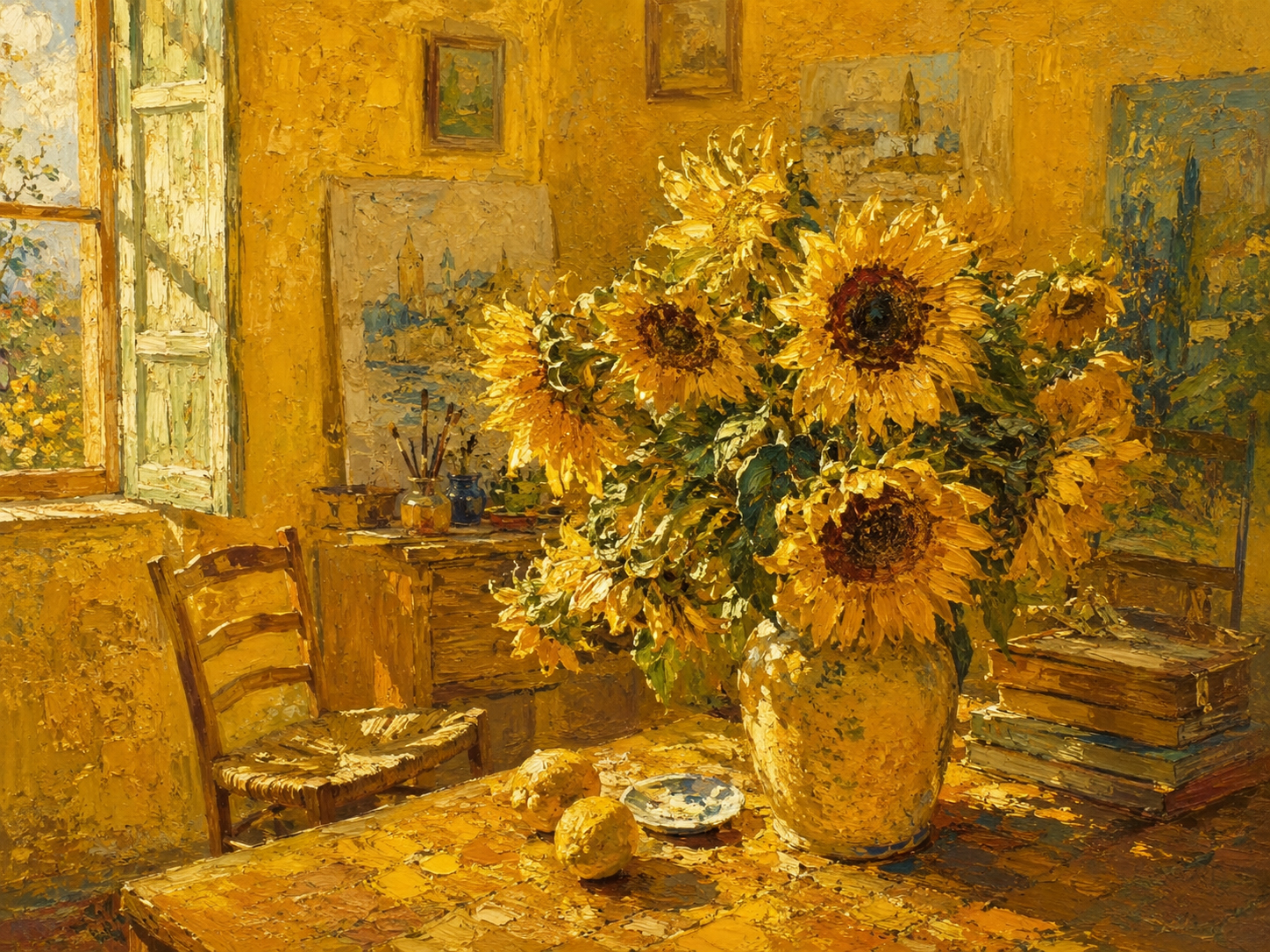
The Yellow Room Glows Back
Sunflowers leaned toward the visitor like tiny suns with opinions. The painting did not simply show flowers. It made yellow feel like friendship, heat, hunger, and memory.
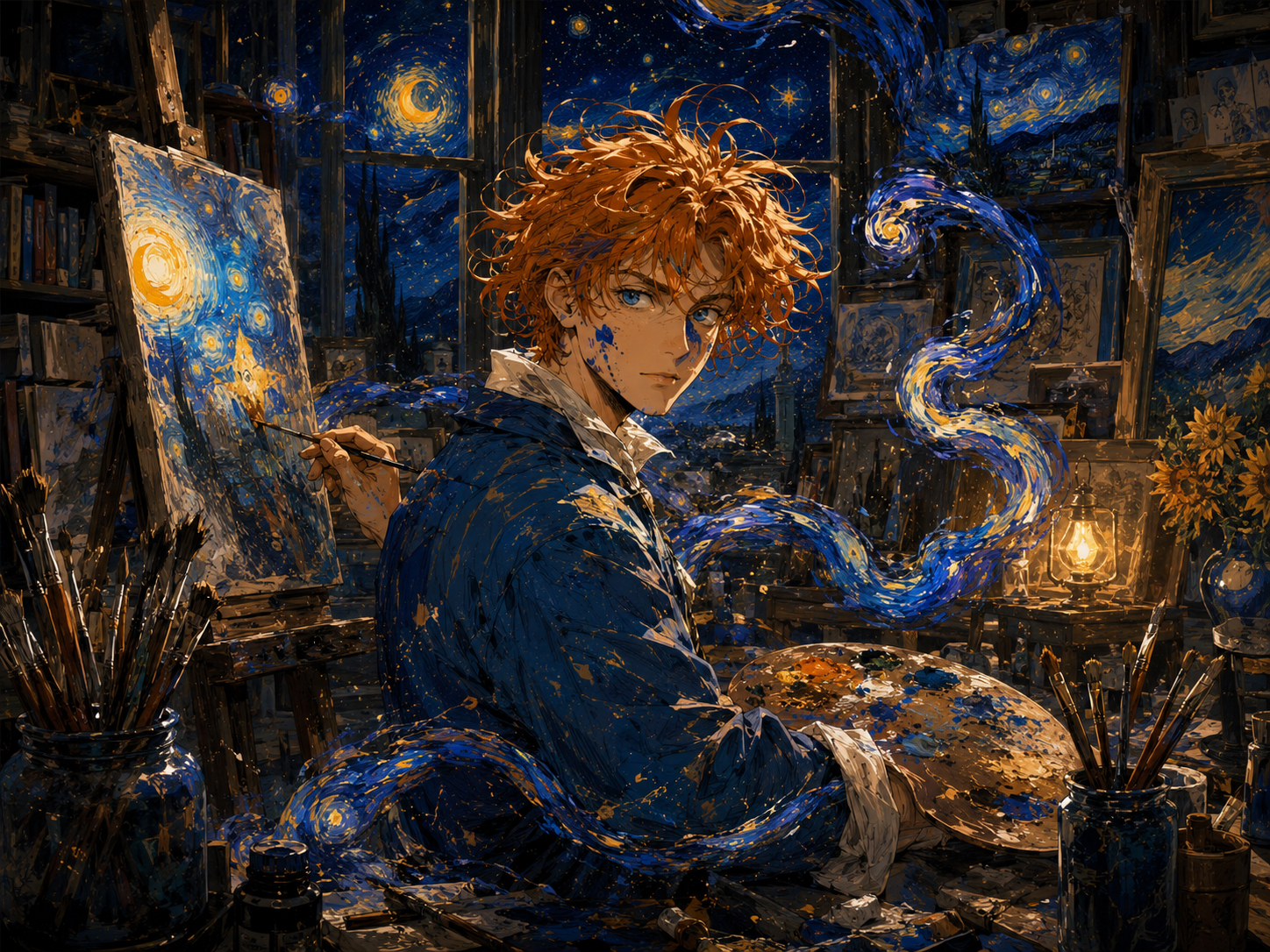
The Stars Enter the Museum
The night sky rolled through the gallery ceiling. Nobody screamed, except the Label Goblin, who screamed educationally.
The sky is not a background.
Van Gogh Boy’s lesson is that color, line, and brushwork do not merely decorate the subject. They can become the subject. The sky matters because it moves. The room matters because it tilts toward feeling. The sunflowers matter because yellow is doing emotional labor.
The visitor looked again at the spirals. They were not mistakes. They were motion, pressure, and attention. The stars were not dots. They were events.
The Star Meter
Curator Cat tried to measure the episode. The instrument overheated near the word “yellow.”
The FineArtDaily lesson
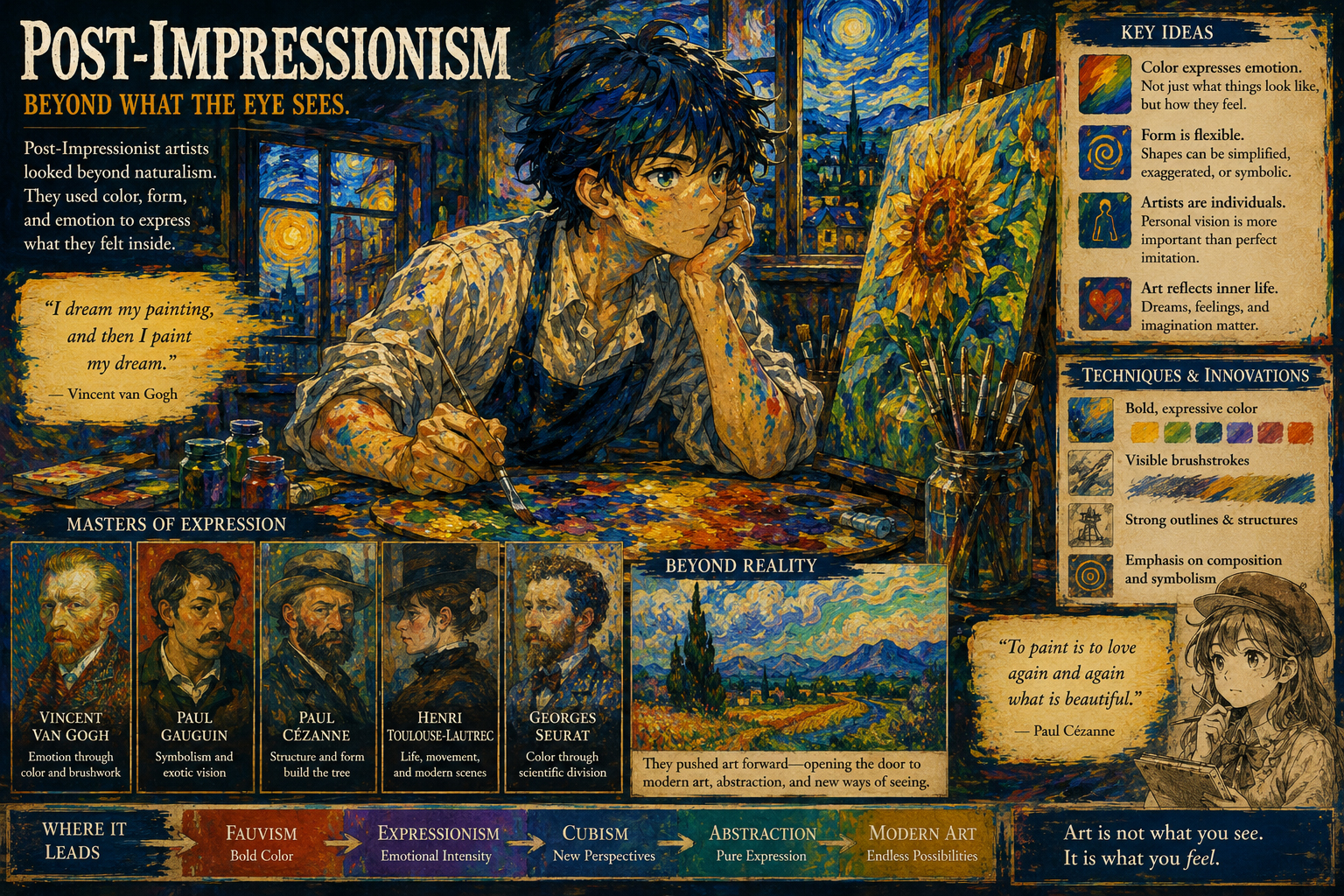
Episode 3 teaches that expressive art can be true without being photographically accurate. A painting can exaggerate color, motion, and shape to tell the truth of a feeling.
- Color can carry mood. Blue, yellow, green, and orange do not just fill space. They create emotional weather.
- Brushwork is a voice. Smooth paint whispers. Thick, moving paint can argue, sing, or tremble.
- Distortion is not always error. A bent room or swirling sky can make feeling visible.
- Expression is a kind of observation. The artist is observing both the world and the inner response to it.
- Look for energy. Ask where the painting feels still, where it moves, and where it almost vibrates.
Episode moral
The stars are not decoration. The color is not background noise. The brushwork is not messy by accident. Every mark is a tiny engine.
Feel the color
Ask what the palette is doing to your mood before you ask what it depicts.
Follow the marks
Brushstrokes can guide the eye like wind across a field.
Trust intensity
Sometimes art becomes more truthful by becoming less literal.