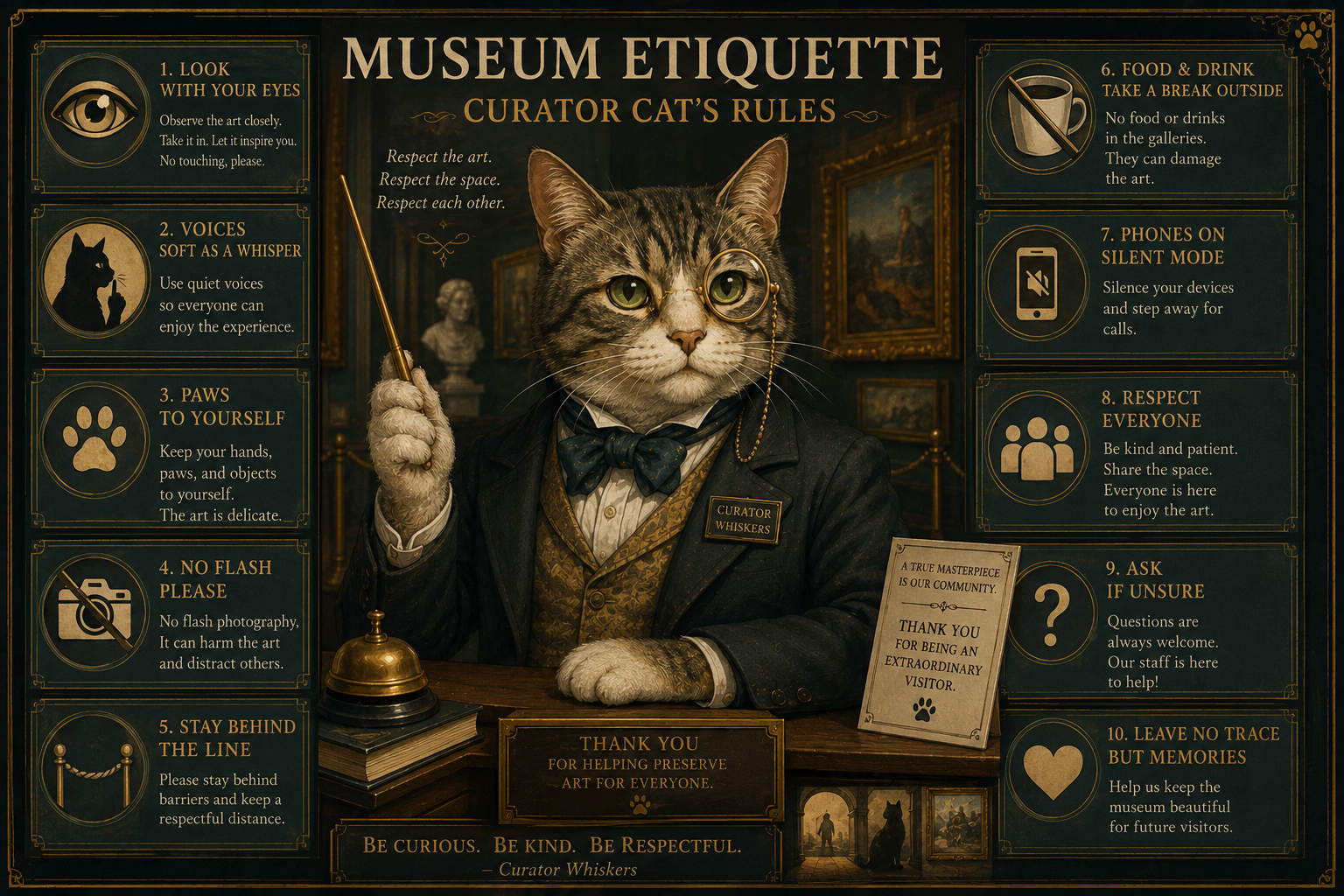
FineArtDaily field note
The golden rule: protect the looking
Museum etiquette is not about acting fancy. It is about making sure the artwork survives and everyone gets a fair chance to look. The best visitor is curious, patient, aware of space, and slightly suspicious of their own backpack.
Curator Cat’s version is shorter: enjoy the art, but do not become the exhibit.
Do not touch the art
This is the most important rule. Even clean hands carry oils, salts, moisture, and tiny museum gremlins. Paint, paper, textile, sculpture, frames, cases, and pedestals are more fragile than they look. Point with your words, not your finger.
- Keep hands back. Six inches feels close; one foot is safer.
- Do not lean on walls or cases. The wall may be part of the protection system.
- Watch sleeves, bags, hats, and camera straps. These are the silent villains of museum rooms.
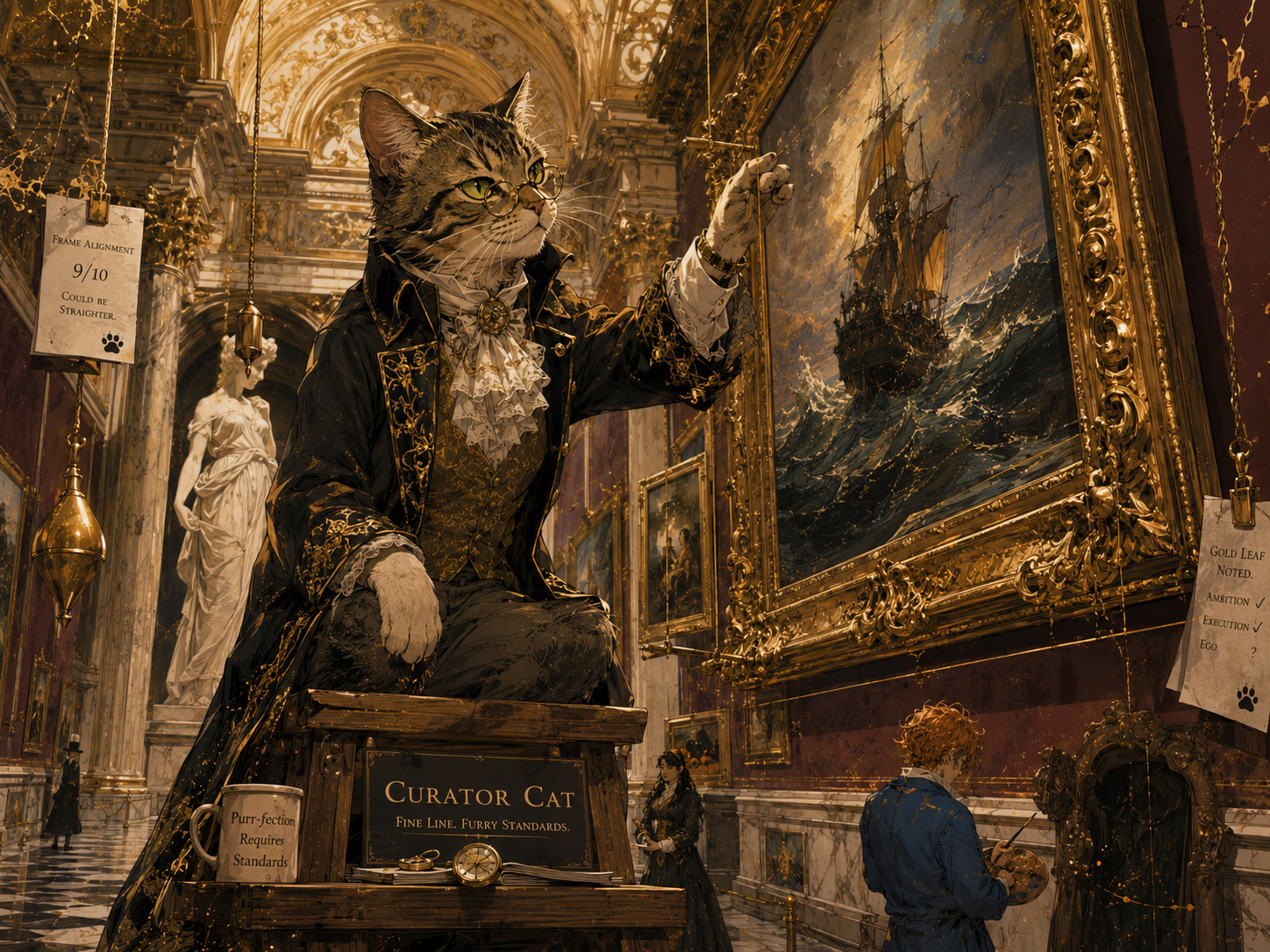
The frame is art-adjacent
Frames can be historic, gilded, fragile, and expensive. Curator Cat sees the fingerprint.
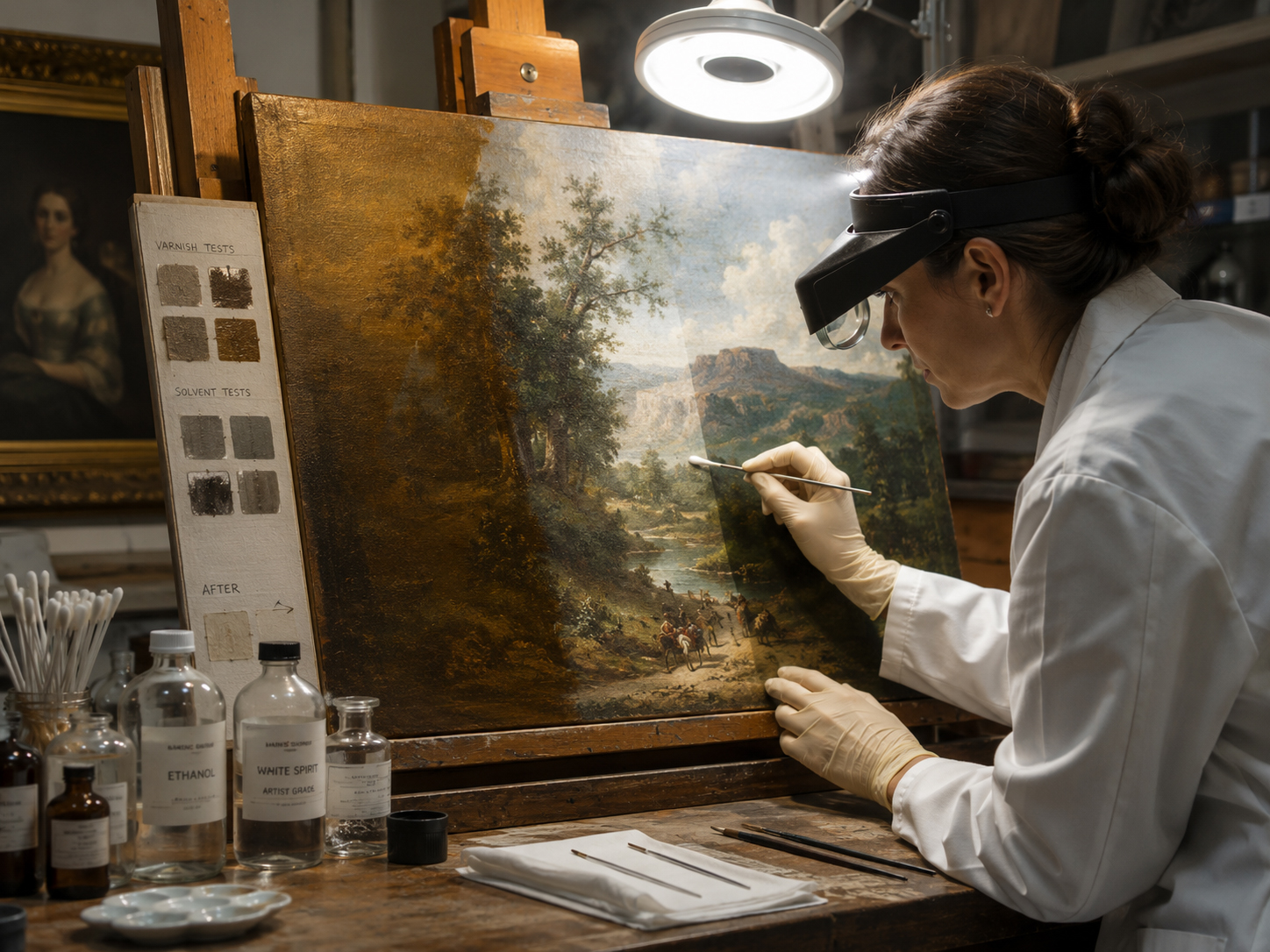
Conservation is slow magic
One careless touch can create work for someone with microscopes, solvents, and a very long sigh.
Give people space
Great paintings attract crowds. The trick is to look without blocking the painting forever. Step in, observe, read the label, take your moment, then step aside so others can enter the viewing lane.
If you are explaining the work to someone, move slightly off-center. The masterpiece does not need you standing directly in front of it like a velvet-rope dragon.
Photos: be quick, quiet, and allowed
Photo policies vary by museum and exhibition. Some galleries allow non-flash photography; others ban photos completely because of loans, copyright, crowd flow, or conservation concerns. When in doubt, check the sign or ask staff.
- No flash unless clearly allowed. Flash is disruptive and often prohibited.
- Do not turn the room into a photo shoot. Quick documentation is fine; a full fashion campaign is not.
- Do not back up without looking. That is how pedestals learn fear.
Read labels, but do not let labels do all the looking
Wall labels are useful, but they should not replace looking. Try this order: look first, feel the painting’s mood, notice the big shapes and colors, then read the label. After the label, look again. The second look is usually better.
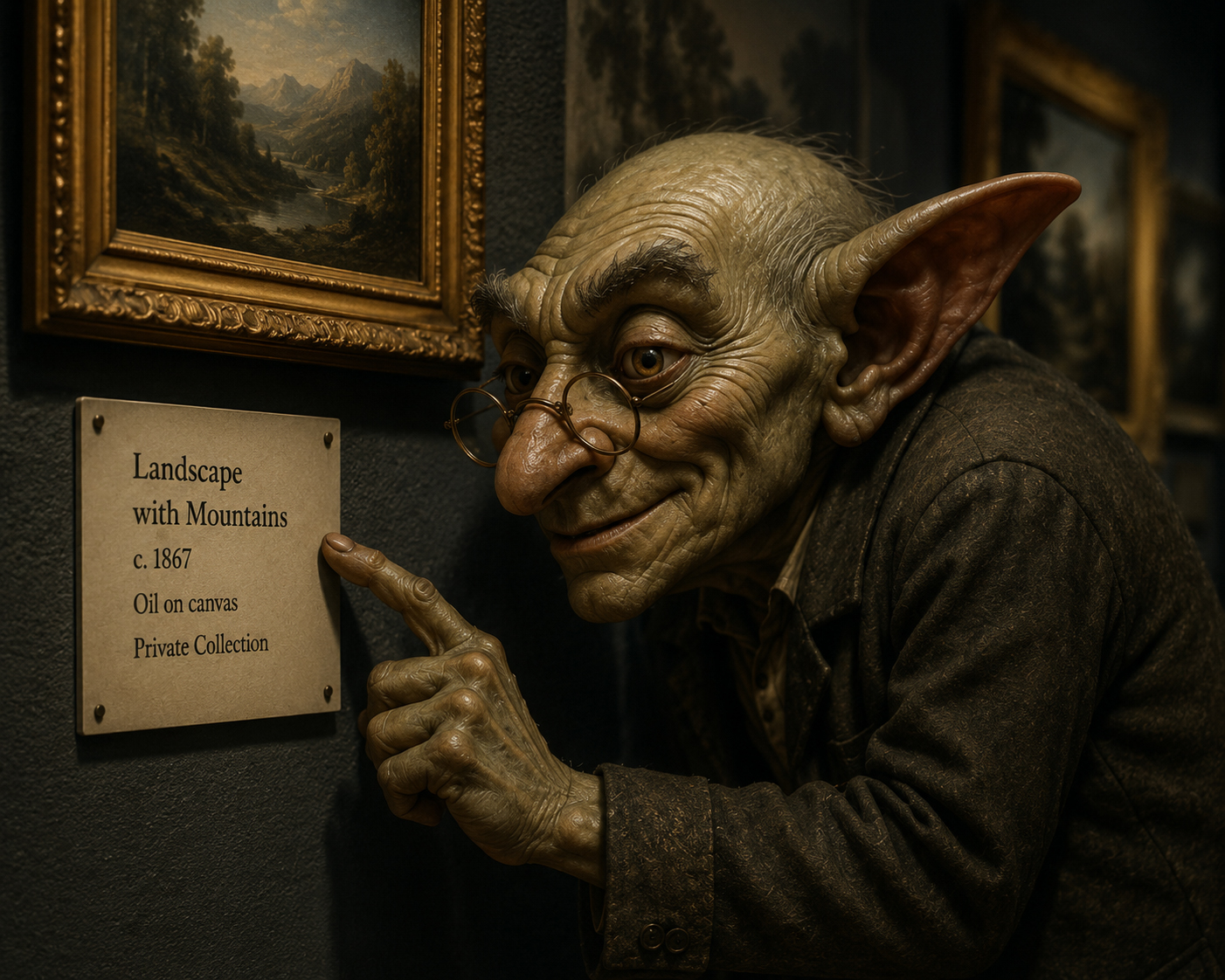
The Gallery Label Goblin
Helpful when accurate. Dangerous when he convinces you that reading is the same as seeing.
Kids, groups, and first-time visitors
Museums should welcome curious people, including kids and visitors who do not know the rules yet. The goal is not silence. The goal is awareness. Use indoor voices, keep walking feet, and turn questions into looking games.
- Ask what they notice. “What is the brightest color?” beats “Be quiet.”
- Choose a short route. Museum fatigue is real, even for adults pretending otherwise.
- Take breaks. Benches are part of the art ecosystem.
Sketching is noble; blocking traffic is not
Sketching in museums is one of the best ways to learn. Bring pencils when allowed, keep supplies compact, and avoid setting up where people need to pass. If a guard gives direction, accept it gracefully. Museum Guard Golem has heard every argument.

Look slowly
The best museum skill is not expertise. It is attention.

Respect staff
Guards protect the art, the room, and sometimes you from your own dramatic backpack.
Curator Cat’s forbidden moves
These are the behaviors that cause tiny thunderclouds to form above the information desk:
- Touching paintings, frames, pedestals, vitrines, or display cases.
- Standing inches from a painting while wearing a large backpack.
- Using flash, tripods, selfie sticks, or lights where prohibited.
- Talking loudly through quiet rooms.
- Letting food, drinks, pens, or wet umbrellas wander near art.
- Arguing with staff about rules they did not invent.
How to have a better museum visit
- Pick three must-see works. Do not try to swallow the whole museum.
- Look before photographing. Your eyes deserve the first copy.
- Spend five full minutes with one work. That is where the painting starts talking.
- Use benches strategically. Resting is not failure. It is curatorial wisdom.
- Leave wanting more. A museum should haunt you a little.
FineArtDaily verdict
Museum etiquette is not about being stiff. It is about protecting wonder. Give the art space, give other visitors a view, follow the posted rules, and let yourself look longer than feels normal. Curator Cat will still judge your posture, but with respect.
Next museum rooms
Now that Curator Cat has reduced the room’s chaos by 37%, continue with the looking guide, famous paintings, art movements, and public-domain sources.