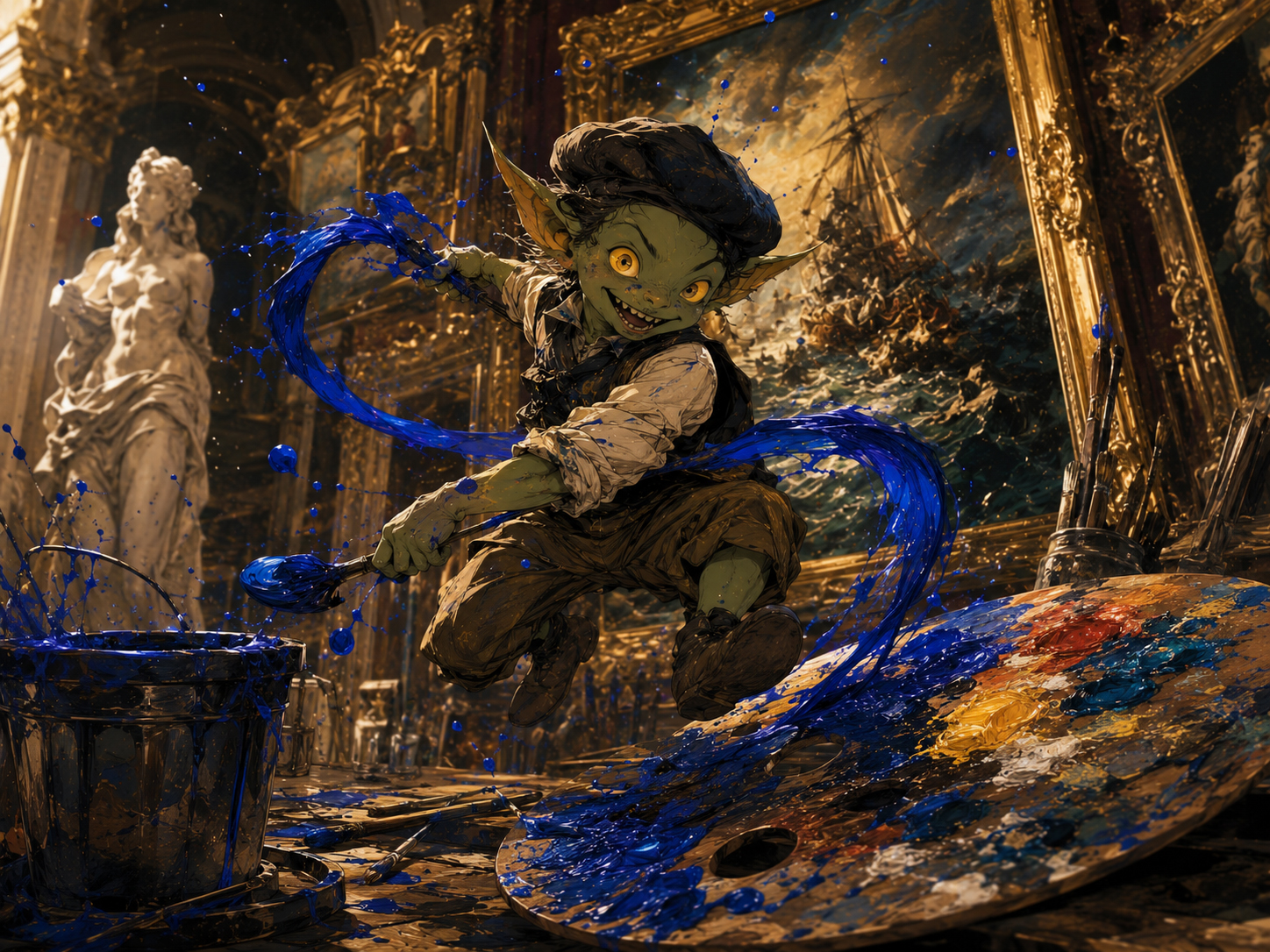
FineArtDaily cast
The goblin who proves color has consequences.
Palette Goblin appears whenever a museum visitor says, “It is just blue,” and the entire gallery gasps. He knows better. Blue can become sky, distance, sadness, divinity, shadow, luxury, water, night, memory, or mischief depending on where an artist places it.
He does not steal colors because he is evil. He steals them because he wants readers to notice what changes when a color disappears. Remove blue from a sky, and the weather collapses. Remove red from a robe, and the drama cools. Change the value of yellow, and a warm room becomes a warning sign.
Profile card
Official title
Junior Keeper of Pigments, Unauthorized Adjuster of Palettes, and Temporary Borrower of Important Blues.
Signature move
The chromatic swipe: one tiny hand movement that changes the emotional temperature of an entire room.
Favorite question
“What would this painting feel like if this color vanished?”
Natural enemy
Muddy color, lazy beige, accidental neon, and anyone who confuses brightness with beauty.
What Palette Goblin teaches
Palette Goblin teaches that color works in relationships. A red is not just red; it changes when placed beside green, gold, gray, black, blue, or white. A color can become louder, softer, warmer, colder, richer, cheaper, calmer, or more dangerous depending on its neighbors.
He also teaches the difference between hue, value, and saturation. Hue is the color family. Value is light or dark. Saturation is intensity. The goblin loves all three, but he respects value most because value controls whether the viewer can actually read the painting from across the room.
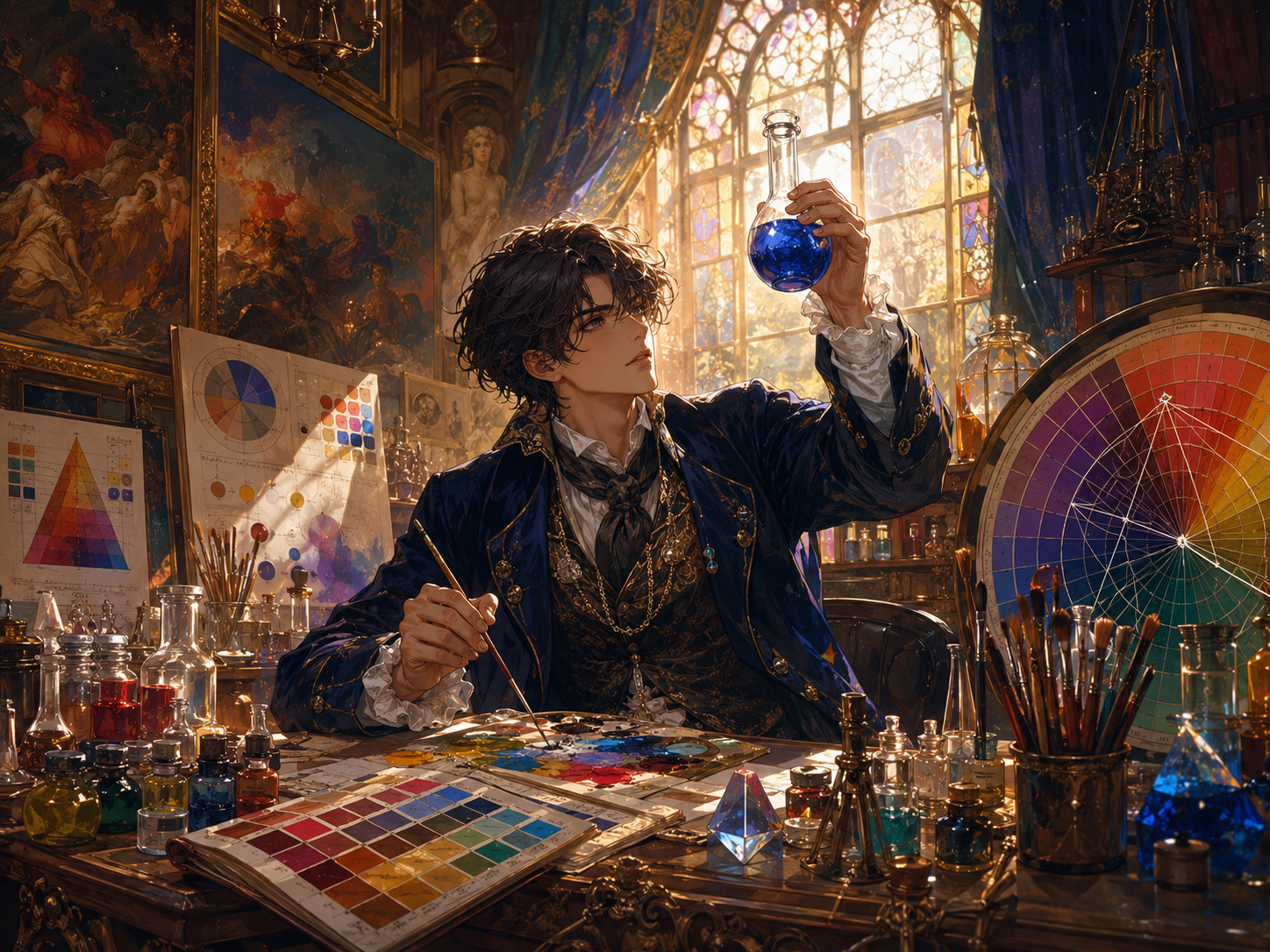
The laboratory
Color is experiment, not decoration. Pigments behave differently when mixed, layered, warmed, cooled, or surrounded.
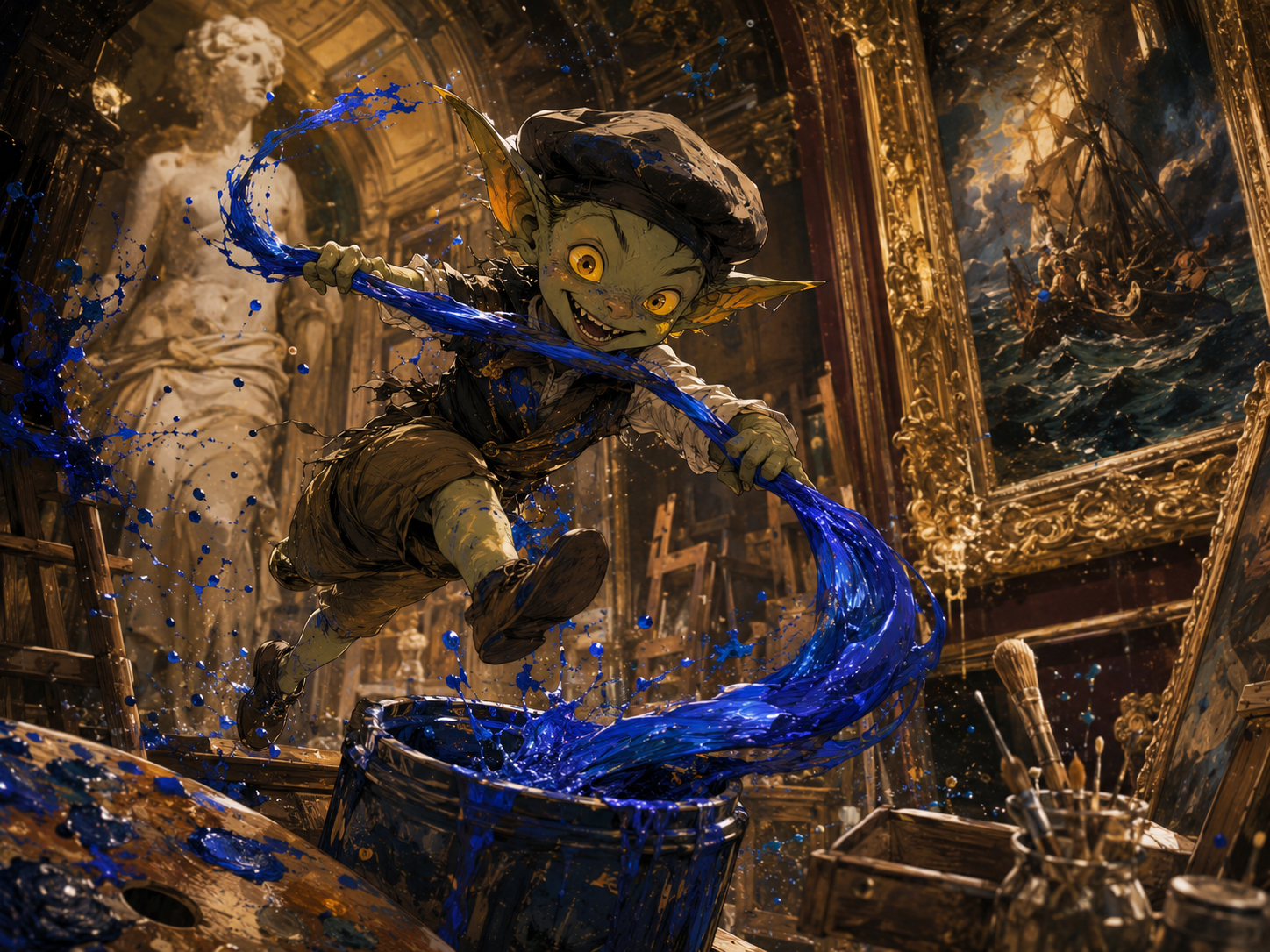
The stolen blue
One missing color can change space, weather, mood, symbolism, and the emotional center of a composition.
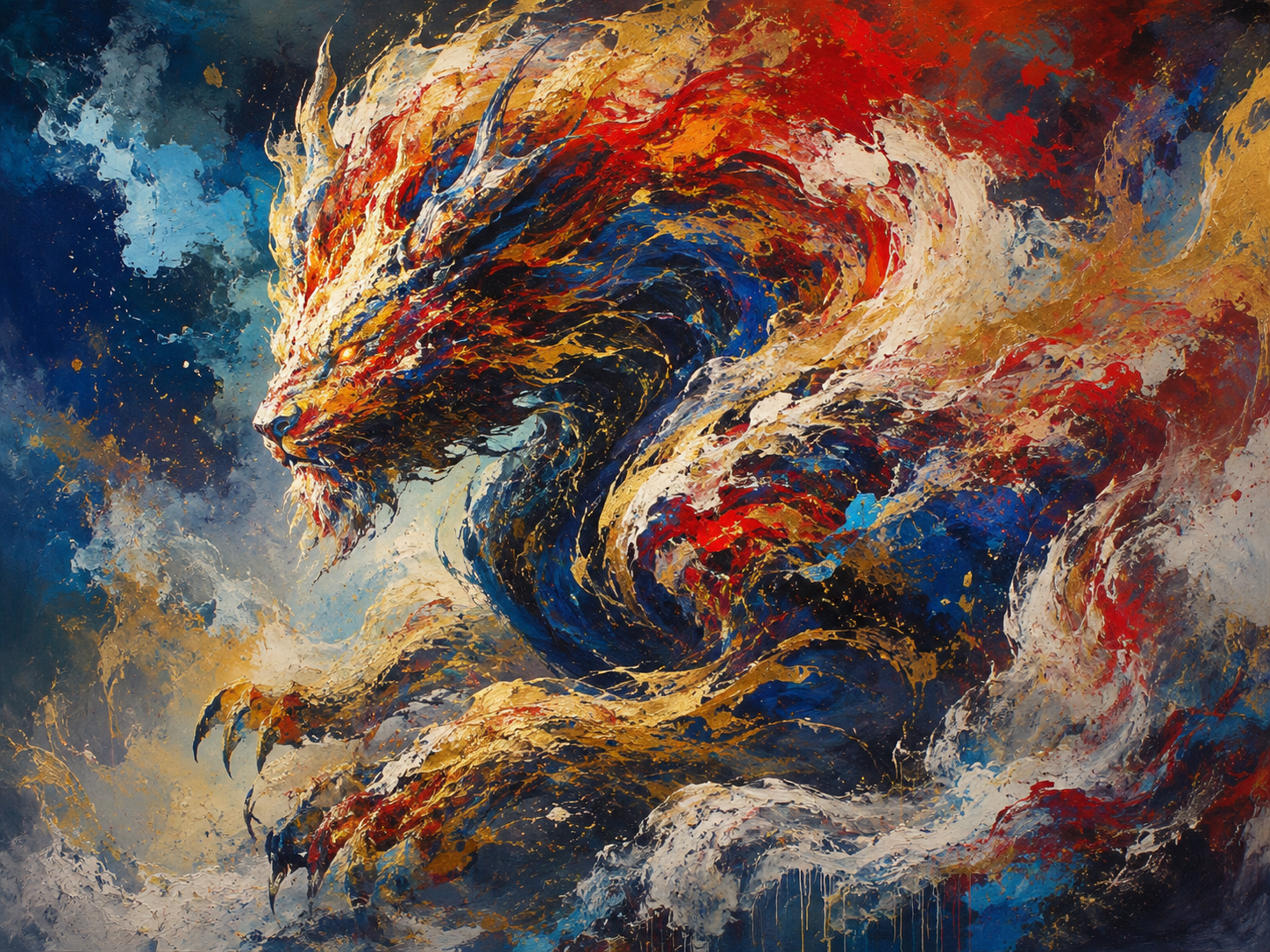
The color beast
When color escapes realism, it can still create rhythm, balance, force, conflict, and feeling.
Role in the FineArtDaily universe
Palette Goblin is the site’s chaos technician. Mona Lisa Sensei keeps a secret. Van Gogh Boy sees stars. Professor Perspective straightens the room. Curator Cat fixes the label. Palette Goblin quietly changes one color and lets everyone discover that the entire painting was built around it.
He is especially useful for pages about color theory, Impressionism, Post-Impressionism, abstract art, symbolism, restoration, pigment history, museum labels, and famous paintings where color carries meaning.
Episode appearances
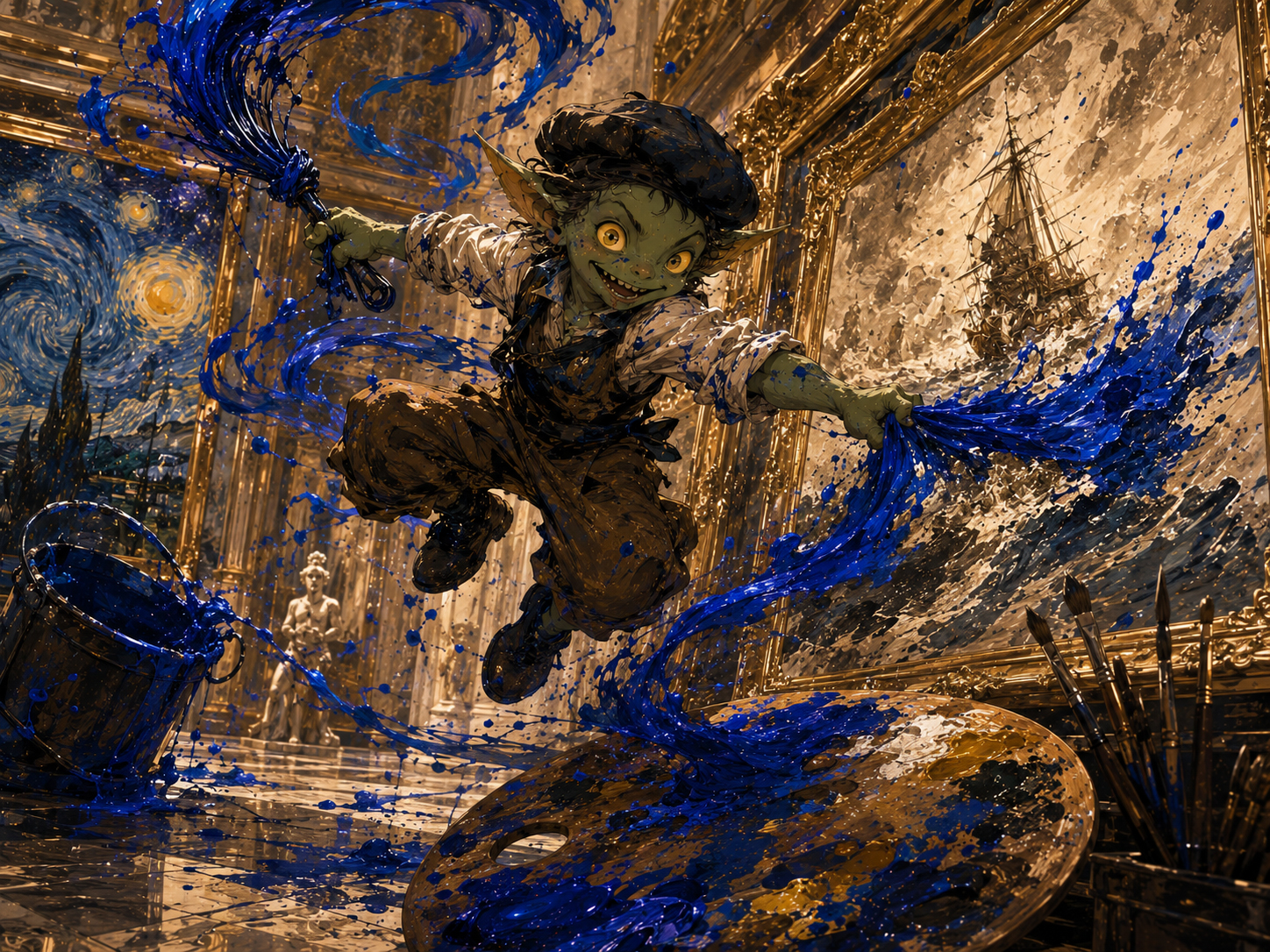
Episode 4: The Palette Goblin Steals Blue
The gallery loses its skies, shadows, rivers, robes, and dignity. Color theory becomes a rescue mission.
Color Theory
Hue, value, saturation, contrast, harmony, and temperature — explained before the goblin pockets anything else.
Palette Goblin’s five rules
- Color has neighbors. Always ask what one color is doing to the colors around it.
- Value carries the structure. Squint at the painting and see whether the big light-and-dark pattern still works.
- Temperature changes mood. Warm color can come forward; cool color can recede, quiet, or haunt.
- Saturation is seasoning. Too little can go flat. Too much can turn into visual shouting.
- Symbolism is slippery. Blue, red, gold, black, and white can mean different things depending on culture, era, and context.
A note from the goblin’s supervisor
FineArtDaily uses original manga-style illustrations inspired by public-domain art history. When the site discusses famous works, it treats the artwork, artist, museum context, and reproduction rights carefully. Public-domain subject matter is not the same thing as permission to use every museum photograph without checking the institution’s image policy.
Next character
Curator Cat has found blue pawprints near the label case and is preparing a strongly worded museum rule.