FineArtDaily field guide
The painting is giving you evidence
Before photography, captions, and wall labels did the explaining, painters used recognizable symbols. A saint might be identified by an object, a virtue by a flower, a warning by a skull, or a miracle by an impossible little dragon behaving badly in the corner.
The trick is not to memorize everything at once. Start with the biggest clue, then ask what it is doing in the story.
Halos, light, and holy attention
A halo is not just a glowing hat. It is a visual spotlight. It tells you who matters spiritually, who belongs to the sacred part of the story, and sometimes who is already beyond ordinary time.
- Round halos often identify saints or holy figures.
- Gold light can signal divine presence, heaven, or sacred importance.
- Radiant beams often point toward revelation, blessing, or transformation.
Objects are name tags
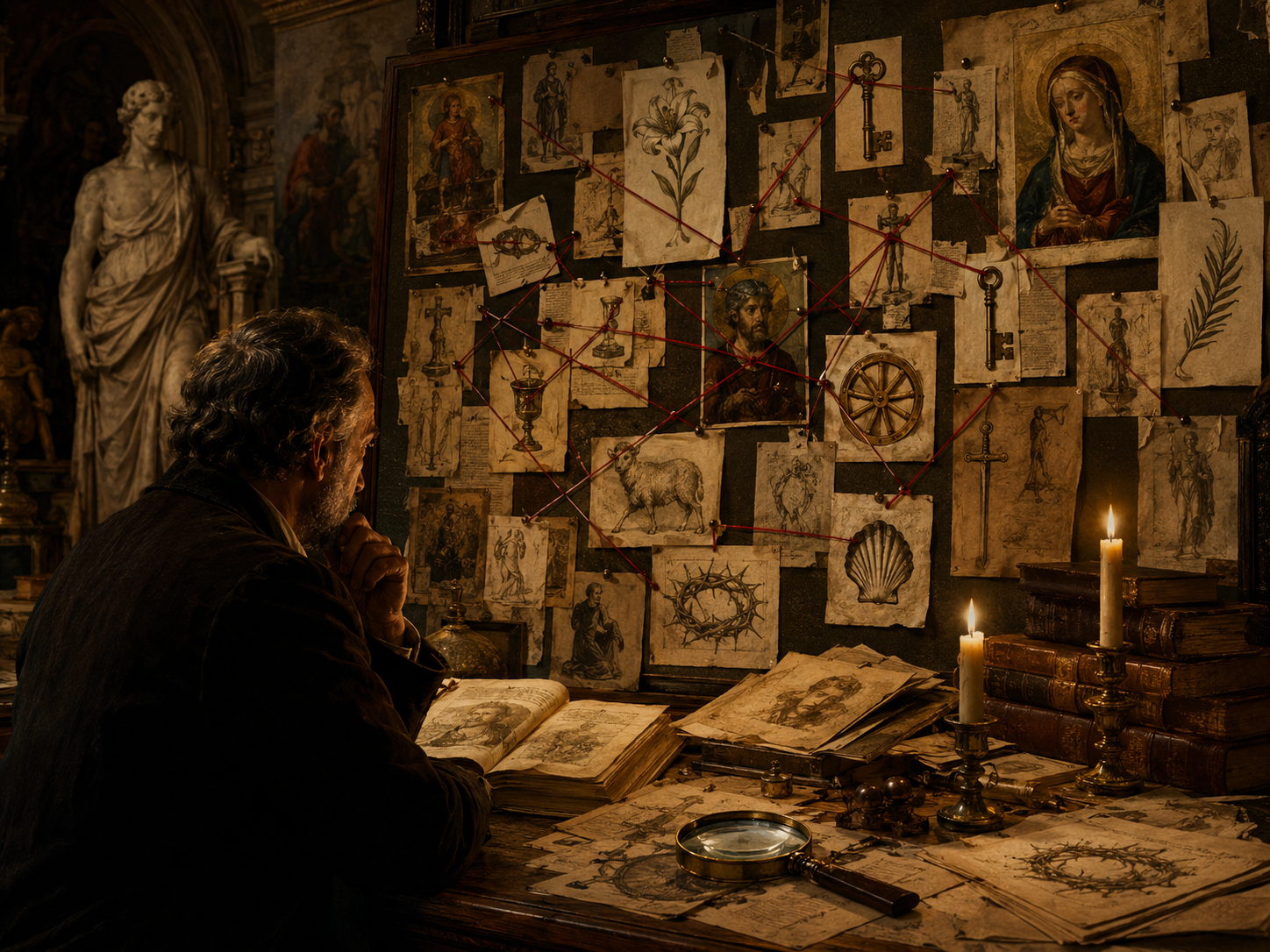
Many saints are recognized by their attributes: repeated objects attached to their stories. A key may point to Saint Peter. A wheel can identify Saint Catherine. A lion can suggest Saint Jerome or Saint Mark depending on the scene. The object works like a museum ID badge.
Margins matter
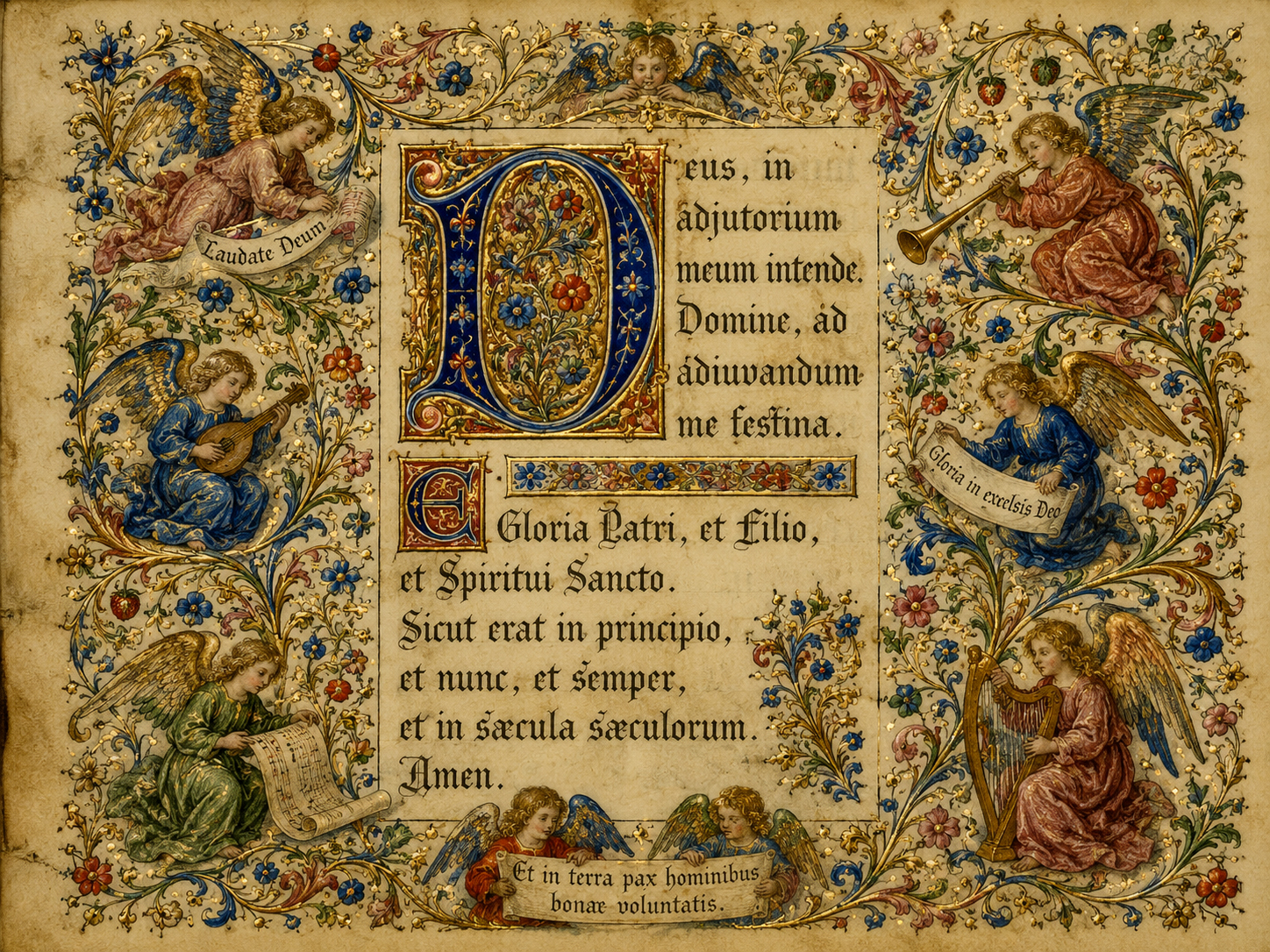
Manuscripts often hide tiny symbolic jokes, warnings, angels, beasts, and visual footnotes.

Gold is never casual
Gold grounds many sacred images in a space that feels outside everyday life.
Animals are witnesses
Animals in old art are often symbolic actors. A dove can signal peace or the Holy Spirit. A lamb may suggest sacrifice or innocence. A dog can mean fidelity. A dragon usually means danger, evil, or a trial that a hero or saint must overcome.
Do not assume every animal has one universal meaning. Context matters. The same creature can shift meaning depending on the story, region, period, and artist.
Flowers, fruit, and fragile things
Flowers can signal purity, beauty, spring, love, death, or transience. Fruit can suggest abundance, temptation, harvest, wealth, or decay. A fresh bouquet and a fading blossom tell different stories even when both look decorative.
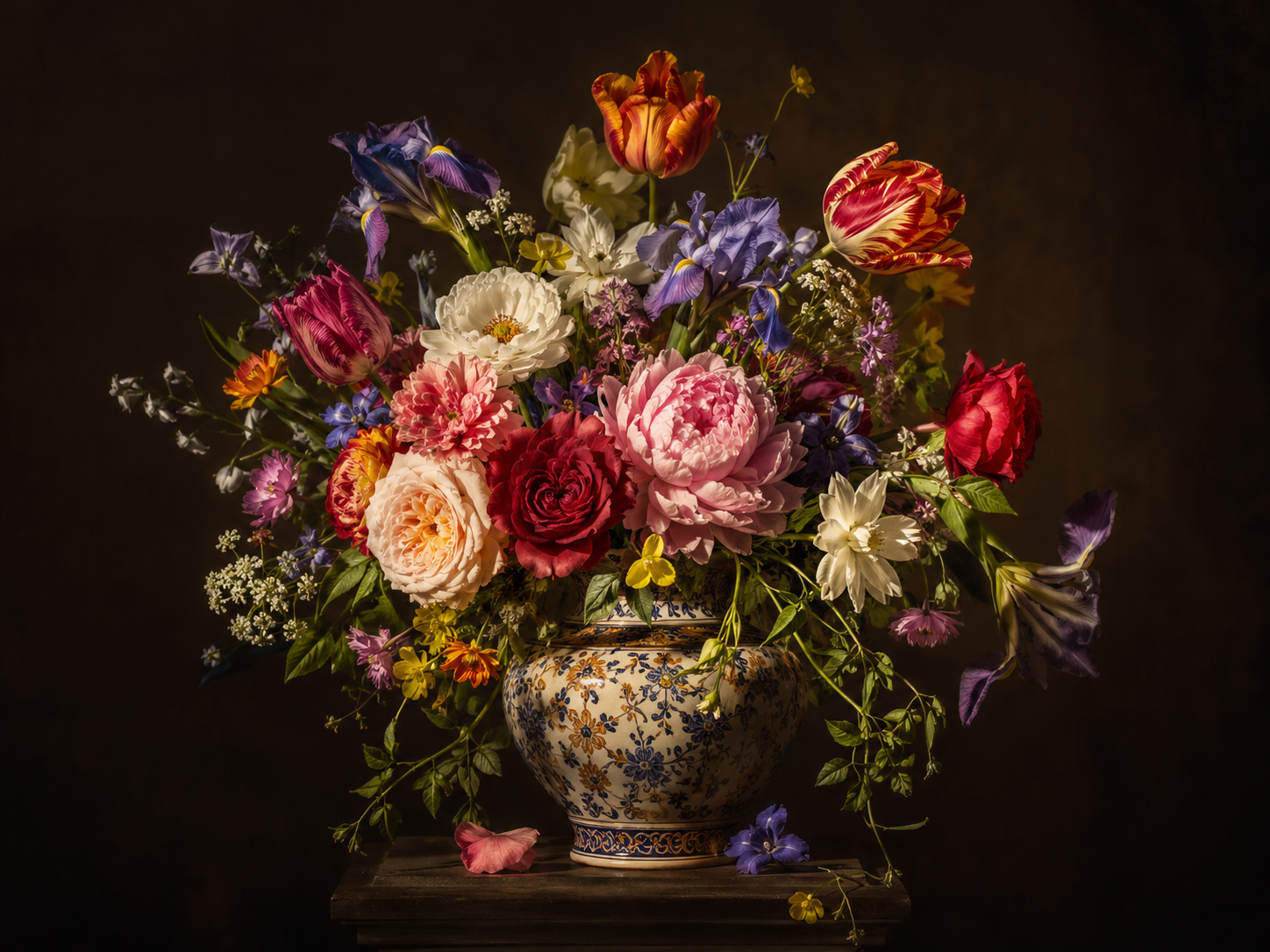
Beauty with a timer
Flowers often whisper that beauty is real, but not permanent.

The vanitas warning
Skulls, candles, bubbles, and clocks often point to time, mortality, and the limits of luxury.
Color can carry meaning
Blue, red, white, black, green, and gold can carry symbolic weight, but color meanings are not automatic. Blue might suggest heaven, devotion, distance, or expense. Red might suggest love, blood, power, danger, or sacrifice. Color is a clue, not a courtroom verdict.
The FineArtDaily detective method
- Look first. Name the objects, animals, colors, gestures, and strange details.
- Find the repeated clue. What does the painting keep pointing toward?
- Ask who benefits. Is the symbol identifying a person, teaching a lesson, flattering a patron, or warning the viewer?
- Check the source. Use museum labels, open-access collection notes, and trustworthy art-history references.
- Stay humble. Symbols can overlap, change, and argue with each other.
Where to go next
Once you understand symbols, paintings become less silent. Portraits become coded biographies. Still lifes become morality plays. Religious scenes become visual maps. Even a quiet flower can start yelling politely.