FineArtDaily hidden layer report
The painting underneath the painting
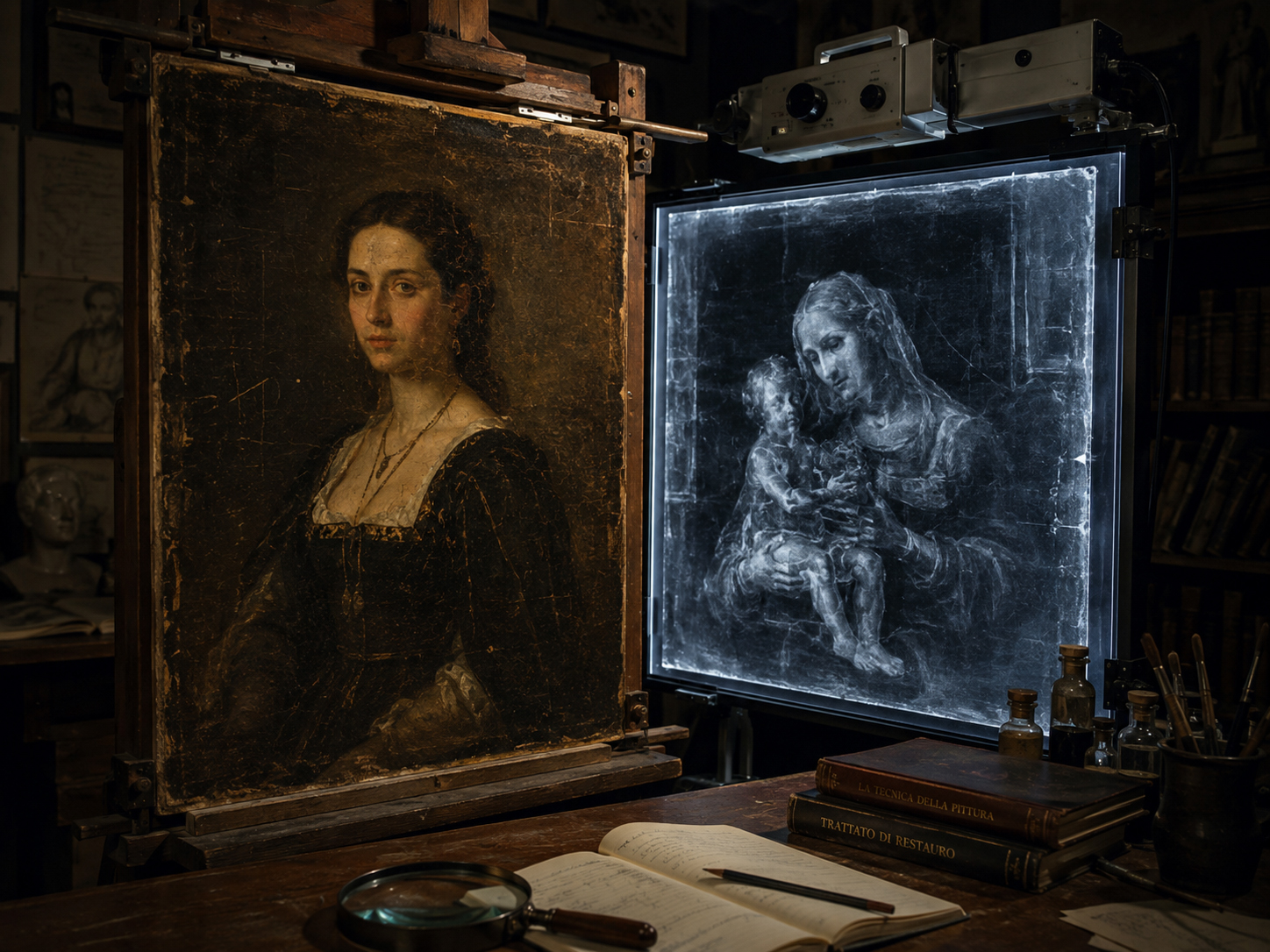
A finished painting can look inevitable, as if every hand, sleeve, shadow, chair, saint, cloud, and suspicious fruit arrived perfectly on schedule. The conservation lab knows better. Beneath the surface there may be a sketch, an earlier pose, a moved eye, a deleted object, or an entire composition the artist changed their mind about.
That hidden evidence is called the painting’s under-layer story. Sometimes it confirms what scholars suspected. Sometimes it starts a polite academic brawl with better lighting.
What X-rays can reveal
X-ray imaging can help conservators see through upper paint layers because different materials absorb radiation differently. Dense pigments, metal-based paints, nails, cracks, fills, old repairs, and structural supports may show up dramatically. The result can look like a ghost version of the painting arguing with the visible one.
- Changed compositions: figures moved, objects removed, backgrounds redesigned.
- Damage and repairs: tears, patches, fills, and old restoration campaigns.
- Construction clues: panel joins, stretcher marks, nails, seams, and supports.
- Material evidence: pigment behavior, heavy whites, and dense underlayers.
Infrared, underdrawings, and the first idea
Infrared reflectography is especially useful for finding underdrawings: the early sketch or planning layer beneath paint. These lines can show how an artist built the image before color and finish took over.
Underdrawings are not always tidy. They can be searching, quick, corrected, or surprisingly confident. They remind us that masterworks were made by decisions, not magic.
Conservation is slow looking with tools
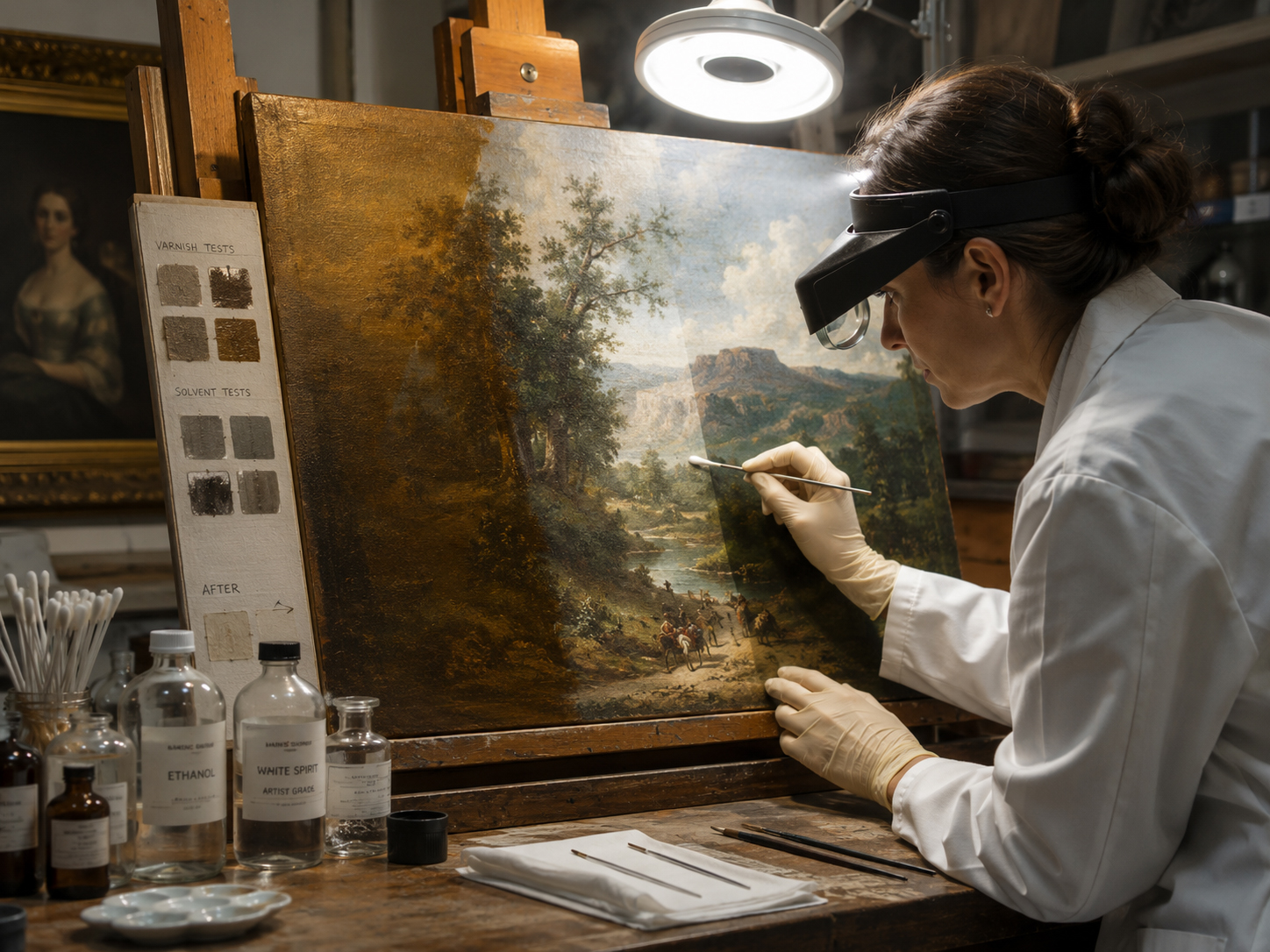
The lab studies paint, varnish, support, damage, history, and risk before making any intervention.
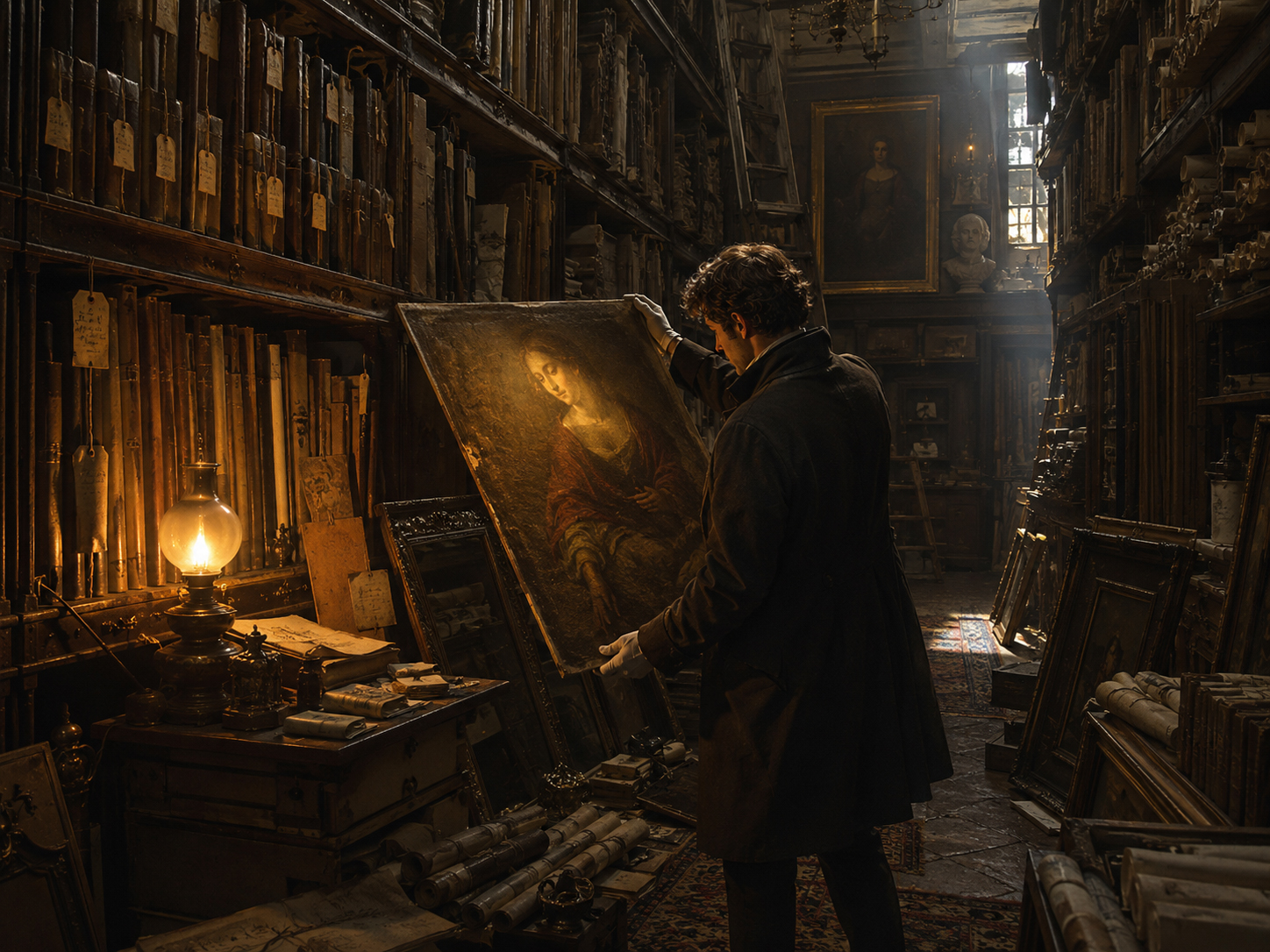
Archives join the evidence
Technical images become stronger when matched with letters, inventories, labels, and earlier photos.
Pentimenti: beautiful changed minds
A pentimento is a visible or detectable change made by the artist during the painting process. A hand shifts. A hat disappears. A face turns. A table edge moves. The word comes from the idea of repentance or reconsideration, but FineArtDaily prefers to call it “the canvas receiving edits.”
Pentimenti are exciting because they suggest the change happened during creation rather than as a later repair. They can make the artist feel startlingly present: not a statue of genius, but a working mind revising in real time.
Restoration is not a makeover show
Cleaning and conservation are cautious because every painting has a history. Dirt, varnish, overpaint, damage, and earlier repairs may all contain information. A restorer is not trying to make the painting look “new.” The goal is to stabilize, understand, and reveal responsibly.
- Examine first: visible light, raking light, X-ray, infrared, microscopy, and documentation.
- Identify materials: paint layers, varnish, fills, support, and previous restoration.
- Test carefully: any cleaning or repair method must be controlled and reversible when possible.
- Document everything: future conservators need to know what was done.
- Respect uncertainty: not every mystery should be forced into a clean answer.
Why hidden layers matter
Hidden layers can change how we understand authorship, process, date, materials, workshop practice, and meaning. They can show that an artist reused a canvas, revised a figure, collaborated with assistants, or covered an earlier image. Sometimes they simply make a familiar painting more human.
The best museum science does not kill mystery. It gives mystery better evidence.
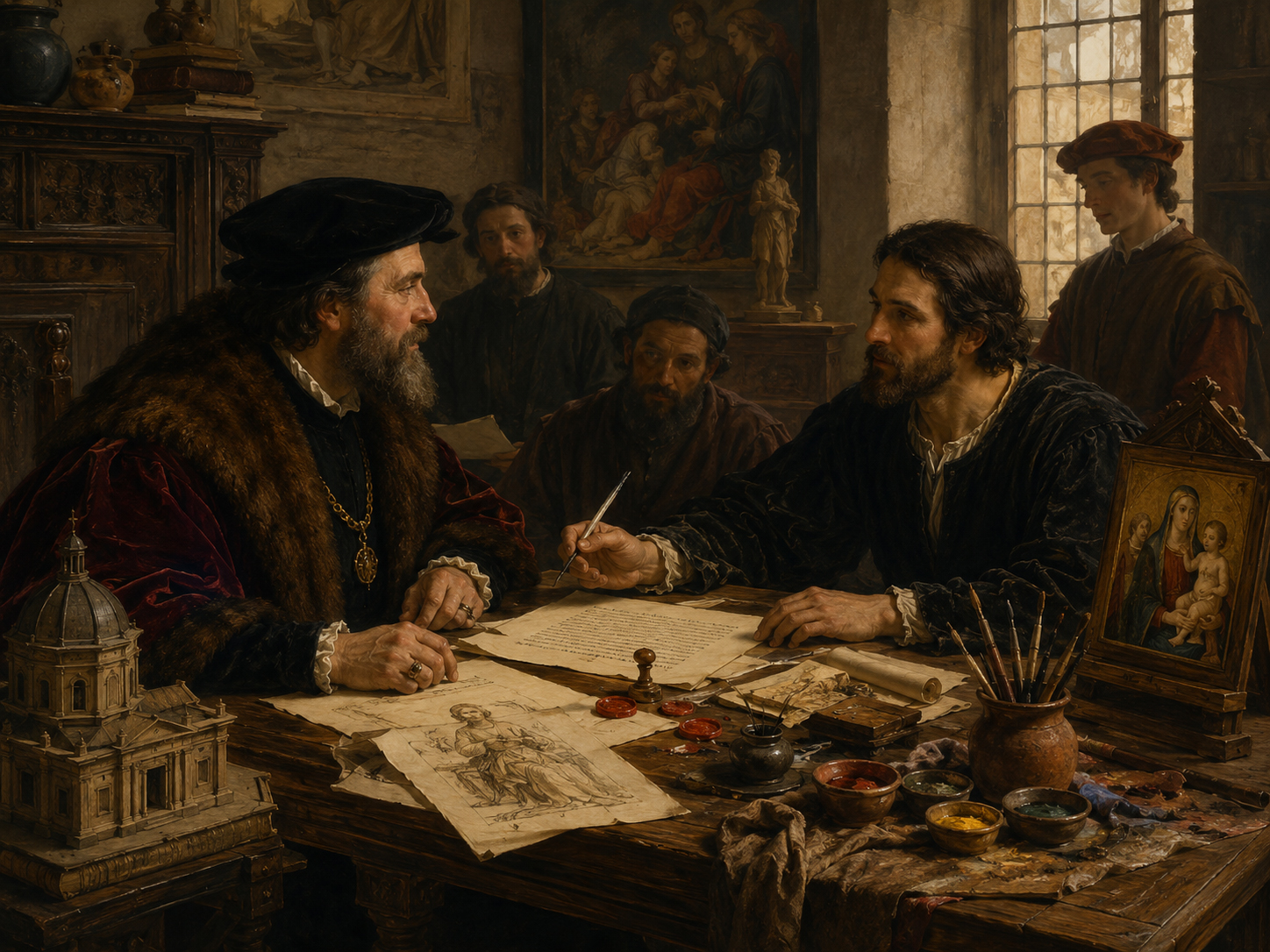
Patrons shaped the image
Technical evidence can reveal where a painting changed to satisfy money, taste, theology, politics, or deadline panic.
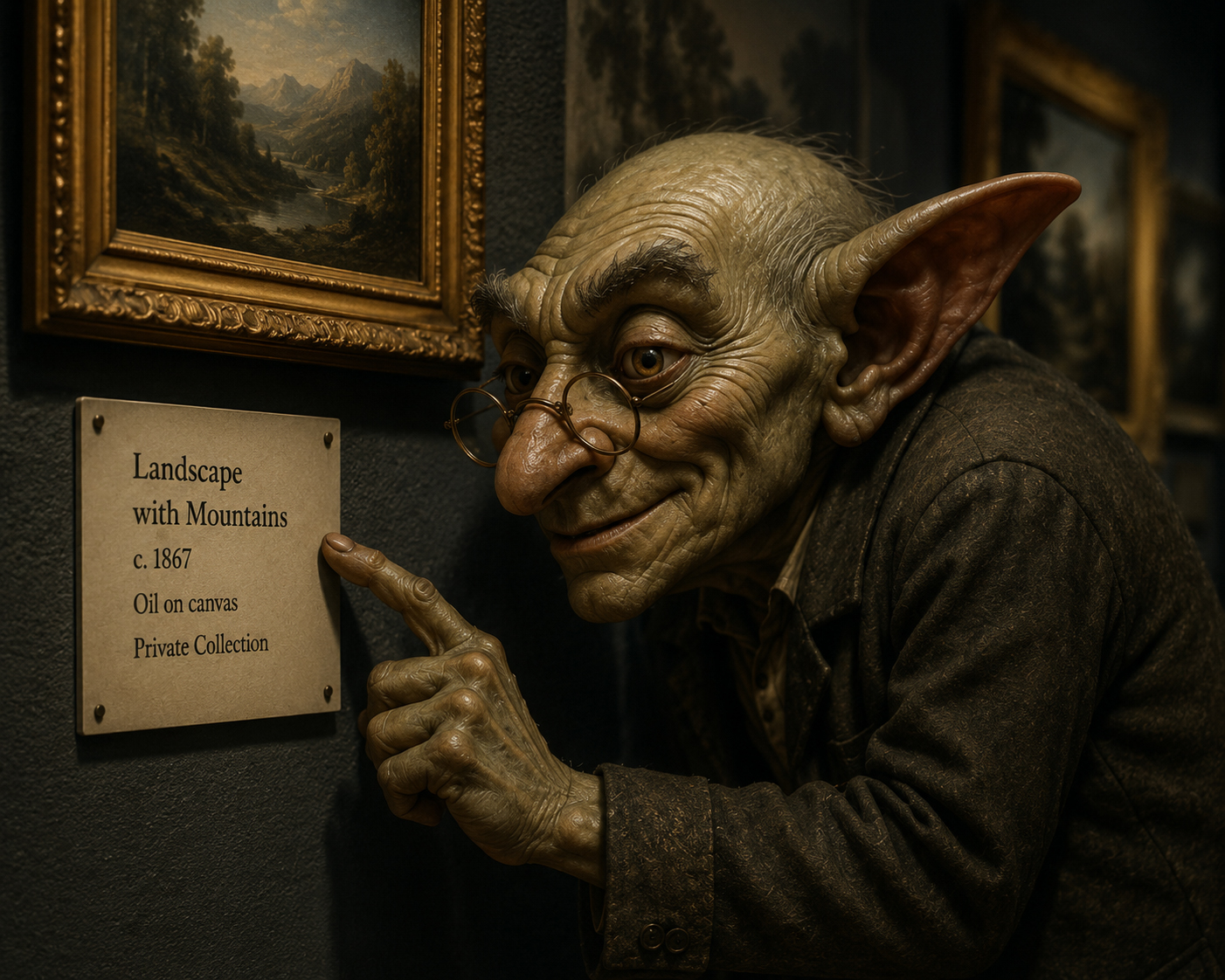
Labels are only the beginning
Technical studies can update wall labels when new evidence changes the story.
The FineArtDaily lab method
When reading a conservation story, keep three questions nearby:
- What did the scan actually show? Avoid turning a faint mark into a full conspiracy.
- Who made the change? Artist, workshop assistant, later restorer, owner, dealer, or accident?
- Does it change the interpretation? Some hidden layers are dramatic. Others are practical studio housekeeping.
Where to go next
If X-rays are the museum’s secret flashlight, restoration is the careful hand holding it. Follow the evidence into varnish, archives, symbols, and the strange little goblins of interpretation.