Slow-looking guide
Why this image works
Girl with a Pearl Earring is famous because it turns a tiny moment into a full theatrical event. Nothing obvious is happening. Nobody is running. No battle cloud arrives. The drama is the turn: the figure seems to have just noticed us.
That is the secret. The painting feels less like a posed portrait and more like an interruption. We are not only looking at her. We have been caught looking.
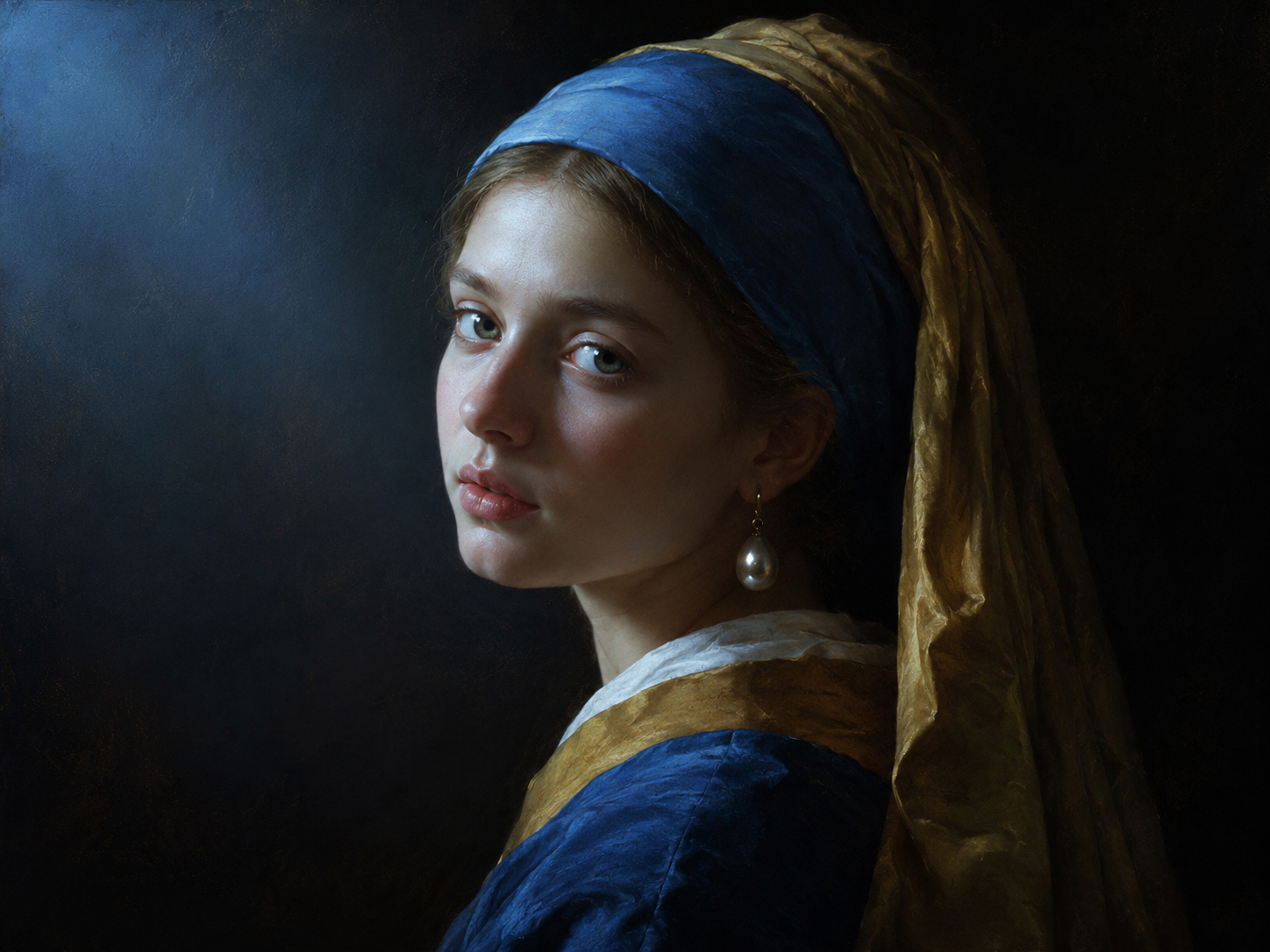
The whole painting is a stage for the face.
The dark background removes nearly everything except light, cloth, skin, eyes, and pearl. The image does not need a palace, a window, a landscape, or a crowd. The face carries the room.
Look first: four things to notice
Before reading labels or history, spend thirty seconds with the image. A famous painting is not a password test. It is a looking machine.
The figure is angled away, then turns back. That twist creates the feeling of a living second.
The gaze is direct but not simple. It feels alert, soft, curious, and guarded all at once.
The earring is a tiny moon. It catches light and makes the whole dark room feel expensive.
The head wrap turns color into identity. Blue becomes atmosphere, not decoration.
The dark background removes noise. It makes silence visible.
The slightly open lips add suspense: is she about to speak, breathe, question, or vanish?
Why the blue matters
Blue is doing more than looking pretty. It cools the face, deepens the darkness, and makes the pearl feel like a small flash of moonlight. The yellow-gold cloth nearby warms the blue, so the colors pull against each other without fighting.
FineArtDaily rule: when a painting seems simple, check the color temperature. Warm and cool colors are often having the real argument.
The pearl problem
The pearl is famous because it is both specific and mysterious. It is not just jewelry. It is a dot of light, a compositional anchor, a sign of luxury, and a question mark. The painting never fully explains who this figure is, what she wants, or why this moment matters.
That open space is why people keep returning. Mystery is not a defect here. Mystery is the engine.
Not every portrait is a biography
This image is often treated as a personality puzzle, but it may be better understood as a study of presence, costume, light, surface, and attention. The sitter matters. But the painting’s bigger trick is making a person feel both near and unreachable.
Pair it with these pages
To see the painting more clearly, compare it with other FineArtDaily rooms about light, domestic silence, and famous-image mystery.
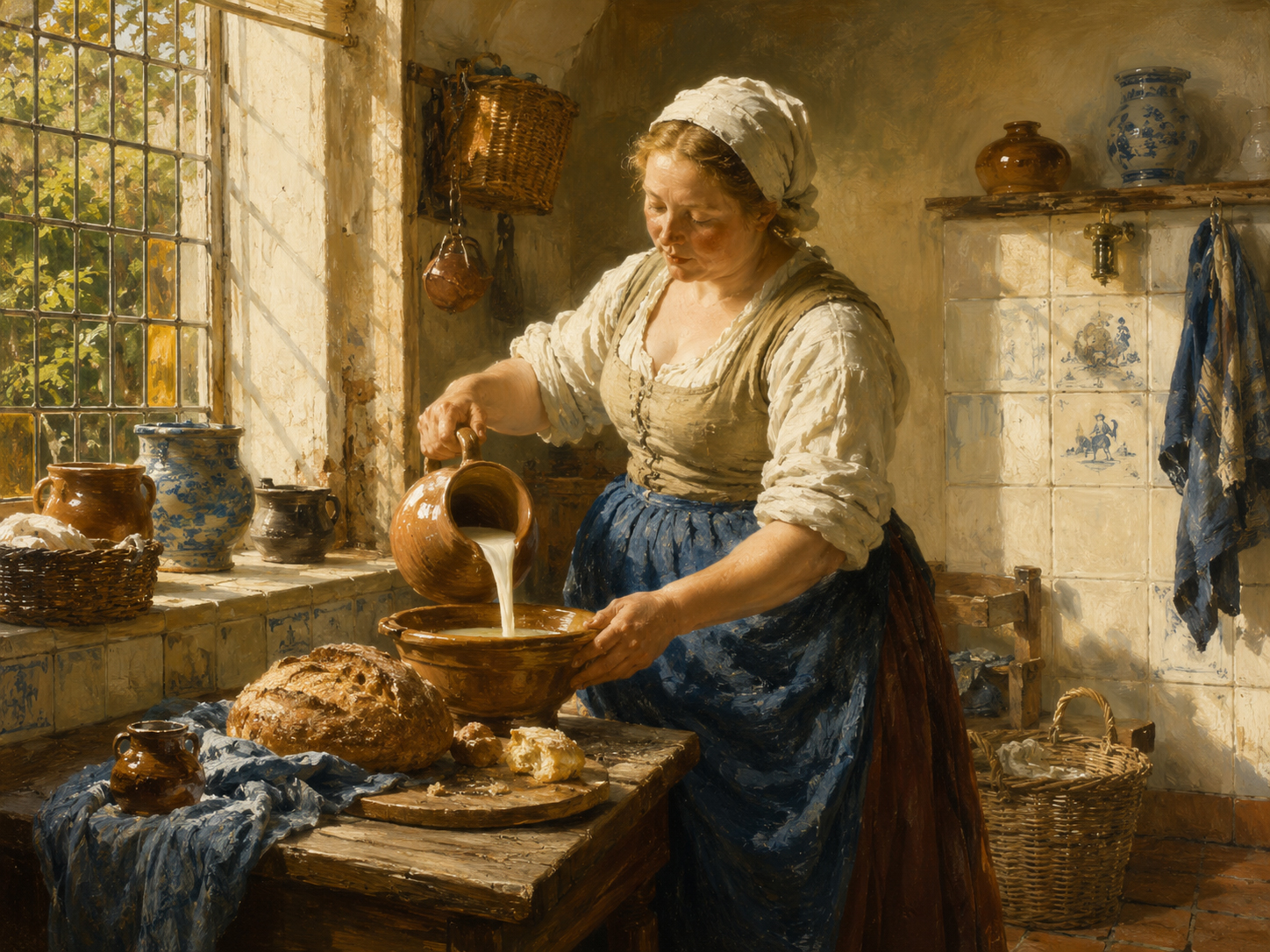
The Milkmaid
Another quiet room where light turns ordinary work into a monument.
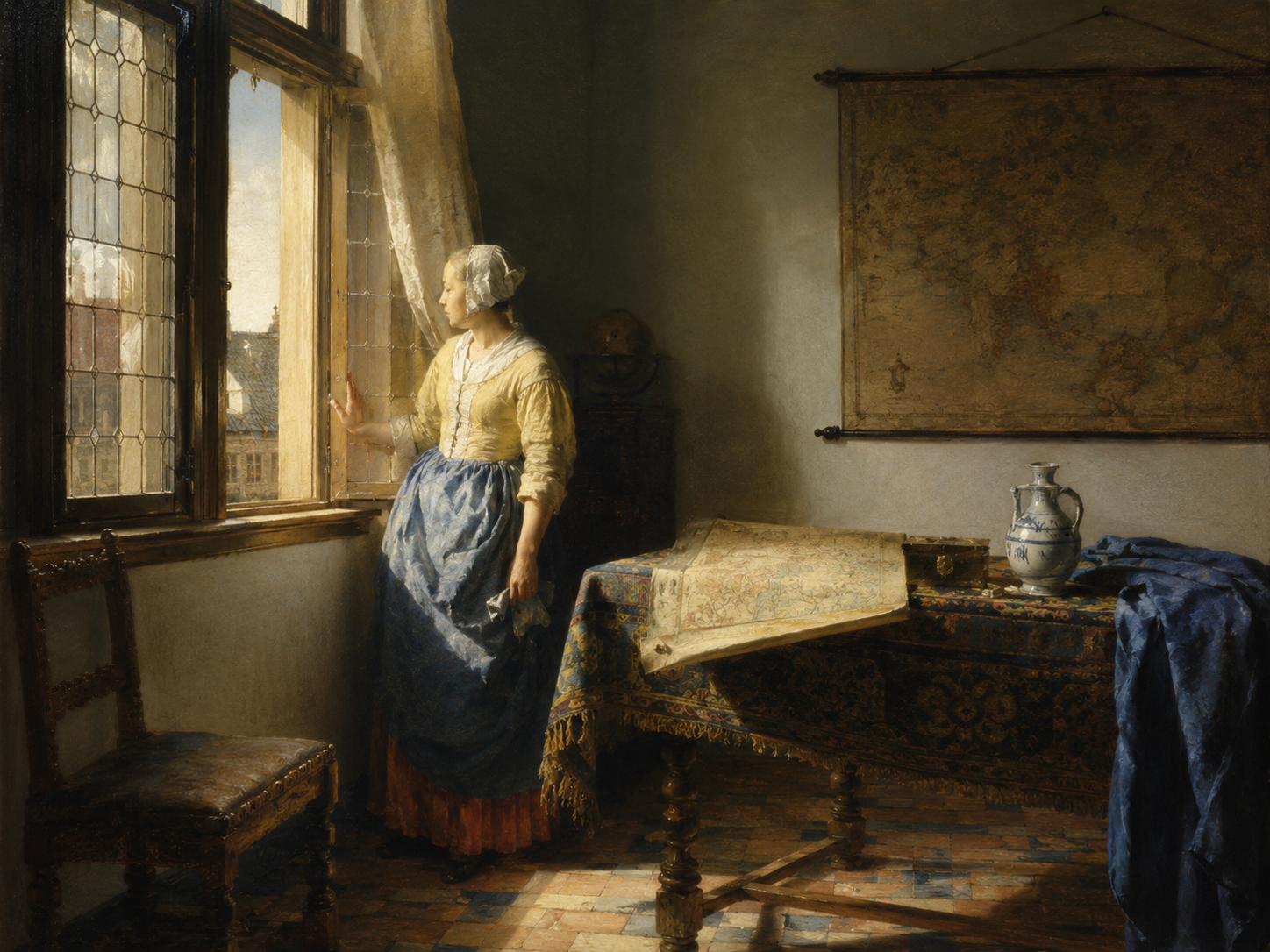
Dutch Window Light
How windows, walls, cloth, and silence became painting superpowers.
How to read it in one minute
- Start with the eyes. Notice whether the gaze feels inviting, startled, calm, or unknowable.
- Move to the pearl. Watch how little paint can imply an object, a shine, and a status symbol.
- Compare the blue and yellow cloth. See how cool and warm colors shape the mood.
- Look at the mouth. That small opening keeps the scene alive.
- Step back. Ask why the plain dark background makes the image more intense, not less.
Public-domain note: the historical painting itself is in the public-domain era, but direct museum reproductions can still have specific image-use terms. FineArtDaily uses original manga/editorial illustration for safer publishing and checks museum source rules before using direct reproductions.